

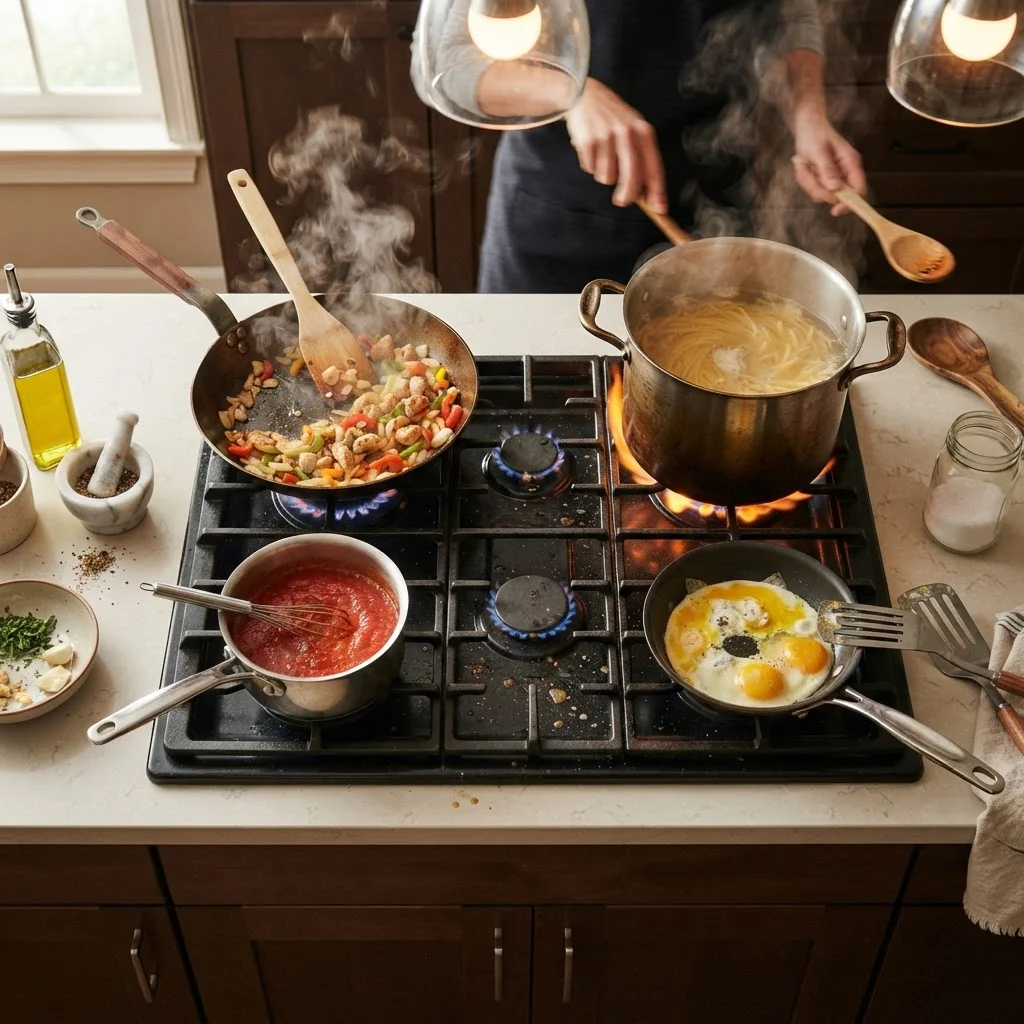
Key Takeaways
- Low heat is ideal for gentle tasks like melting butter, warming sauces, and keeping food without scorching.
- Medium heat covers the widest range of everyday cooking, from sautéing vegetables to cooking eggs.
- High heat is reserved for tasks that need quick browning, like searing meat or boiling water fast.
- Most recipes that say simply "cook over medium" assume a standard home range — adjust based on your stove's power.
- Switching heat levels mid-cook is normal and often produces better results than sticking to one setting.
Stovetop Heat Levels
Stovetop heat levels refer to the temperature range your burner produces — typically described as low, medium-low, medium, medium-high, and high. Each level transfers heat to your food at a different rate, which directly affects texture, color, and doneness. Choosing the right heat level for a task is one of the most fundamental cooking skills you can develop.
On most home gas and electric ranges, burner output is measured in BTUs (British Thermal Units). Electric coil and induction burners use wattage instead, but the low-to-high scale functions the same way for practical cooking purposes.
Why Heat Level Is the Most Underrated Cooking Variable
Timing, seasoning, and technique all matter in cooking — but heat level quietly governs all of them. Too high, and garlic burns before it softens. Too low, and chicken skin goes rubbery instead of crisp. Yet most recipes offer only vague guidance: "cook over medium" or "bring to a boil." Understanding what each heat level actually does gives you the confidence to interpret recipes, troubleshoot problems, and cook more reliably. See our guide to common cooking terms if you're also working through unfamiliar recipe vocabulary.
5
Distinct stovetop heat levels used in home cooking
Low, medium-low, medium, medium-high, and high each serve different culinary functions across everyday recipes.
325–375°F
Approximate pan surface temp at medium heat
This range is a general guideline; actual temperatures vary depending on pan material, stove type, and burner output.
The Five Heat Levels and What They Do
Low Heat
Low heat is the gentlest setting — just enough energy to maintain warmth or melt something slowly. It's ideal for melting butter or chocolate without scorching, keeping a finished dish warm while you plate others, and long, slow simmers where you want minimal bubbling activity. If your sauce is barely moving in the pot, you're at low.
Medium-Low Heat
Step up slightly and you get medium-low — the sweet spot for tasks that need time but not intensity. Think cooking eggs slowly for a creamy scramble, softening onions without browning them, or heating milk for a béchamel. It's forgiving, which makes it a great default when a recipe says "gentle heat."
Medium Heat
Medium is the workhorse of everyday cooking. Most stovetop tasks — sautéing vegetables, pan-frying fish fillets, making a pan sauce — work best here. Food cooks through without rushing, and you have time to stir, adjust, and watch. When a recipe doesn't specify heat level, medium is a safe starting assumption.
Medium-High Heat
Medium-high brings more energy and speed. Use it when you want some browning: stir-frying vegetables that should stay crisp-tender, searing chicken thighs before finishing in the oven, or reducing a liquid quickly. A pan at medium-high should feel active — sizzling steadily when food goes in.
High Heat
High heat is for specific moments, not extended cooking. Boiling pasta water, searing a steak for a dark crust, or charring vegetables for flavor — these are high-heat tasks. Left unattended, high heat burns food fast. Use it deliberately, stay close, and be ready to reduce the flame.
Preheat Your Pan Before Adding Food
A cold pan added to heat takes time to stabilize, and food added too early often sticks or cooks unevenly. For most tasks, heat the pan for 1–2 minutes before adding oil or butter. You'll get more consistent results and better browning.
Reading Your Own Stove
No two home stoves are exactly alike. A gas range with high BTU burners can run significantly hotter than an older electric coil at the same dial position. Induction cooktops respond near-instantly to changes. The best way to calibrate is through simple observation:
- Water test: A drop of water on a preheated pan should sizzle actively at medium and evaporate within seconds. At low, it sits and steams. At high, it pops off immediately.
- Butter test: Butter added to a medium pan should foam gently within 30 seconds. If it browns right away, lower the heat.
- Listen: A steady, moderate sizzle is medium. A violent spit and crackle is high. Silence or very faint hissing is low.
It takes a few sessions to learn your stove's personality — and once you do, cooking becomes noticeably more predictable.
Adjusting Mid-Cook Is a Skill, Not a Sign of Failure
Many beginner cooks set a burner and leave it, treating any adjustment as a mistake. In reality, changing heat levels throughout the cooking process is standard practice. You might start onions at medium to soften them, crank to medium-high to add color, then drop back to low when you add cream. Recipes sometimes spell this out, but often they assume you'll respond to what you see and hear.
Pay attention to visual cues: excessive browning, smoking oil, or liquid boiling too aggressively are all signals to pull back. A pan that's gone quiet when it should be sizzling means you need more heat. Cooking is responsive, not mechanical — and understanding heat levels is what makes that responsiveness possible.
Electric vs. Gas: A Key Difference
Electric coil and smooth-top ranges retain heat longer than gas burners, so they respond more slowly when you turn the dial down. If you're moving from gas to electric, give the burner a moment to cool after reducing — or shift the pan off the element briefly. Induction stoves, by contrast, lose heat almost immediately when adjusted, making them highly responsive but requiring a slight recalibration of habits.