

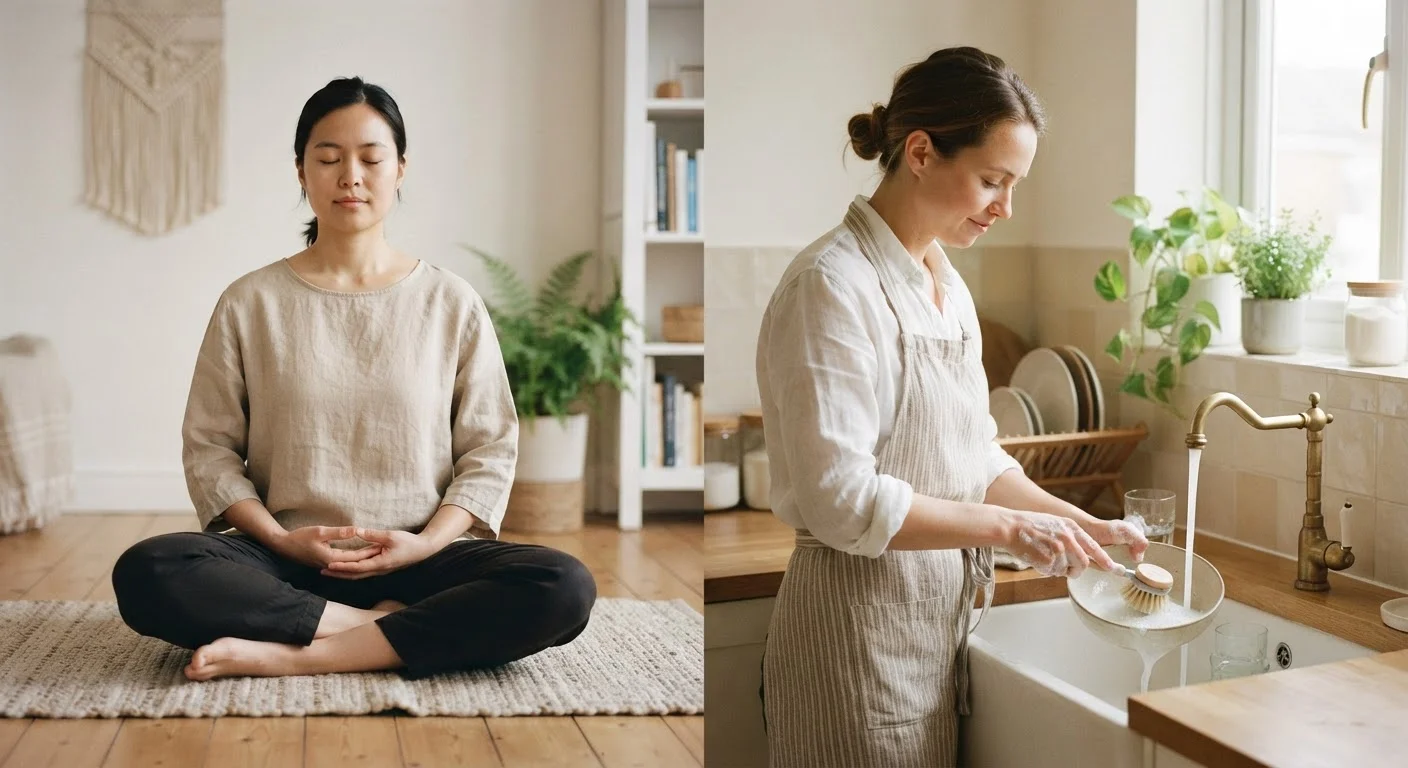
Key Takeaways
- Mindfulness is a quality of awareness; meditation is a formal practice used to train that awareness.
- You can be mindful at any moment — while eating, walking, or talking — without setting aside special time.
- Meditation typically requires a dedicated session with a specific technique, such as breath focus or body scan.
- Both practices have research support for reducing stress, anxiety, and improving overall well-being.
- The two are complementary, not competing — many people benefit from using both together.
Option A
Mindfulness
The always-available, woven-into-life awareness practice.
Best for: People who want to reduce stress and improve focus without setting aside dedicated practice time.
Option B
Meditation
The deliberate, structured training session for the mind.
Best for: People seeking deeper mental training, emotional regulation, or a consistent formal wellness habit.
If you have no spare time but want to feel less reactive
Mindfulness
Mindfulness can be layered onto activities you already do — commuting, eating, or breathing — making it accessible even on the busiest days.
If you want to build a structured mental wellness habit
Meditation
Formal meditation sessions create a reliable container for deeper mental training, which tends to compound in benefit over weeks and months.
If you're managing persistent stress or anxiety
Mindfulness
Bringing non-judgmental awareness to stressful moments in real time can interrupt habitual stress responses — though always speak with a professional for persistent symptoms.
If you want to improve sleep or emotional regulation
Meditation
Practices like body scan and loving-kindness meditation have been studied specifically for their effects on sleep quality and emotional balance.
If you're completely new to either practice
Mindfulness
Starting with simple mindful breathing or mindful eating has a low barrier to entry and naturally builds toward a meditation habit over time.
The Core Difference: State vs. Practice
Mindfulness and meditation are often used as synonyms, but they describe fundamentally different things. Mindfulness is a mental quality — a state of open, non-judgmental attention to the present moment. Meditation is a deliberate practice — a structured activity you sit down to do with a specific technique and goal. One is a way of being; the other is a training method.
Think of it this way: mindfulness is the skill, and meditation is one of the most effective ways to develop it. A musician can be fully present and "in flow" during any performance, but it's the daily practice sessions that built that capacity. Similarly, you might experience mindful awareness while folding laundry or having a conversation — but formal meditation is often what deepens and sustains that ability over time.
Understanding this distinction matters because it shapes how you bring each practice into your life. Mindfulness asks nothing more than a willingness to notice what's happening right now. Meditation asks you to carve out time and show up consistently. Both are worth understanding — and neither is superior. For a broader look at how practices like these fit into overall well-being, see what mental wellness actually means.
| Criterion | Mindfulness | Meditation |
|---|---|---|
| What it is | A quality of awareness | A structured practice or technique |
| When it happens | Anytime, during daily activities | During a dedicated session |
| Time required | Seconds to minutes, as needed | Typically 5–45 minutes per session |
| Learning curve | Very low — intuitive to begin | Moderate — technique helps |
| Primary goal | Present-moment awareness | Training attention and mental skills |
| Research support | Strong for stress and well-being | Strong for anxiety, sleep, focus |
| Equipment needed | None | None (apps optional) |
How Each Practice Works in Real Life
Mindfulness in practice means intentionally paying attention — without judgment — to whatever you're doing in the moment. You're not trying to stop thoughts or reach a special state. You're simply noticing: the warmth of coffee in your hands, the tension in your shoulders during a stressful call, the sound of rain. This kind of awareness can be practiced anywhere, anytime, and in any duration. Even three deliberate breaths at a red light count.
Meditation in practice is more structured. Most forms involve sitting quietly, choosing an anchor (often the breath, a word, or a body sensation), and gently returning attention to that anchor whenever the mind wanders. Common styles include focused-attention meditation, body scan, loving-kindness, and open-monitoring practices. Sessions can range from five minutes to an hour. What makes it "meditation" is the intentional container: a set time, a technique, and a commitment to the process.
~14%
US adults who meditate regularly
According to a National Health Interview Survey published by the CDC, the share of US adults practicing meditation rose significantly between 2012 and 2017.
8 weeks
Typical MBSR program length
Mindfulness-Based Stress Reduction (MBSR), developed at UMass Medical School, runs over eight weeks and combines formal meditation with mindfulness skills training.
10–20 min
Common daily meditation duration in studies
Many peer-reviewed studies examining meditation's effects on anxiety and stress use daily sessions of 10 to 20 minutes as a standard protocol.
Research published in journals including JAMA Internal Medicine has found that regular meditation practice is associated with reductions in anxiety, depression symptoms, and pain — though it's important to understand these are population-level findings, not guarantees for individuals. Mindfulness-based interventions, such as Mindfulness-Based Stress Reduction (MBSR), combine both elements: formal meditation sessions alongside guidance on bringing mindful awareness to everyday life.
If you're weighing these practices against other forms of mental health support, our explainer on therapy, counselling, and coaching can help clarify where each type of support fits.
Which One Is Right for You — or Is It Both?
The honest answer is that most people benefit from some version of both. Mindfulness is practical and portable — it costs nothing and has no learning curve. You can start right now, with your next breath. Meditation requires more intention and consistency, but the payoff tends to grow the longer you sustain it.
If you're new to either, starting with brief mindfulness moments throughout your day is a natural on-ramp. Notice how food tastes at lunch. Pause before replying to a tense email. Take three slow breaths when you wake up. These micro-practices build attentional muscle that makes formal meditation feel more natural when you're ready. For further reflection on when rest and mental resets genuinely help, the piece on mental health days offers useful framing.
These Practices Work Best Together
Mindfulness and meditation aren't competing — they're complementary. Formal meditation trains your capacity for awareness, while daily mindfulness keeps that awareness active between sessions. Many evidence-based programs, like MBSR, deliberately combine both. Starting with one doesn't mean excluding the other; most practitioners naturally move toward integrating both over time.
This article is for general informational purposes only and is not a substitute for professional medical or mental health advice. If you're experiencing persistent mental health symptoms, please consult a qualified healthcare professional.