

Key Takeaways
- Serving size is the foundation of every number on the label — always check it first.
- The % Daily Value column shows how much a nutrient contributes to a 2,000-calorie reference diet.
- Aim for less than 5% DV for nutrients to limit and more than 20% DV for nutrients to prioritize.
- Added sugars and sodium are two of the most important figures to monitor on packaged foods.
- Ingredient lists run from most to least by weight, making the first few entries the most telling.
What you will need
Why the Nutrition Facts Panel Exists — and What It Can (and Can't) Tell You
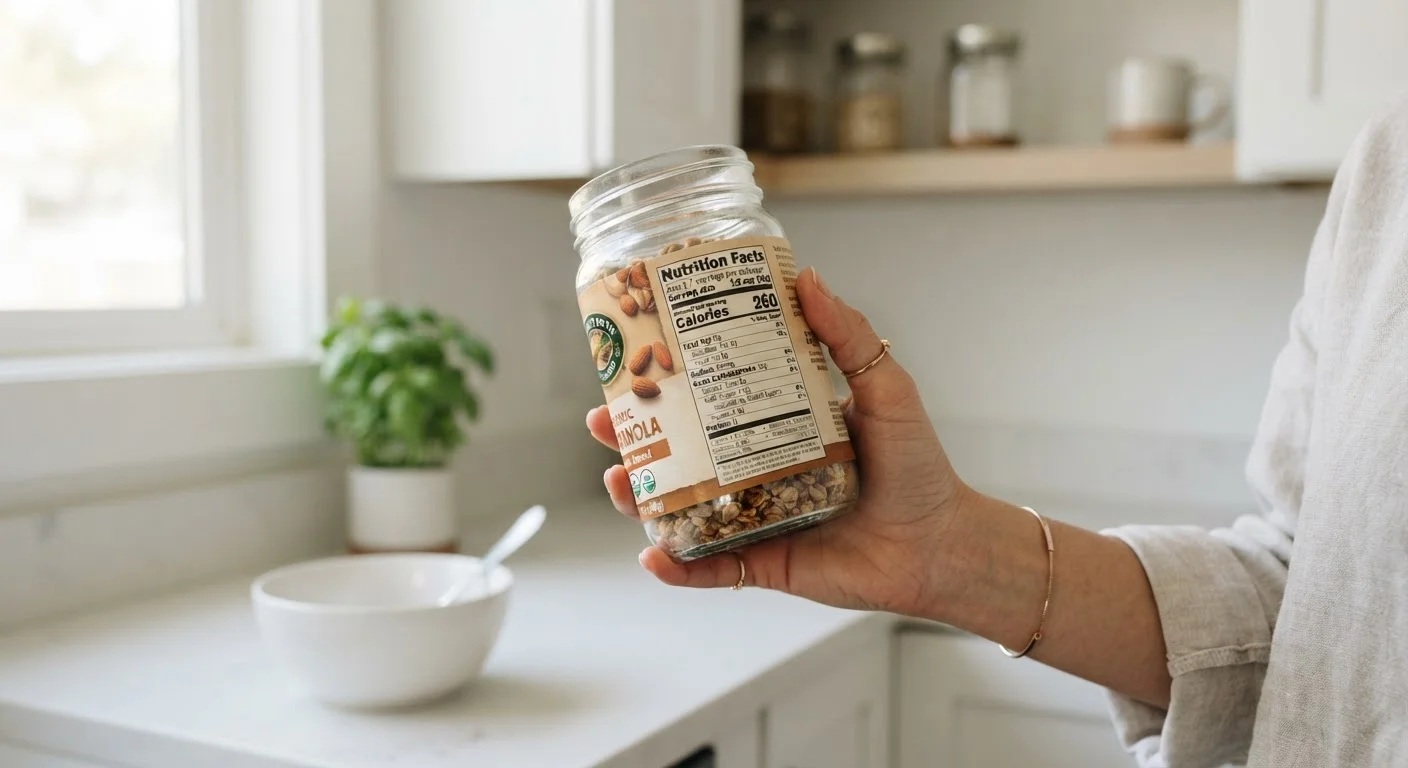
The Nutrition Facts panel is a standardized format required by the U.S. Food and Drug Administration (FDA) on most packaged foods. Its purpose is to give shoppers consistent, comparable information about what they're eating — but it was never designed to be read in isolation or to replace the bigger picture of an overall diet.
Think of the label as a reference tool rather than a verdict. A food with a high sodium count isn't automatically 'bad,' just as a food with low calories isn't automatically 'good.' Context always matters: how much you eat, how often, and alongside what other foods. Once you understand how each section of the panel works, you can use it to make more informed choices rather than feeling paralyzed by numbers.
For a broader look at your overall eating patterns, a practical self-audit checklist can help you see the full picture beyond any single label. And if you want to understand the types of fats you're seeing listed, a side-by-side breakdown of fat types offers useful grounding.
Labels Reflect One Serving, Not the Package
Every number on a Nutrition Facts panel — calories, fat, sodium, sugar — applies to one serving, not the whole container. A bag that holds three servings triples every figure if you eat it all. Always check the serving size and servings per container before drawing any conclusions about what you're actually consuming.
How to Read a Nutrition Label Step by Step
Follow these steps the next time you pick up a packaged item at the supermarket. With a little practice, scanning a label takes under a minute.
What you will need
Start with Serving Size and Servings Per Container
The very first lines of any Nutrition Facts panel tell you the serving size (e.g., 1 cup, 28g) and how many servings fit in the package. Every single number below that line is based on one serving. If a bag of crackers lists 140 calories per serving but contains 3 servings, eating the whole bag means 420 calories — not 140. Identify this anchor before reading anything else.
Note the Calorie Count in Context
Calories represent the energy a serving provides. While a single number doesn't tell the whole story — calories have real limits as a measure of nutrition — they remain a useful reference point when comparing similar products. Ask yourself whether this food's calorie count aligns with the portion you'll realistically eat.
Scan the 'Limit These' Nutrients
The panel groups certain nutrients under an implicit 'limit' category: saturated fat, trans fat, cholesterol, sodium, and added sugars. Current dietary guidelines generally suggest keeping these lower in the overall diet. Pay particular attention to sodium — many packaged foods supply a surprisingly large share of the daily reference value in a single serving. For more detail, see what sodium figures on labels actually mean.
Look for Nutrients Worth Getting More Of
Below the dividing line you'll usually find dietary fiber, vitamin D, calcium, iron, and potassium — nutrients many people don't get enough of. A high % Daily Value (20% or more) in this section is generally a positive signal. Fiber in particular is worth watching; most Americans fall well short of recommended amounts. Learn why fiber is so frequently underestimated.
Decode the % Daily Value Column
The % Daily Value (%DV) column tells you how much of a nutrient one serving contributes toward a daily reference intake based on a 2,000-calorie diet. It's a general benchmark, not a personal prescription — your needs may differ. Use the 5/20 rule as a practical shortcut: 5% DV or less is considered low; 20% DV or more is considered high. This works for both nutrients you want more of and those you want less of.
Read the Ingredient List
Ingredients are listed in descending order by weight — what appears first makes up the largest portion of the food. If a form of sugar (sucrose, high-fructose corn syrup, dextrose, honey) appears in the first three or four ingredients, the product is likely sugar-heavy regardless of what the front of the pack says. A shorter ingredient list often — though not always — indicates less processing. For a fuller picture of how processing levels affect nutritional quality, see the spectrum from whole foods to ultra-processed.
Use the 5/20 Rule as a Quick Shortcut
When scanning labels in a busy store, the 5/20 rule is your fastest filter: 5% DV or less means a nutrient is low in that serving; 20% DV or more means it is high. Use this to quickly flag high-sodium snacks or identify foods genuinely rich in fiber or calcium — no mental math required.
Front-of-Pack Claims Can Mislead
Words like 'natural,' 'light,' or 'multigrain' on the front of a package are marketing language and are regulated differently — or less strictly — than the Nutrition Facts panel. Always flip to the back and read the panel and ingredient list rather than relying on front-of-pack messaging. For a deeper look, see what front-of-pack claims actually mean.
This article is for general informational and educational purposes only and is not a substitute for professional medical or dietary advice. Individual nutritional needs vary. If you have specific health concerns or conditions, consult a registered dietitian or qualified healthcare provider before making dietary changes.