

Key Takeaways
- 50% of take-home pay covers needs: housing, utilities, groceries, and minimum debt payments.
- 30% goes to wants: dining out, entertainment, subscriptions, and other non-essentials.
- 20% is directed toward savings, investments, and extra debt payoff.
- The rule works best as a starting point, not a rigid requirement — adjust percentages to your situation.
- High cost-of-living areas or low incomes may make the 50% needs ceiling difficult to hit.
The 50/30/20 Rule
The 50/30/20 rule is a budgeting guideline that splits your after-tax income into three categories: 50% for needs, 30% for wants, and 20% for savings and debt repayment. It gives you a ready-made spending framework without requiring a detailed line-item budget. The goal is balance — covering essentials, leaving room for enjoyment, and building financial security at the same time.
The framework was popularized by Senator Elizabeth Warren and her daughter Amelia Warren Tyagi in their 2005 book 'All Your Worth.' It applies to net (after-tax) income, not gross pay.
How the Three Categories Work
The entire framework rests on one number: your monthly take-home pay. From there, everything divides cleanly.
50% — Needs
This half of your income covers the expenses that would cause real harm if skipped. Think rent or mortgage, electricity, water, basic groceries, health insurance, and transportation required for work. Minimum monthly debt payments also belong here, because missing them has consequences.
30% — Wants
This bucket is for spending that improves your quality of life but isn't strictly necessary. Restaurant meals, concert tickets, streaming subscriptions, hobby supplies, and clothing beyond the basics all fit here. The distinction isn't always crisp — a phone is a need, but a premium data plan may be a want.
20% — Savings and Extra Debt Payoff
The final slice goes toward your financial future. Emergency fund contributions, retirement account deposits, investment accounts, and payments above the minimum on high-interest debt all fall here. Building this category is what prevents the next unexpected expense from derailing everything else.
Start by Tracking One Month First
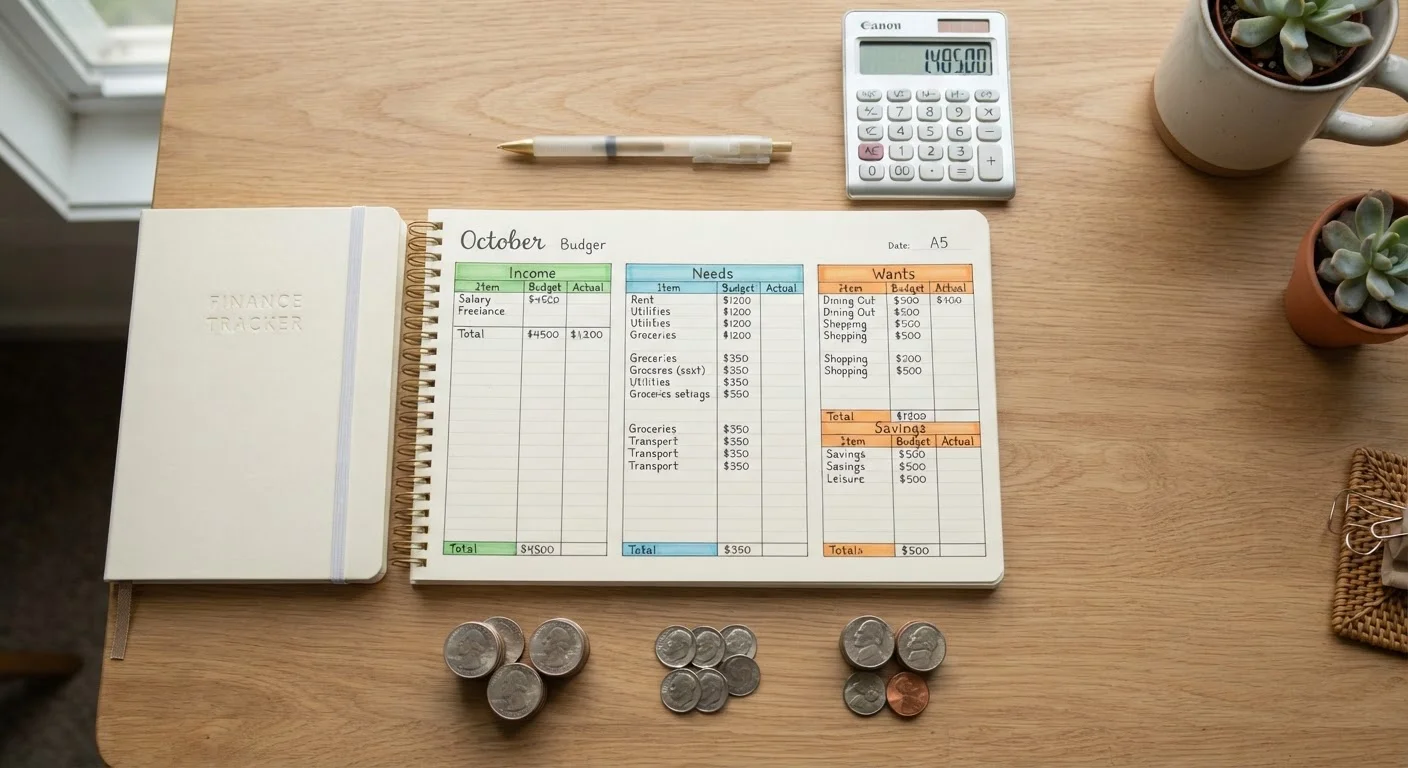
Before adjusting anything, simply record what you actually spent last month across needs, wants, and savings. Most people are surprised by how much the wants category has grown quietly. Knowing your real starting point makes the 50/30/20 targets feel achievable rather than arbitrary.
This article provides general financial education and is not personalized financial advice. Consider speaking with a licensed financial professional about decisions specific to your situation.
Putting It Into Practice
Start with your actual monthly take-home pay — not what you earn before taxes. If you're paid biweekly, multiply one paycheck by 26, then divide by 12 to get a monthly figure.
Then multiply that number by 0.50, 0.30, and 0.20 to get your target dollar amounts for each bucket. Compare those targets against what you actually spent last month. Most people find their needs are close to 50%, but their wants are quietly eating into the savings slice.
57%
Americans living paycheck to paycheck
According to a 2023 LendingClub report, more than half of U.S. consumers reported spending all or most of their monthly income, underscoring the need for a structured savings habit.
$1,000
Savings needed to cover most emergency expenses
Bankrate research has consistently found that a meaningful share of Americans could not cover an unexpected $1,000 expense without borrowing, highlighting the importance of the 20% savings category.
30%
Income share spent on housing by renters
The U.S. Department of Housing and Urban Development considers households that spend more than 30% of income on housing to be 'cost-burdened,' which directly compresses the needs bucket in the 50/30/20 framework.
If you share finances with a partner, combining both incomes before splitting makes the math simpler. The guide to building a household budget as a couple walks through how to align on shared spending categories without friction.
When the Rule Fits — and When It Doesn't
The 50/30/20 rule works well for people with a stable, predictable paycheck who want a simple structure without tracking every dollar. It's particularly useful for new budgeters who get overwhelmed by detailed spreadsheets.
It's less useful if your needs genuinely consume more than 50% of take-home pay. In expensive metro areas, rent alone can eat 40–50% of income before any other necessity is covered. In those situations, the rule can feel discouraging rather than helpful — and it may need significant adjustment or replacement.
Freelancers and gig workers also face a challenge: the rule assumes a consistent monthly income to divide. If your earnings vary, consider our approach to budgeting on an irregular income instead.
For a deeper look at how this framework stacks up against a more granular alternative, see our comparison of zero-based budgeting and the 50/30/20 rule. And if you're building toward a specific goal — like a trip — the 20% savings slice can be directed there. Our guide to building a travel fund shows how to do exactly that.