

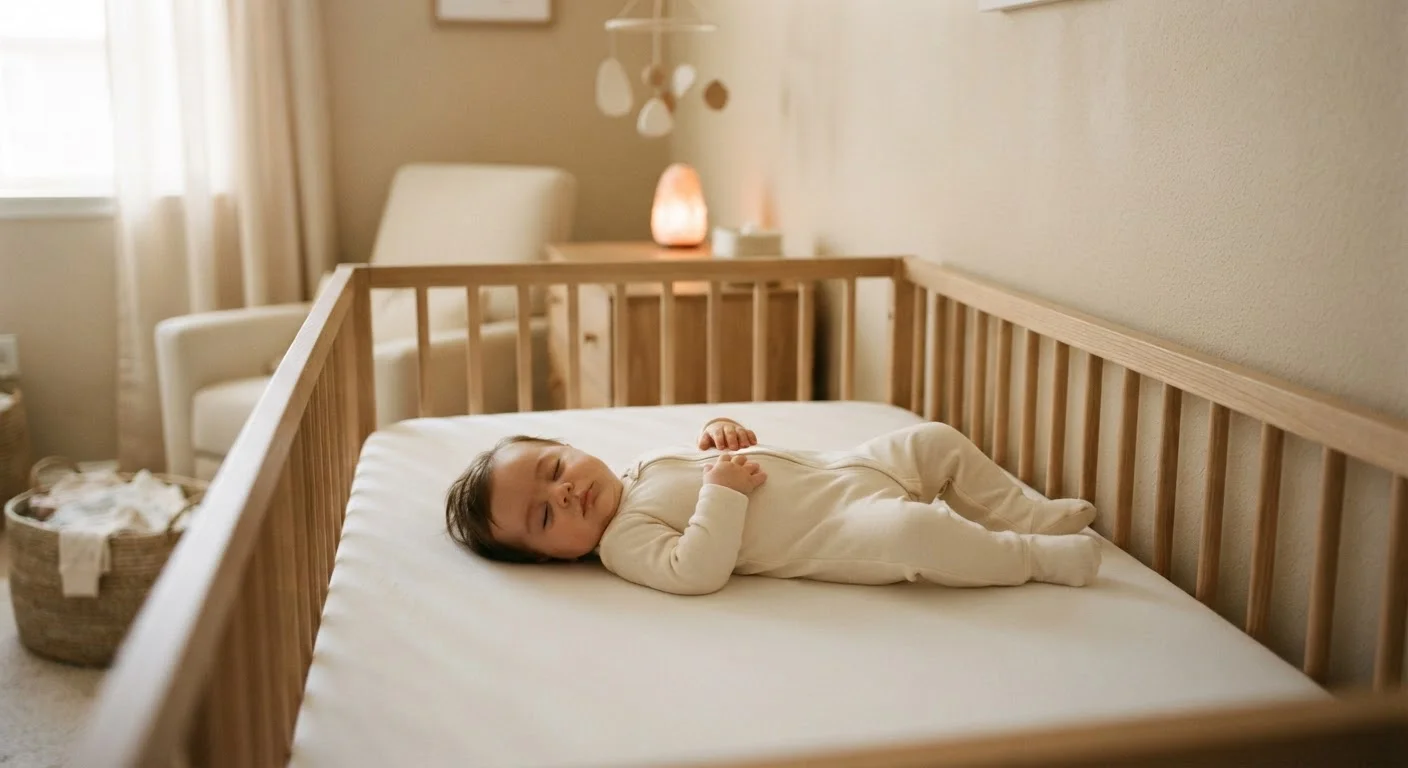
Key Takeaways
- Babies should always be placed on their backs to sleep, on a firm, flat surface.
- The sleep space should be free of soft bedding, pillows, bumpers, and toys.
- Room-sharing without bed-sharing is recommended for at least the first six months.
- Overheating is a risk factor — dress babies in light layers and keep the room cool.
- These guidelines apply to every sleep, including naps, not just overnight.
Why Safe Sleep Guidelines Exist
Sudden unexpected infant death (SUID) — which includes sudden infant death syndrome (SIDS) and accidental suffocation or strangulation in bed — remains one of the leading causes of death in babies under one year of age in the United States. The good news is that the risk can be meaningfully reduced through consistent, evidence-based sleep practices.
Current guidance from organizations such as the American Academy of Pediatrics (AAP) is built on decades of research into what environmental and positional factors are associated with infant sleep-related deaths. Understanding the reasoning behind each recommendation helps parents apply them with confidence, even during exhausting nights. For a helpful companion to this topic, see why newborn sleep looks nothing like adult sleep.
This article is for general informational purposes only and does not constitute medical advice. Always consult your pediatrician or a qualified healthcare professional with questions about your baby's specific health and sleep needs.
Core Safe Sleep Practices
The following practices reflect the broad consensus of pediatric health guidance. They apply to every sleep period — naps included — for babies through approximately twelve months of age.
Always place babies on their backs to sleep.
Back sleeping dramatically reduces the risk of SIDS compared to stomach or side positions. This recommendation applies from birth and remains important until a baby can confidently roll in both directions independently.
Use a firm, flat sleep surface with a fitted sheet only.
Soft surfaces — including memory foam toppers, thick padding, or inclined sleepers — can conform around a baby's face and restrict breathing. A firm, flat mattress in a safety-approved crib, bassinet, or play yard is the recommended environment.
Keep the sleep space completely bare.
Loose bedding, pillows, bumper pads, positioners, and stuffed animals all pose suffocation and entrapment risks. A baby's sleep area should contain only the infant and the fitted sheet beneath them.
Avoid overheating by dressing babies lightly and keeping the room cool.
Overheating has been identified as a risk factor in SIDS research. Babies regulate temperature less efficiently than adults, so a room that feels comfortable to a caregiver may be too warm for an infant.
Offer a pacifier at sleep time after breastfeeding is established.
Research suggests pacifier use at sleep onset is associated with a reduced risk of SIDS, though the mechanism is not fully understood. It should not be forced if a baby refuses it.
Room-Sharing, Bed-Sharing, and the Space Between
One of the most common sources of confusion for new parents is the distinction between room-sharing and bed-sharing. Current guidance recommends that babies sleep in the same room as a caregiver — but not in the same bed — for at least the first six months, and ideally through the first year. Room-sharing is associated with a reduced risk of SIDS, likely because a caregiver's presence can prompt brief arousals in the infant.
What "Room-Sharing" Actually Means
Room-sharing means the baby sleeps in the same room as a caregiver on their own separate surface — a crib, bassinet, or play yard placed close to the adult bed. It does not mean the same mattress, sofa, or armchair. If cost is a concern, a basic safety-approved bassinet serves the purpose just as well as more expensive options.
Bed-sharing, by contrast, is associated with an increased risk, particularly when either parent has consumed alcohol, is a smoker, or is taking medication that affects alertness. Soft mattresses, heavy duvets, and pillows create additional hazards in an adult bed.
If you find yourself falling asleep while feeding your baby, placing them on their back on a firm, flat surface as soon as you wake is safer than remaining on a sofa or armchair, which carry higher risks than a firm bed. Once your baby is sleeping more predictably, you may find our overview of sleep training methods useful for the next phase.
Small Steps You Can Take Right Now
Safe sleep doesn't require expensive equipment — it mostly requires consistency. The quick wins below focus on changes you can make today, regardless of where you are in setting up your nursery.
If you're also thinking about broader home safety as your baby grows, our room-by-room baby-proofing checklist is a natural next step.