

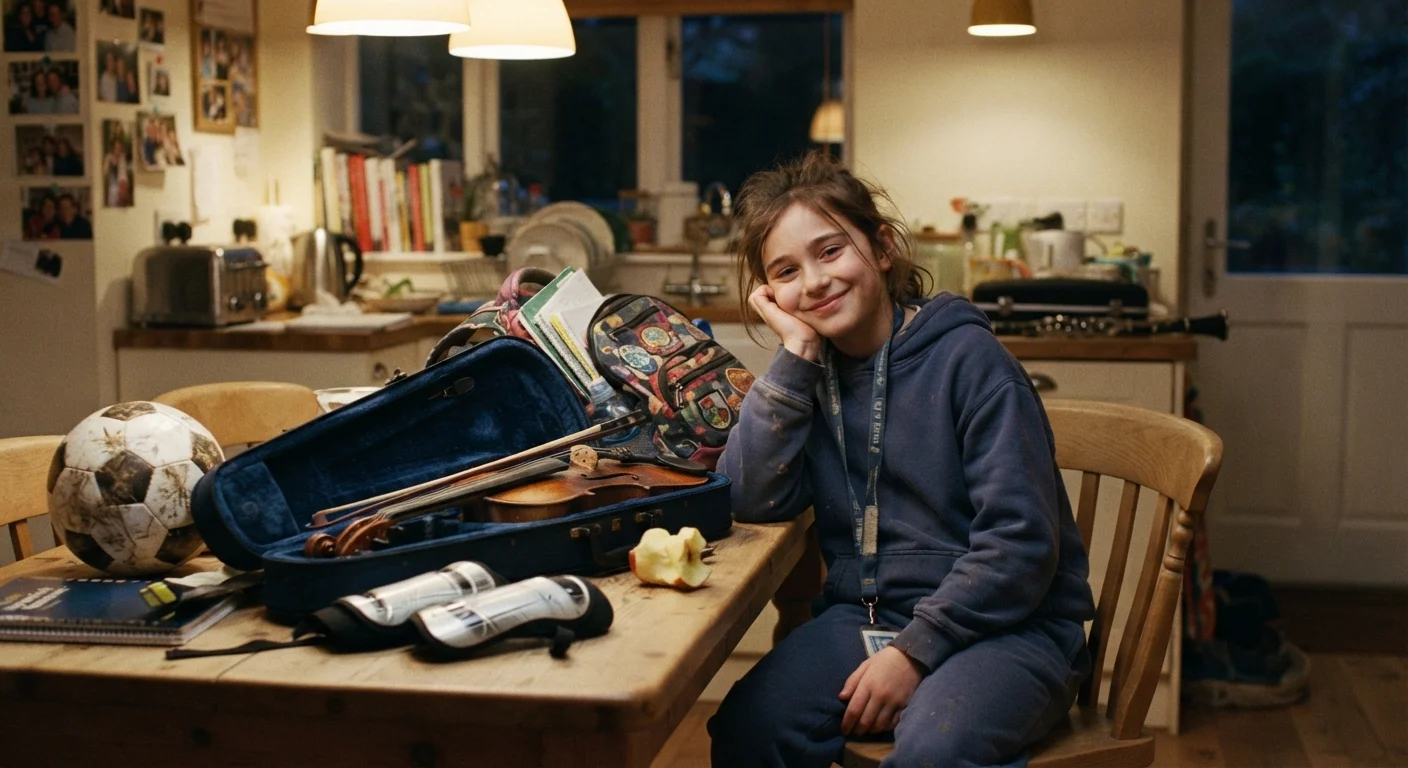
Key Takeaways
- One or two well-chosen activities often serve children better than a packed weekly schedule.
- Unstructured free time is not wasted time — it supports creativity, resilience, and emotional regulation.
- Physical and behavioral signs of stress in children can signal over-scheduling before a child can verbalize it.
- Letting children have input into which activities they pursue increases their motivation and enjoyment.
- Family logistics and financial pressure can quietly drive over-scheduling — it's worth examining honestly.
The Pressure to Sign Up for Everything
Soccer on Tuesday, piano on Thursday, art class Saturday morning — and don't forget the robotics club after school on Wednesdays. For many families, this kind of schedule feels almost normal. The desire to give children every advantage is deeply human, and the fear of missing a formative window can make every activity feel essential.
But research consistently suggests that children need more than structured achievement to thrive. According to the American Academy of Pediatrics, unstructured play is critical to healthy child development — building problem-solving skills, emotional regulation, and social confidence in ways that organized activities simply cannot replicate. The question isn't whether extracurriculars are valuable (they genuinely are), but how to find the balance that works for your particular child.
The tips below are designed to help you read the signals, have honest conversations, and make decisions with clarity rather than guilt. If you're also thinking about how downtime at home is spent, our piece on screen time during the school years is a useful companion read.
A helpful rule of thumb for most families
Many child development specialists suggest that one or two extracurricular activities per school term is a reasonable starting point for most school-age children. This leaves room for homework, family time, rest, and unstructured play. If your child is thriving and asking for more, you can always add — but it's much harder to scale back once commitments are locked in.
Signs Your Child May Be Over-Scheduled — and How to Respond
Watch for physical signs of chronic fatigue
Children who are consistently overtired may not report feeling stressed — they may simply show it. Frequent headaches, complaints of stomachaches on activity days, trouble falling asleep despite exhaustion, or a sudden drop in appetite can all be the body's way of signaling too much. These physical cues often appear before a child has the vocabulary to say "I'm overwhelmed."
If these symptoms cluster around specific days or activities, it's worth pausing to assess the schedule rather than assuming illness. Reducing commitments — even temporarily — can reveal whether rest is the missing ingredient.
Physical complaints often surface before a child can say they're overwhelmed.
Notice mood and behavior changes at home
A child who comes home irritable, tearful, or unusually withdrawn after a full week isn't necessarily going through a phase. Persistent moodiness, increased conflict with siblings, and resistance to previously enjoyed activities can all indicate that a child's stress bucket is full. Home is often where children release what they've been holding together all day — so the behavior you see there tells a real story.
Rather than addressing the behavior in isolation, consider whether the schedule itself is contributing. A child who has no downtime between school, activities, homework, and bedtime has very little room to decompress.
Home behavior is often where over-scheduling reveals itself most clearly.
Ask your child — and actually listen to the answer
Many children won't volunteer that they want to quit an activity, especially if they sense a parent is emotionally invested in it. Instead, try open-ended questions: "Which part of your week feels the most tiring?" or "If you could swap one thing in your schedule for free time, what would it be?" Give them room to answer honestly without immediately problem-solving or reassuring.
Research on intrinsic motivation suggests children are more likely to persist in activities they feel they chose themselves. When participation becomes entirely obligation-driven, the developmental benefits diminish. A child's voice in the process is not just considerate — it's effective.
Children persist longer in activities they feel they genuinely chose for themselves.
Protect time that belongs to no one
Unstructured time — time without a goal, a coach, or a curriculum — is where children practice being bored, then finding their way out of boredom. This is foundational for creativity, self-direction, and emotional resilience. The American Academy of Pediatrics specifically highlights child-led play as essential to brain development, and many developmental researchers argue it is under-valued in contemporary childhood.
Even one consistent block of free afternoon time per week — where a child can read, build something, wander the backyard, or simply daydream — can meaningfully counterbalance a busy schedule. Think of it as a non-negotiable part of their week, not a reward for finishing everything else.
Boredom followed by self-directed play is where resilience is quietly built.
Be honest about what's driving the schedule
Sometimes the pace of a child's schedule reflects parental anxiety, social comparison, or logistical defaults ("everyone else is doing it") more than the child's actual needs or interests. It's worth asking yourself: Is this activity here because my child loves it, or because I'm worried they'll fall behind? Is the schedule this full because of genuine opportunity, or because it's hard to say no?
Family finances also play a quiet role. Extracurriculars can be expensive, and the pressure to justify the cost can keep children in activities past the point of enjoyment. Reviewing your overall spending framework — including activity costs — through a simple budgeting lens (see budgeting basics) can help make these decisions more deliberate and less reactive.
Parental anxiety and social comparison often quietly shape a child's schedule.
Use transitions as natural reset points
The end of a season, a school term, or a session of classes is the perfect low-pressure moment to reassess. Rather than automatically re-enrolling, treat each transition as a genuine check-in: Does my child want to continue this? Did it bring them energy or drain it? Is there something new they'd like to try instead?
This approach prevents activities from becoming entrenched defaults and teaches children a valuable habit — reflecting on whether something is still working before simply continuing out of inertia. One or two activities pursued with real engagement nearly always outperform five activities pursued reluctantly.
Seasonal transitions are the ideal moment to reassess — not mid-commitment.
Every child's capacity is different
Some children are genuinely energized by busy schedules and multiple social environments, while others need significantly more downtime to feel regulated and happy. Children with certain learning differences, anxiety, or sensory sensitivities may find transitions between activities particularly taxing. There's no universal right number of activities — the goal is to know your individual child well enough to tell the difference between productive stretch and harmful strain.
Every child has a different capacity for busyness, and what energizes one may drain another. If your child is navigating a particularly hard stretch at school, the strategies in supporting a child through a difficult school year can help you offer meaningful support without adding pressure.
This article is for general informational and educational purposes only. If you have concerns about your child's mental or physical health, please consult a qualified healthcare professional.