

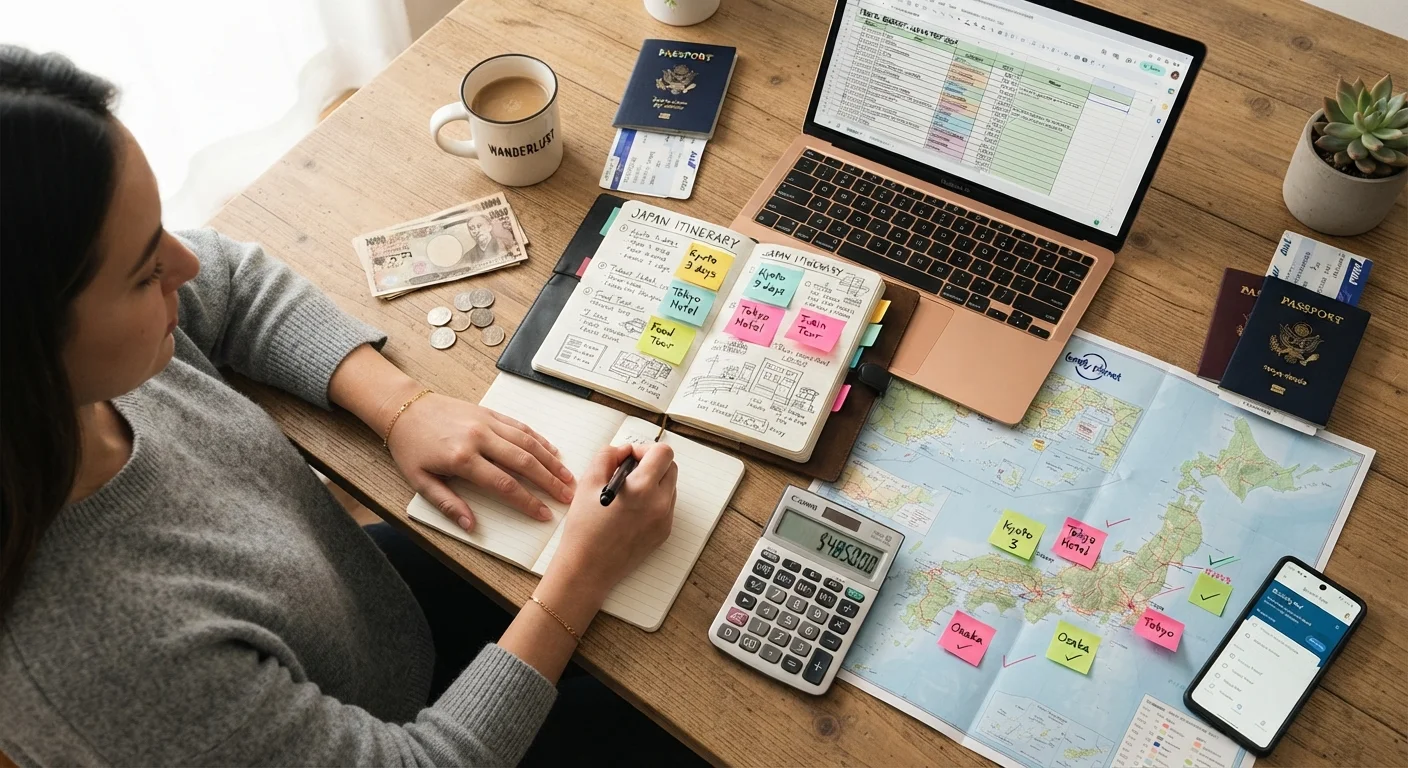
Key Takeaways
- Estimate all major cost categories — transport, lodging, food, and activities — before booking anything.
- Add a 15–20% buffer to your total estimate to cover unexpected or overlooked expenses.
- Flight price is rarely the true cost of getting somewhere; fees and transfers add up quickly.
- Daily food and activity costs vary widely by destination and should be researched specifically.
- A written budget forces clarity and prevents the wishful thinking that leads to overspending.
What you will need
Why Most Travel Budgets Fall Short
The typical travel budget mistake isn't overspending in one big category — it's underestimating several small ones simultaneously. Travelers often plan for flights and hotels, then discover on arrival that local transport, activity admissions, dining, and fees collectively push costs well past what they expected.
A structured budget built before any booking commits you to nothing but gives you an accurate picture of what a trip actually costs. It also reveals whether your dream trip is currently affordable or needs to be scaled or delayed. For a broader framework on managing travel costs, the Travel on a Budget hub is a useful companion resource, and the Budgeting Basics hub covers the foundational money-management habits that support any travel savings plan.
Budget First, Book Second
Booking flights or accommodation before completing a full budget estimate is one of the most common ways travelers end up overspending. Locking in a low airfare can feel like a win, but if you haven't accounted for lodging, food, and local transport, that deal can unravel fast. Complete your budget estimate — including a contingency buffer — before making any financial commitment.
The steps below walk you through each cost category in the order most travelers find useful — starting with the biggest line items and working toward the details. Use the tools and prerequisites listed to set yourself up before you begin.
What you will need
Spreadsheet application
Organize cost categories, record estimates, and track your running total as you research.
Flight search tools
Research realistic airfare ranges for your travel dates and route — for estimation only at this stage.
Accommodation search tools
Sample nightly rates across different lodging types to build an accurate lodging estimate.
Currency converter
Convert destination prices into USD so all estimates sit in the same currency.
Putting It All Together Before You Book
Work through each step below to build your estimate category by category. The goal isn't a perfect number — it's a realistic one that accounts for how you actually travel.
Define your trip parameters
Before you can estimate costs, you need a working framework: where you're going, how long you'll be away, and roughly how many people are traveling. Even approximate answers are enough to start. A 10-day international trip and a 4-day domestic road trip require entirely different budgeting approaches.
Write down your destination (or shortlist of destinations), intended travel dates, and trip length in nights. If dates are flexible, note that — flexibility can affect cost significantly, particularly for flights.
Estimate your transportation costs
Transportation typically represents the largest single line item in a travel budget. Start with your primary mode of getting there — usually a flight or train. Search actual fares for your intended dates using flight or rail tools, but don't book yet. Record the realistic midpoint of what you see, not the lowest possible outlier.
Then account for everything else: airport transfers, local transit passes, taxis or rideshares, car rental, tolls, and parking. These secondary transport costs are frequently underestimated. For international trips, also factor in checked baggage fees, which vary by airline and route. See our comparison of flying vs. train costs for a breakdown of the true costs of each option.
Research accommodation costs
Search for lodging in your destination for your specific dates and record the nightly rate range across a few realistic options — not just the cheapest listing available. Multiply your chosen nightly estimate by the number of nights you'll stay.
Consider the full spectrum of accommodation types: hotels, guesthouses, hostels, vacation rentals, and alternatives like home exchanges. Our guide to accommodation beyond hotels covers options that can significantly reduce this line item. Also factor in resort fees, city taxes, and cleaning fees, which may not appear in the headline rate.
Build a daily food and activity budget
Food and activities are the most variable part of any travel budget and the area where wishful thinking most often creeps in. Research your specific destination: a sit-down lunch in one city may cost $8; in another, the same meal costs $30.
Estimate a realistic daily food spend based on your typical eating habits — how often you'll cook versus eat out, whether you'll grab street food or prefer restaurants. Do the same for activities: look up admission costs for museums, tours, or experiences you actually want to do. Multiply each daily estimate by your number of days. For food-specific strategies, see eating well without overspending while traveling.
Add miscellaneous and often-missed costs
This category catches most travelers off guard. Include: travel insurance premiums, visa application fees, required vaccinations, currency conversion costs, souvenirs or shopping, tips and gratuities, and any gear or clothing you need to buy before the trip.
For international travel, foreign transaction fees on your card can quietly add 1–3% to every purchase. These line items individually seem small but collectively can add several hundred dollars to a trip total. Our article on hidden costs that blow travel budgets covers this territory in detail. Always verify entry requirements — including visas and health documentation — with official government sources, as these change and can vary by passport.
Add a contingency buffer and set your ceiling
Once you've totaled all categories, add 15–20% as a contingency buffer. This isn't pessimism — it's accuracy. Prices shift, plans change, and unexpected costs (a missed connection, a medical co-pay, a broken suitcase handle) are a normal part of travel. A buffer means these don't derail your trip or your finances.
Your final number is your working budget ceiling. If it exceeds what you're able to spend, revisit each category and adjust — fewer restaurant meals, a shorter trip length, or a different destination — rather than simply hoping costs come in lower than estimated. This is the moment to make deliberate trade-offs rather than optimistic guesses.
Use a Simple Spreadsheet to Stay Organized
You don't need budgeting software to do this well. A basic spreadsheet with columns for category, estimated cost, and actual cost is enough. Build it out as you research, and revisit it after each booking to keep your running total accurate. This habit also makes post-trip reflection easier — useful for planning future trips.
Once your budget is complete, compare it against the pre-trip budget planning checklist to catch any gaps before you make a single booking. For a full end-to-end planning walkthrough, the complete guide to planning a low-cost trip picks up where your budget estimate leaves off.
Don't Rely on "Average Cost" Estimates Alone
Generic per-day travel cost figures found online often reflect a specific travel style that may not match yours. A backpacker's daily spend and a mid-range traveler's daily spend in the same city can differ by 100% or more. Use destination-specific research and your own spending habits as the baseline, not broad averages.
This article provides general travel budgeting information for educational purposes. Prices, fees, visa requirements, and travel conditions change frequently. Always verify current costs and entry requirements through official government and provider sources before traveling.