

Key Takeaways
- Most large employers use Applicant Tracking Systems (ATS) that filter résumés automatically before human review.
- Common formatting errors, missing keywords, and file type mismatches can disqualify your application instantly.
- Tailoring each résumé to the specific job posting dramatically improves your chances of passing automated filters.
- Applying through the right channel — not just the easiest one — meaningfully affects whether your application is seen.
The Filter Most Applicants Never See
You spent hours polishing your résumé, wrote a thoughtful cover letter, and hit submit — then heard nothing. This isn't unusual. Research from hiring software firms has consistently found that the majority of résumés submitted to large employers are screened and discarded by software before a recruiter opens a single file.
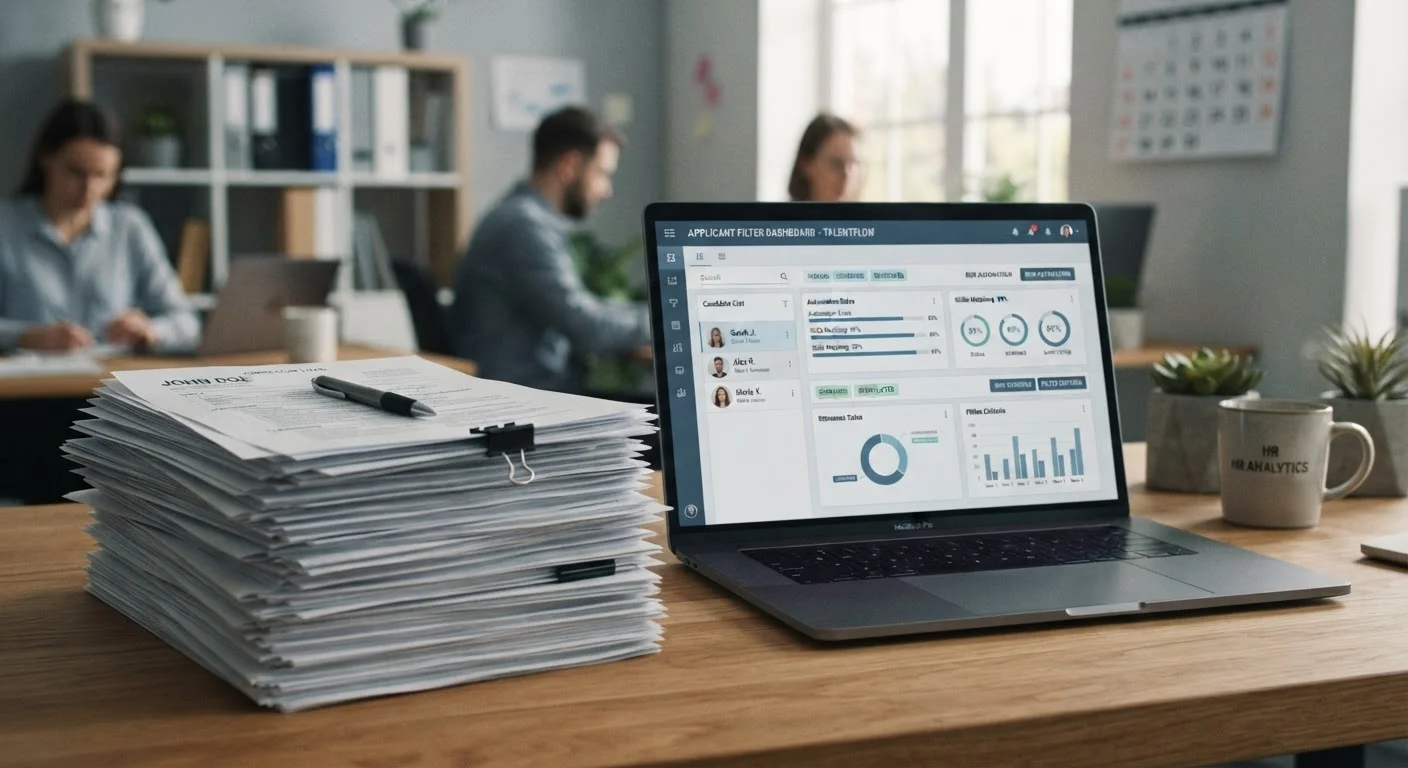
The culprit is the Applicant Tracking System (ATS) — software that parses, ranks, and filters applications automatically. Most companies with more than 50 employees use some form of it. The system isn't looking for the best candidate; it's looking for the closest match to a set of configured criteria. Understanding that distinction changes how you approach every application. For broader context on how today's hiring process actually works, see what's changed in modern job searching.
Using a visually complex résumé template with columns, tables, text boxes, or graphics.
Why it happens: Candidates want their résumé to stand out visually, and design-heavy templates look impressive on screen. Many popular résumé builders default to multi-column layouts.
Submitting a résumé in the wrong file format — for example, sending a .pages or .jpg file when the system expects a .docx or .pdf.
Why it happens: Applicants use whatever software they have and assume the content is what matters. Format requirements buried in job postings are easy to overlook.
Ignoring the specific keywords and phrases used in the job posting.
Why it happens: Job seekers write one general résumé and submit it widely to save time. Generic descriptions of past work rarely mirror the exact language a specific employer uses.
Listing skills or qualifications only in the cover letter, not in the résumé itself.
Why it happens: Applicants treat the cover letter as the place to elaborate, assuming recruiters will connect the dots. Many ATS platforms do not parse cover letters the same way they parse résumés — or at all.
Using non-standard section headers like "My Story" or "Where I've Made an Impact" instead of conventional labels.
Why it happens: Creative headers feel personal and memorable. Career coaches sometimes encourage unconventional framing to express personality.
How These Mistakes Play Out — and What to Do Instead
Each of the mistakes above shares a root cause: applicants optimize for how a résumé looks to a human reader without accounting for how software reads it first. A few practical habits fix most of these problems.
75%
Résumés filtered before human review
Industry estimates from ATS providers and HR research groups suggest roughly three in four résumés are screened out automatically at large employers.
7 seconds
Average recruiter scan time per résumé
Studies by hiring research firms have found recruiters spend as little as seven seconds on initial résumé review when applications do reach a human reader.
Start by treating the job posting as a matching document. Pull the exact language used for required skills and responsibilities, then reflect that language in your résumé — naturally, not stuffed. A title like "Client Success Manager" in the posting shouldn't become "Customer Relationship Specialist" on your résumé if the ATS is doing literal keyword matching.
Before submitting, always run your résumé through a plain-text test: paste it into a basic text editor. If it looks scrambled — broken bullet points, missing section headers, garbled dates — an ATS will struggle to parse it too. Fix what you see there. For a structured review before you submit anything, use this pre-submission checklist to catch what's easy to miss under pressure.
Finally, consider whether applying online is always the right first move. Direct outreach sometimes outperforms portal submissions — especially at smaller companies where there may not be an ATS at all. And once your résumé clears the filter, the work isn't over: tailoring your résumé content is what converts a screened application into an actual interview.
Keyword Stuffing Can Backfire
Some job seekers try to game ATS filters by pasting job description text in white font or cramming keywords into a hidden section. Modern ATS platforms are increasingly designed to detect this, and human reviewers who do open your résumé will see it immediately. Only include skills and keywords that accurately reflect your actual experience.