

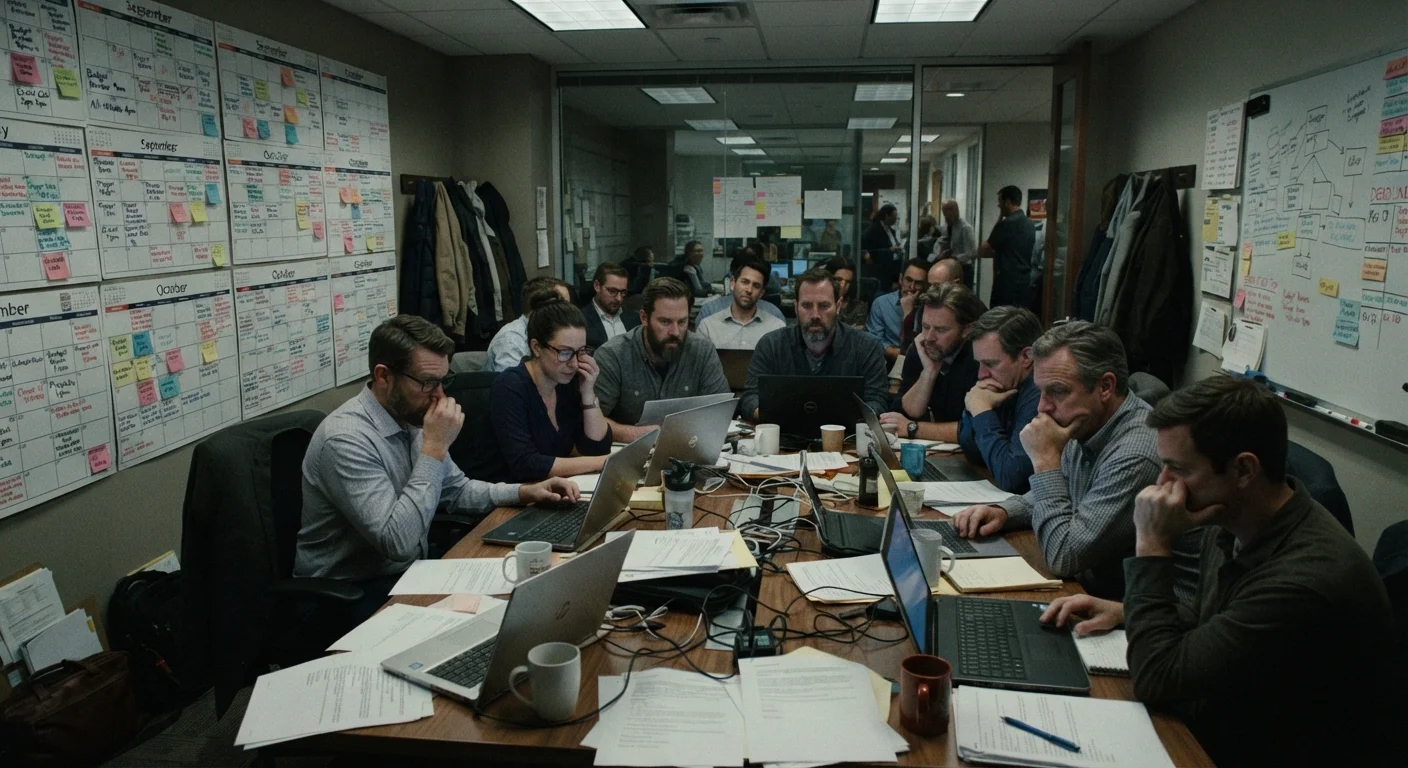
Key Takeaways
- Meetings are most valuable for decisions, conflict resolution, and complex real-time collaboration.
- A meeting without a clear agenda or decision-maker is usually a more expensive version of an email.
- Meeting overload is a structural problem — it requires organizational solutions, not just personal willpower.
- Async alternatives — written updates, shared docs, recorded walkthroughs — preserve deep work time.
- The hidden cost of meetings includes not just clock time but recovery time and lost focus.
Enables real-time decisions with immediate input
Complex decisions with multiple stakeholders benefit from live discussion, where objections can be raised and resolved on the spot rather than over days of back-and-forth email.
Surfaces misalignment before it becomes costly
A well-run meeting can expose conflicting assumptions early — the kind of misalignment that, left unaddressed, derails projects weeks later.
Builds trust and interpersonal connection
Especially in remote or hybrid teams, face-to-face (or video) time creates relational context that email and messaging can't fully replicate, supporting longer-term collaboration.
Effective for navigating conflict and sensitive topics
Tone, nuance, and empathy travel better in conversation than in text. Difficult feedback or team friction is better handled live, where misreading is less likely.
Supports brainstorming and creative problem-solving
When the goal is generating ideas rather than executing a defined task, the energy and spontaneity of live conversation often produces better outcomes than async alternatives.
Destroys deep focus time in chunks
A 30-minute meeting rarely costs just 30 minutes. Context-switching and mental re-entry mean a single mid-morning meeting can effectively eliminate productive focus for the entire first half of the day.
Hidden cost multiplies with every attendee
A one-hour meeting with eight people costs eight person-hours — the equivalent of a full workday. Most meeting organizers don't factor this in when deciding who to invite.
Status updates rarely require synchronous attendance
Much of what fills recurring meetings — project updates, metric reviews, team announcements — could be communicated faster and more effectively in writing.
Recurring meetings drift from their original purpose
A meeting created for a specific project often outlives that project, becoming a fixture on the calendar that no one audits or cancels even when the original need is gone.
Loud voices dominate, quieter perspectives get lost
Group discussions tend to favor more assertive participants, meaning async written formats often surface a wider and more considered range of input.
Creates false sense of productivity
A packed meeting calendar can feel like intense work while actual output stalls. The activity of attending meetings substitutes — psychologically — for the progress those meetings were meant to support.
Our Verdict
Meetings aren't inherently bad — they're the right tool for specific jobs. The problem is that most organizations treat them as the default rather than the last resort. Used intentionally, with a clear purpose and the right attendees, meetings accelerate decisions and build trust. Used carelessly, they consume the exact time and energy needed to do the work everyone gathered to discuss.
Workers and managers who want to reclaim focus time while keeping collaboration genuinely effective — not those looking to avoid accountability or hard conversations.
Why Meetings Multiply — and Why That's a Problem
Scheduling a meeting feels productive. It signals responsiveness, engagement, and team cohesion. But that feeling is often misleading. Research consistently shows that knowledge workers lose significant chunks of their week to meetings that could have been an email, a shared document, or a two-minute voice message.
The core issue isn't meetings themselves — it's that they've become the default response to uncertainty. When someone doesn't know how to move something forward, they schedule a meeting. When a manager feels disconnected from their team, they add a recurring check-in. Over time, these accumulate into calendars that leave almost no room for the focused work the meetings are supposedly supporting.
If you've ever wondered why your to-do list barely moves despite a full calendar, prioritisation breakdown at work is a key reason. Meetings interrupt the cognitive state needed to do complex tasks — and recovery time after interruption is real and measurable.
31 hrs
Average time in unproductive meetings per month
Estimates cited across workplace productivity research suggest knowledge workers lose roughly one full work week per month to meetings considered unproductive by participants.
67%
Workers saying meetings prevent them from doing real work
Surveys on workplace productivity, including data published by Atlassian, have found that a majority of workers view excessive meetings as a significant obstacle to focused output.
Where Meetings Actually Add Value
Criticizing meetings shouldn't mean eliminating them. There are situations where synchronous, real-time conversation is genuinely the most effective format.
Enables real-time decisions with immediate input
Complex decisions with multiple stakeholders benefit from live discussion, where objections can be raised and resolved on the spot rather than over days of back-and-forth email.
Surfaces misalignment before it becomes costly
A well-run meeting can expose conflicting assumptions early — the kind of misalignment that, left unaddressed, derails projects weeks later.
Builds trust and interpersonal connection
Especially in remote or hybrid teams, face-to-face (or video) time creates relational context that email and messaging can't fully replicate, supporting longer-term collaboration.
Effective for navigating conflict and sensitive topics
Tone, nuance, and empathy travel better in conversation than in text. Difficult feedback or team friction is better handled live, where misreading is less likely.
Supports brainstorming and creative problem-solving
When the goal is generating ideas rather than executing a defined task, the energy and spontaneity of live conversation often produces better outcomes than async alternatives.
The common thread across these use cases: they involve nuance, real-time adjustment, or relationship dynamics that written communication handles poorly. When stakes are high and misunderstanding is costly, a meeting earns its place on the calendar.
The Real Costs of Too Many Meetings
Every meeting carries a cost beyond the time shown on the calendar invite. Consider the full picture before scheduling.
Destroys deep focus time in chunks
A 30-minute meeting rarely costs just 30 minutes. Context-switching and mental re-entry mean a single mid-morning meeting can effectively eliminate productive focus for the entire first half of the day.
Hidden cost multiplies with every attendee
A one-hour meeting with eight people costs eight person-hours — the equivalent of a full workday. Most meeting organizers don't factor this in when deciding who to invite.
Status updates rarely require synchronous attendance
Much of what fills recurring meetings — project updates, metric reviews, team announcements — could be communicated faster and more effectively in writing.
Recurring meetings drift from their original purpose
A meeting created for a specific project often outlives that project, becoming a fixture on the calendar that no one audits or cancels even when the original need is gone.
Loud voices dominate, quieter perspectives get lost
Group discussions tend to favor more assertive participants, meaning async written formats often surface a wider and more considered range of input.
Creates false sense of productivity
A packed meeting calendar can feel like intense work while actual output stalls. The activity of attending meetings substitutes — psychologically — for the progress those meetings were meant to support.
These costs hit individual contributors hardest — especially deep-focus roles like engineers, writers, analysts, and researchers. For them, a day with four meetings isn't half a workday of meetings and half a workday of work. Fragmented time between meetings is rarely enough to enter the focused state their work requires.
Managers and leaders often underestimate this because their own work is more naturally interrupt-driven. Understanding that gap is essential before having a productive conversation.
The 'Meeting to Discuss the Meeting' Problem
One reliable signal that meeting culture has gone wrong: meetings are being scheduled to coordinate the logistics of other meetings, or to debrief meetings that already happened. This loop is a symptom of unclear ownership and decision-making authority. When no one knows who can actually close a discussion, more meetings get added to fill the gap — compounding the original problem rather than solving it.
Better Alternatives to the Default Meeting
For most status updates, information sharing, and straightforward decisions, async formats are faster and less disruptive:
- Written updates: A brief structured note (what's done, what's next, what's blocked) replaces most weekly check-ins.
- Shared documents with comments: Collaborative editing lets people respond on their own schedule without pulling everyone into a room.
- Recorded walkthroughs: Screen recordings with narration work well for project demos or onboarding — viewers can pause and rewatch.
- Decision memos: A short written proposal with a stated deadline for objections moves decisions forward without requiring a group call.
Choosing the right format for the right situation is itself a communication skill — and one that pairs well with a structured approach to time management. When deep work blocks are protected in advance, the pressure to fill every gap with meetings decreases naturally.
Making the Meetings You Do Have Worth It
When a meeting is the right call, structure determines whether it delivers. A few practices consistently separate effective meetings from wasted ones:
- Circulate an agenda in advance — even two bullet points help people arrive ready to contribute rather than orient.
- Name a decision-maker — collaborative input is useful, but someone needs the authority to close the discussion and commit to a direction.
- Invite the minimum viable attendee list — every additional person raises the meeting's cost and often reduces its quality.
- End with explicit next steps and owners — a meeting without documented action items is a conversation, not a decision.
- Respect the end time — consistently running over signals poor preparation and disrespects everyone's remaining schedule.
Meeting culture is a reflection of broader communication habits. Teams that communicate clearly in writing tend to have fewer meetings — and better ones. If your organization defaults to meetings out of habit rather than necessity, that's worth surfacing as a structural issue, not just a personal one.