

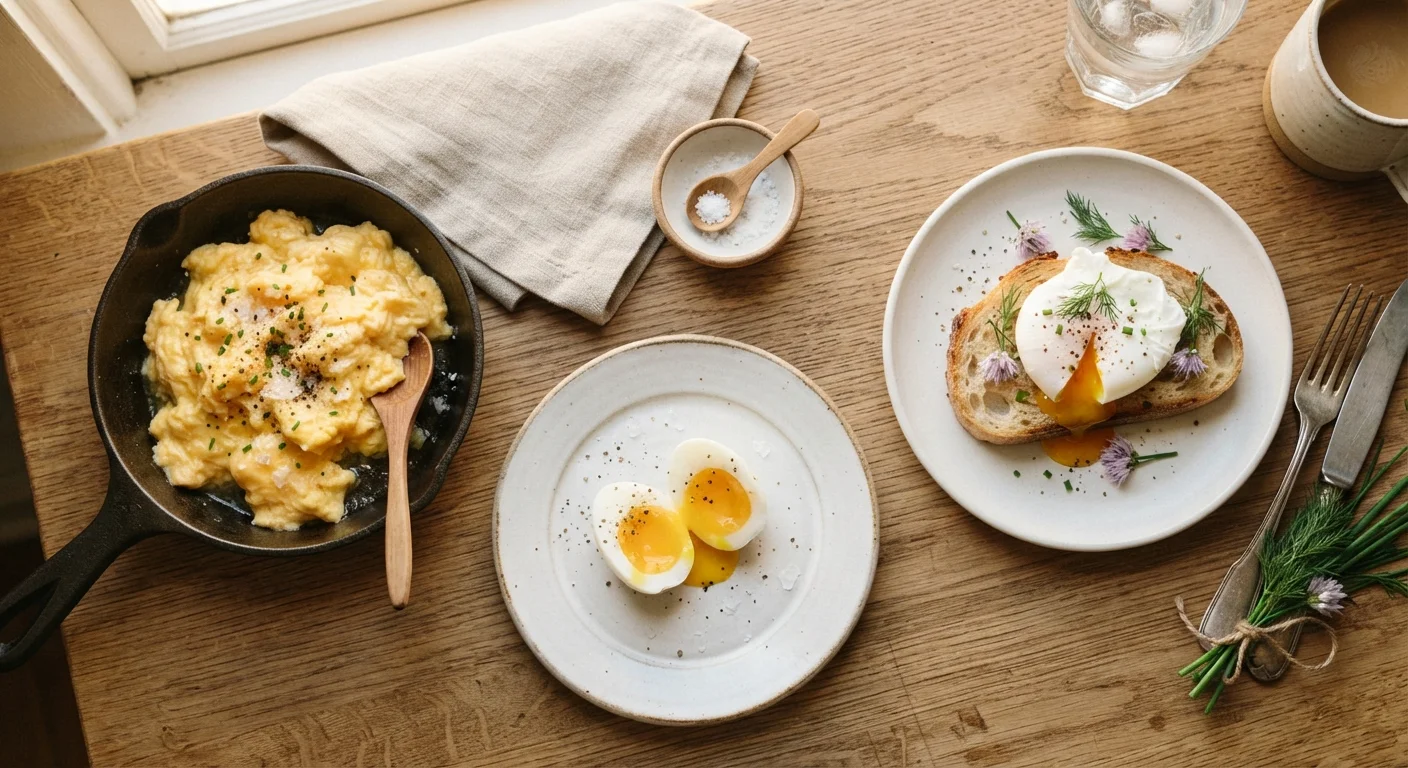
Key Takeaways
- Each egg cooking method teaches a transferable technique used across many other recipes.
- Low, steady heat is the single most common mistake to avoid when cooking eggs.
- Freshness and temperature of an egg noticeably affect the result of every method.
- Timing precision learned from soft-boiling applies directly to pasta, vegetables, and more.
- Understanding fat behavior from frying eggs prepares you for sautéing and pan sauces.
Why Eggs Are the Perfect Teaching Ingredient
Few ingredients reveal cooking skill — and cooking mistakes — as honestly as an egg. Crack one into a hot pan and within seconds you can see the effects of temperature, timing, and fat. That immediacy makes eggs an unmatched teaching tool for anyone new to the kitchen.
Eggs are also forgiving on the wallet and widely available, so a failed attempt costs almost nothing. Before you follow complex recipes, understanding eggs gives you a practical shorthand for the principles that show up in nearly every dish: heat management, timing, protein behavior, and moisture control.
If you're still building confidence in the kitchen, our guide to reading a recipe without getting lost is a helpful companion — it explains how to interpret instructions before you ever turn on the stove.
6g
Protein per large egg
According to the USDA, one large egg provides approximately 6 grams of complete protein, containing all essential amino acids.
4
Core techniques taught by eggs
Scrambling, poaching, boiling, and frying each represent a distinct category of cooking method applicable far beyond eggs.
~3 min
Time to cook scrambled eggs
Low-heat scrambled eggs take only a few minutes, making them one of the fastest ways to practice heat control in the kitchen.
Scrambled Eggs: Learning Heat Control
Scrambled eggs are the clearest demonstration of why heat level matters. High heat produces rubbery, weeping curds. Low, patient heat — stirring constantly — creates soft, creamy folds that hold together without drying out.
The technique: whisk eggs with a pinch of salt, then pour into a pan set over low-to-medium heat with a small amount of butter. Stir continuously with a spatula, moving eggs from the edges to the center. Remove from heat just before they look fully set — residual heat finishes the job.
This "carry-over cooking" principle applies to roasting meats, cooking fish, and finishing sauces. Pull the food slightly early; it keeps cooking off the heat.
Take your pan off the heat when the eggs are still slightly underdone — about 80% set. Residual heat in the pan will finish cooking them perfectly without overcooking.
Carry-over cooking is one of the most underused principles in home kitchens; understanding it prevents the rubbery, dry texture that discourages beginners from enjoying scrambled eggs.
Use a room-temperature egg whenever possible — cold eggs straight from the refrigerator are more likely to crack when boiled and can lower pan temperature when frying.
Temperature consistency is a fundamental of cooking proteins evenly; starting with an ingredient closer to cooking temperature reduces variance in results.
Season eggs before cooking, not after. Salt draws out a small amount of moisture, which actually helps produce a more tender curd when cooked gently.
Poached Eggs: Mastering Gentle Liquid Cooking
Poaching introduces you to sub-boiling liquid cooking — a technique used for delicate fish, dumplings, and fruit. The water should hover around 180°F (82°C): steaming, with small bubbles rising but no rolling boil.
Fresh eggs poach better because the whites are tighter and hold together. Add a splash of white vinegar to the water — it helps the whites set faster around the yolk. Swirl the water gently, slide the egg in from a small cup, and let it cook undisturbed for 3 to 4 minutes for a runny yolk.
Avoid a Rolling Boil When Poaching
Aggressively boiling water will shred egg whites before they have a chance to set around the yolk. Look for a gentle simmer — small bubbles, steaming surface — and maintain it throughout. If the water begins to boil hard, reduce the heat immediately or add a splash of cold water.
Learning to read simmering liquid — quiet versus aggressive — is a skill that carries into stock-making, braising, and steaming. If the water boils hard, lower the heat immediately; eggs (and most delicate proteins) tighten and toughen under aggressive heat.
Soft-Boiled Eggs: Timing Is Everything
A perfect soft-boiled egg — set white, jammy yolk — is entirely a function of time and consistency. Bring water to a full boil, lower eggs in gently, and set a timer for 6 to 7 minutes depending on egg size and your altitude. Transfer immediately to an ice bath to stop cooking.
This stop-the-cooking step is called shocking, and you'll use it for green vegetables, pasta salad, and blanched herbs. It locks in color, texture, and temperature simultaneously.
Soft-boiled eggs also make nutrition accessible and portable. For a broader look at how eggs fit into an everyday balanced diet, see our nutrition fundamentals guide.
Fried Eggs: Fat, Crust, and Basting
Frying an egg teaches you to read a pan and manage fat. A properly heated pan with butter or oil produces a white with crisp, lacy edges and a yolk that stays intact. Too little heat: a pale, steamed-looking egg that sticks. Too much: a scorched bottom with a raw center.
For a basted egg, tilt the pan and spoon hot fat over the yolk repeatedly — this sets the top gently without flipping. The same basting motion is used when finishing pan-seared fish or chicken, making it a technique worth practicing here first.
Set Up Before You Cook
Have your spatula, plate, and any toppings ready before the egg hits the pan. Fried and scrambled eggs cook in under three minutes, leaving no time to rummage for tools. This habit — called mise en place — will serve you in every recipe you ever follow.
Once you're comfortable with the stovetop, a well-organized workspace makes every technique smoother and faster. Our article on keeping a home kitchen organised covers practical setup habits for everyday cooks.
What These Techniques Teach You Beyond Eggs
Each egg method maps to a broader class of cooking techniques:
- Scrambling → low-heat protein cookery, custards, hollandaise
- Poaching → gentle liquid cooking, fish, dumplings
- Boiling with timing → pasta, vegetables, legumes
- Frying and basting → pan sauces, seared proteins, finishing with fat
When you understand why each technique works — not just how to follow the steps — you start to adapt rather than just copy recipes. Terms like "fold," "emulsify," or "reduce" become intuitive rather than intimidating. Our plain-language cooking glossary can help decode any vocabulary you encounter along the way.
Start with one method per session. Keep notes on what changed — heat level, timing, pan type. Eggs respond quickly and teach fast. Within a few weeks, you'll have built instincts that carry into everything else you cook.