

Key Takeaways
- Prep ingredients before cooking starts — a habit called mise en place — reduces mid-recipe panic.
- Grouping tools and ingredients by task cuts the time spent searching during busy meal prep.
- Clearing counters of non-kitchen items creates usable workspace without any renovation.
- Labelling and rotating pantry staples prevents waste and speeds up ingredient retrieval.
- A consistent clean-as-you-go routine prevents clutter from accumulating between meals.
Why Kitchen Organisation Matters More Than You Think
Most cooking frustration doesn't happen at the stove — it happens in the scramble before it. Hunting for a lid, realising the garlic is buried behind a stack of cans, or running out of counter space mid-chop are the small friction points that make cooking feel harder than it needs to be.
Organisation isn't about picture-perfect kitchens. It's about reducing the number of decisions and interruptions between you and a finished meal. Even modest improvements to your setup — grouping tools, clearing a workspace, prepping ahead — can make everyday cooking noticeably faster and calmer.
If you're also working on broader kitchen technique, pairing these habits with skills like confident knife work and reading recipes effectively will compound the benefits quickly.
Adopt mise en place before every cook
Mise en place (pronounced meez ahn plahs) is a French culinary term meaning "everything in its place." It describes the practice of measuring, chopping, and setting out every ingredient before heat hits the pan.
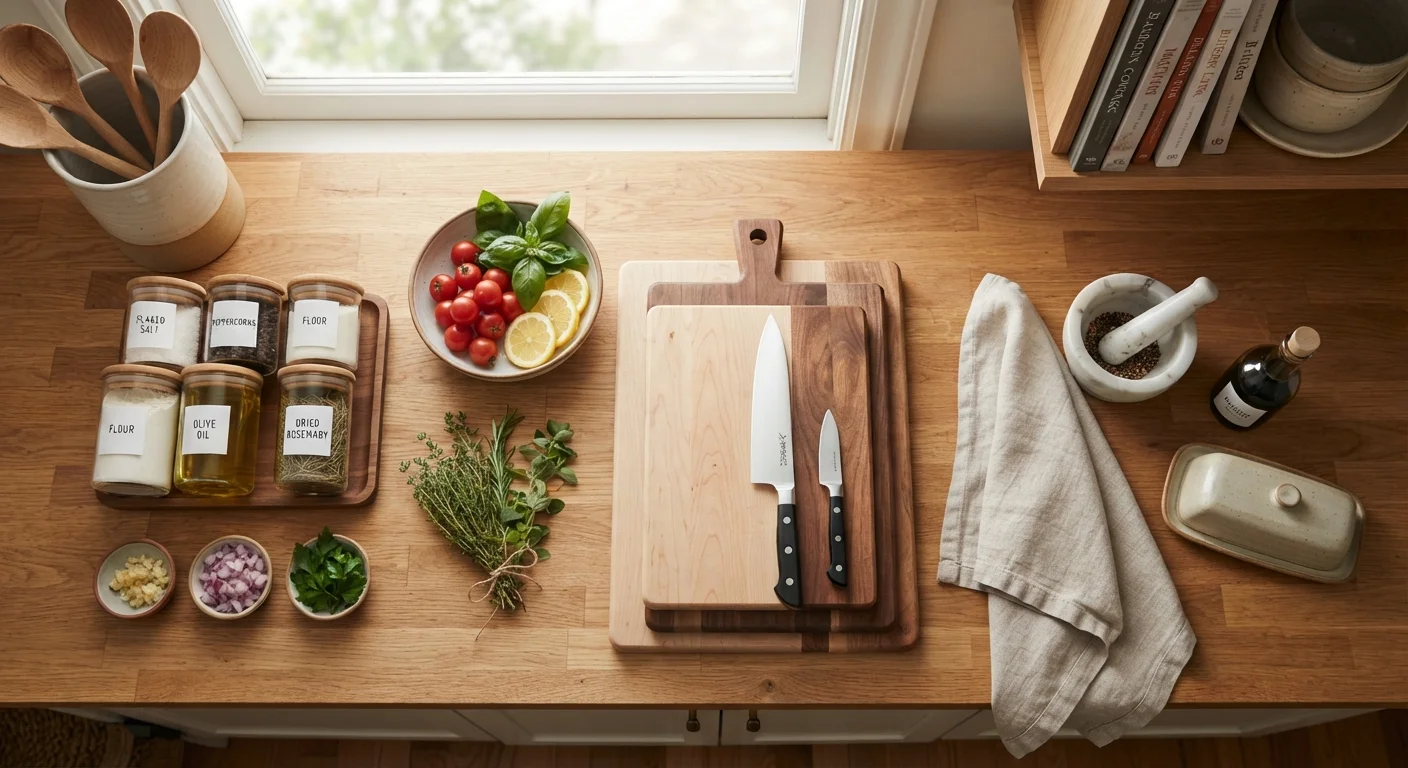
For home cooks, this means reading through the full recipe first, then prepping all ingredients into small bowls or piles on the cutting board before you begin. It feels slower at first, but it eliminates the frantic mid-cook scramble that leads to burnt garlic or missed steps.
Even for simple weeknight meals, a five-minute mise en place session makes the actual cooking feel effortless by comparison.
Prepping everything before cooking starts is the single habit that most reduces kitchen stress.
Clear your counter to create a real workspace
Counter space is cooking space. Appliances, mail, keys, decorative items — anything that doesn't serve an active cooking purpose during the week is eating into your usable area.
Identify which appliances you use daily (a coffee maker, a toaster) and keep only those out. Everything else earns a cupboard spot. Even gaining an extra foot of unobstructed counter can transform how manageable food prep feels.
If you're working with a compact kitchen, smart non-permanent storage solutions can help you reclaim space without any renovations.
Counter space is cooking space — protect it by storing anything that doesn't earn its place there.
Group tools and ingredients by task
Think in zones: a prep zone near the cutting board (knives, peeler, mixing bowls), a cooking zone near the stove (spatulas, tongs, oil, salt), and a plating zone near your serving area. When every tool lives where you use it, you stop walking back and forth across the kitchen.
Apply the same logic to pantry staples. Group baking ingredients together, canned goods together, and grains together. You'll stop buying duplicates of things you already own and find ingredients faster under pressure.
Zoning your kitchen by task means every reach is intentional — no more hunting mid-recipe.
Label and rotate your pantry
Labels are not fussy — they're functional. When dried herbs, grains, and baking staples are stored in similar-looking containers, labels eliminate guesswork and prevent the wrong ingredient from going into a dish.
Pair labelling with a simple rotation habit: when you bring home new pantry items, move the older ones to the front. This reduces waste and means you're always reaching for what needs to be used first.
Building a well-organised spice section pairs well with having the right spices to begin with — see our guide to building a first spice collection for a practical starting point.
Labelling similar containers and rotating stock are two small habits that prevent a surprising amount of waste.
Clean as you go — not after
The most common reason kitchens feel chaotic isn't the cooking — it's the accumulation of mess during it. A cutting board left unwashed, used utensils piling up, empty packaging left on the counter — by the time the meal is done, cleaning feels like a second job.
Clean-as-you-go is straightforward: rinse a bowl when you're done with it, wipe the cutting board between tasks, toss packaging immediately. The goal is to finish cooking with roughly as little mess as you started with, so the kitchen stays functional rather than becoming a source of dread.
Cleaning during cooking, not after, keeps the kitchen functional and prevents the post-meal dread spiral.
Do a weekly five-minute reset
At the end of each week, spend five minutes returning anything that has drifted out of place — check that zones are intact, wipe down shelves, and note what pantry items are running low before shopping.
This brief reset prevents entropy from gradually undoing the organisation you've built. It also gives you a moment to notice what's working and what isn't, so you can adjust your system rather than fighting it.
For more on how cleaning and clutter are different problems, it's worth understanding the distinction — tidying without a system rarely sticks.
A five-minute weekly reset is all it takes to keep an organised kitchen from slowly drifting back to chaos.
Build Habits That Actually Stick
Organisation is only useful if it's maintained. The good news is that the habits that keep a kitchen functional are mostly small and repeatable — not a weekend overhaul. Think of each tip above as a module: implement one or two at a time and let them settle before adding more.
Start with one zone, not the whole kitchen
Trying to reorganise everything in a single session is a fast path to frustration and abandonment. Pick one area — the spice drawer, the counter by the stove, the cutting board station — and get that working well before moving on. Small, stable improvements compound over time far better than a single dramatic overhaul.
For a longer-term view of what sustains an organised kitchen over months and years, see our kitchen habits that hold up over time. And if your whole home feels like it needs attention, the room-by-room decluttering guide offers a practical, low-pressure starting point.