

Key Takeaways
- Small, consistent habits prevent kitchen clutter from building back up after a big clean.
- Organising systems only work when they match how you actually cook and move in the space.
- A one-in, one-out rule for tools and pantry items reduces accumulation over time.
- Assigning a home to every item is the single most effective organisation principle.
- Weekly resets take less than 10 minutes and replace the need for marathon weekend sessions.
Why Most Kitchen Organisation Efforts Don't Last
Most people organise their kitchen once — usually in a burst of motivation — then watch it slowly drift back to chaos within weeks. The problem isn't the organisation itself. It's the absence of habits to maintain it.
A tidy kitchen isn't a destination you arrive at. It's the result of small, repeatable actions that become second nature over time. The good news: the most effective kitchen habits are low-effort. They don't require a full weekend or a drawer full of matching containers. They just need to happen consistently.
If you're also looking to build other kinds of sustainable routines, the same logic applies — our guide to habits that keep a budget running without constant willpower explores how systems beat willpower in almost every area of life.
Start With One Zone, Not the Whole Kitchen
Trying to reorganise everything at once is a reliable recipe for giving up halfway through. Pick a single zone — the spice shelf, the utensil drawer, or the fridge door — and get it right before moving on. A well-organised zone also makes the rest of the kitchen feel more manageable, which builds momentum naturally.
The Habits That Actually Hold Up
The practices below are ranked not by effort but by long-term durability — these are the ones that still work six months in, not just the week after a big clean-out.
Give every item a designated home and always return it there
When everything has a fixed location, you spend zero mental energy deciding where things go — and clutter stops accumulating. Misplaced items are the primary driver of kitchen chaos.
Apply a one-in, one-out rule for tools and pantry items
Kitchens accumulate tools and duplicates faster than almost any other room. A strict replacement rule keeps drawers manageable without requiring periodic purges.
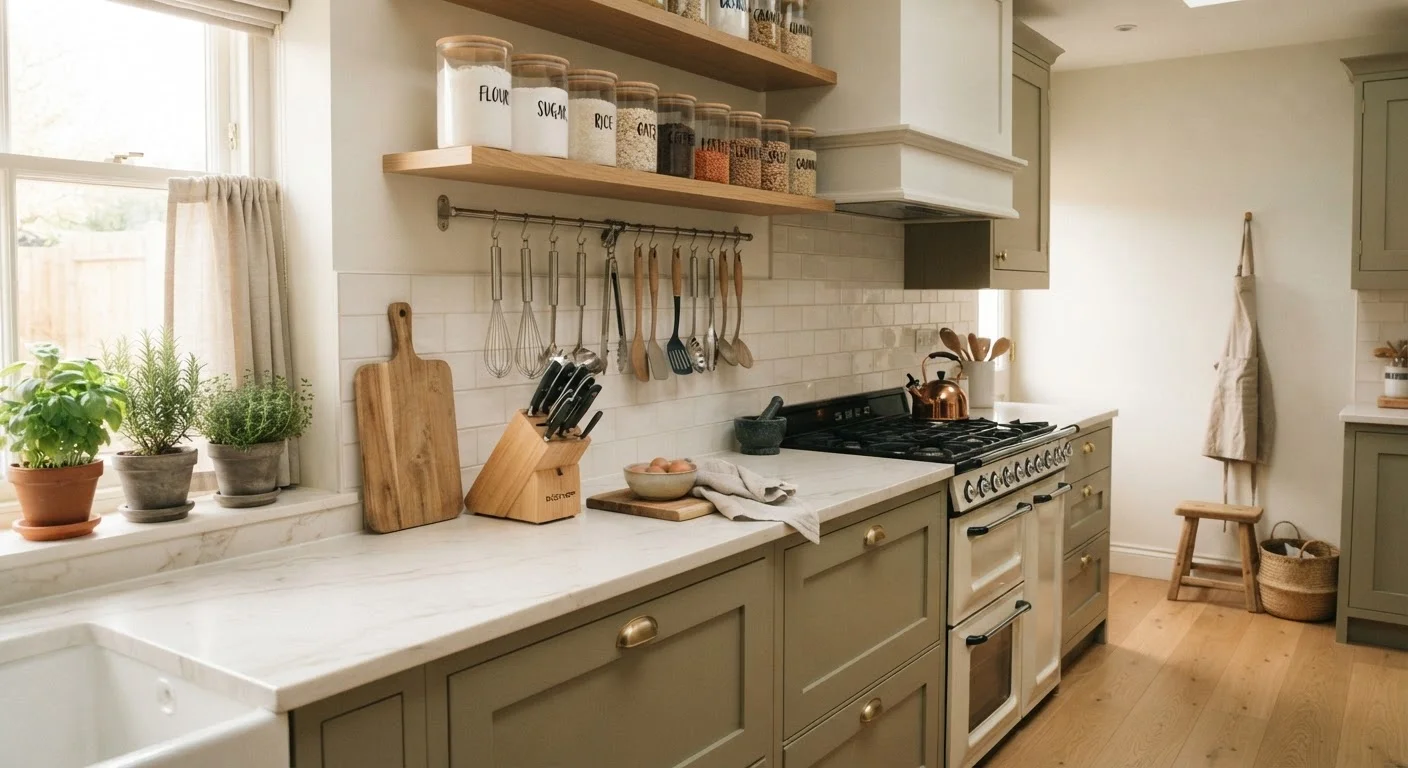
Decant frequently used pantry staples into clear, stackable containers
Visibility is the foundation of a functional pantry. When you can see what you have at a glance, you avoid buying duplicates and use ingredients before they expire.
Clean as you go during every cooking session
Wiping down surfaces and washing prep bowls between cooking steps prevents the post-meal pile-up that makes kitchens feel overwhelming. It also makes the final clean-up a two-minute task instead of a twenty-minute one.
Do a weekly five-minute pantry and fridge scan
A brief, regular check prevents forgotten ingredients from expiring, reduces food waste, and informs your weekly shopping list naturally.
Store items closest to where you use them
Proximity reduces friction. When cooking tools are stored near the stove and prep tools near the cutting area, you move through tasks more fluidly and are more likely to return items to their spot.
Quick Wins to Start This Week
You don't need to overhaul your whole kitchen to feel the difference. A few targeted actions can shift how the space feels and functions almost immediately. Pair these with your existing cooking basics for a kitchen that genuinely supports how you cook.
Keeping It Going Without Burnout
The secret to long-term kitchen order is lowering the stakes. Instead of waiting until things are overwhelming, build in a brief weekly reset — scan surfaces, return items to their designated spots, and check the pantry for anything close to expiring.
Pair your reset with something you already do, like a weekend coffee or a grocery order. Habit stacking — attaching a new behaviour to an existing one — dramatically improves follow-through. If your kitchen is also the heart of your meal prep, see our knife skills guide for ways to make prep itself faster and less messy.
Organisation Systems Should Fit Your Cooking Style
There's no universal layout that works for every kitchen or every cook. A household that batch-cooks on weekends has different storage priorities than one that cooks simple weeknight meals. Audit how you actually use your kitchen — not how you think you should — before locking in any system. The best organisation is the one you'll use without thinking.
For a broader approach to keeping your whole home tidy with minimal effort, a cleaning schedule that actually gets followed can help you build the same kind of low-friction routine across every room.