

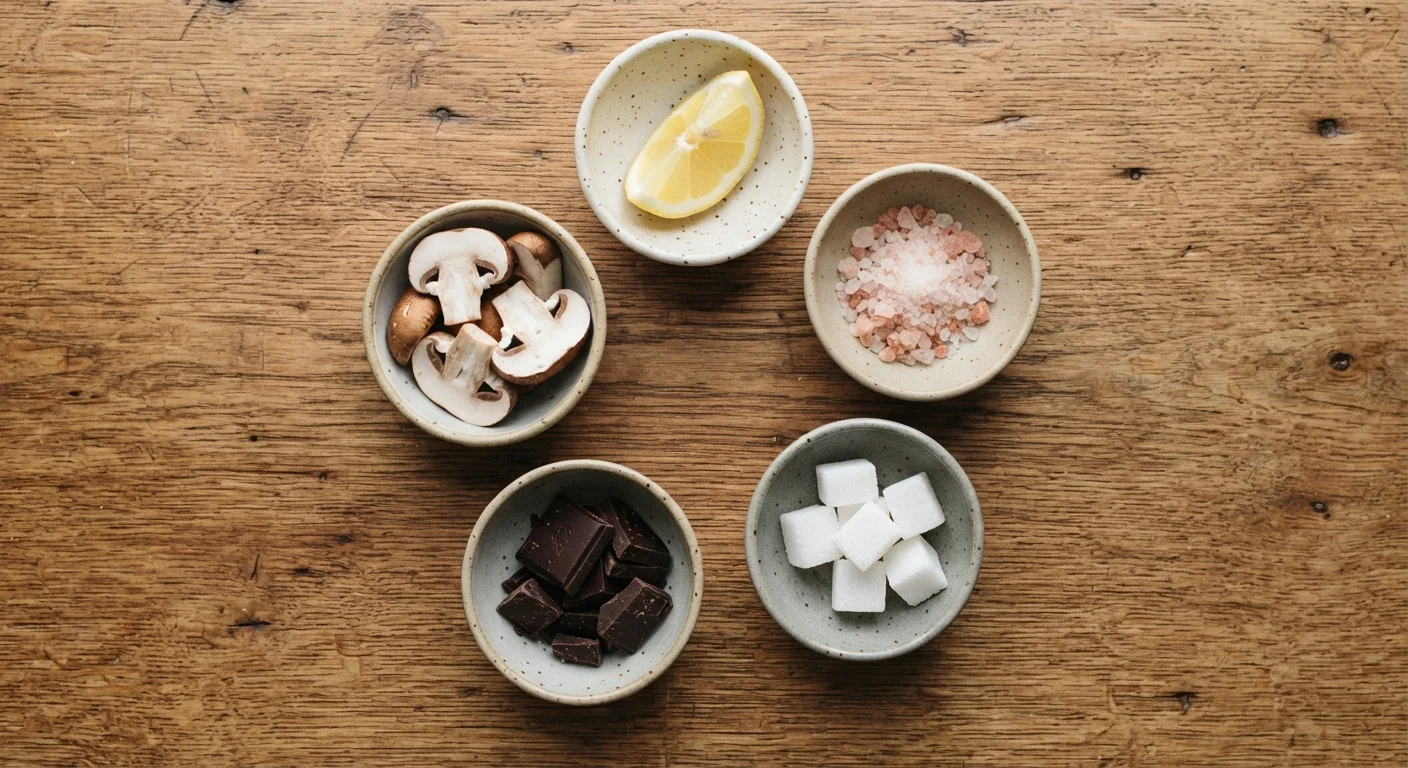
Key Takeaways
- There are five recognized basic tastes: sweet, sour, salty, bitter, and umami.
- Each taste plays a specific role in making food feel balanced and satisfying.
- Most seasoning problems can be solved by identifying which taste is missing.
- Umami is the most recently recognized basic taste and acts as a natural flavor amplifier.
- Acid (sour) and salt are the two most powerful tools for fixing a flat-tasting dish.
The Five Basic Tastes
The five basic tastes — sweet, sour, salty, bitter, and umami — are the primary sensations your taste buds detect when you eat. Together, they describe how flavor is perceived and categorized by the human palate. Understanding them helps you diagnose what a dish is missing and fix it with confidence.
Taste receptors on the tongue send signals to the brain that are interpreted as these five distinct categories; flavor — which also includes aroma, texture, and temperature — is a broader, more complex experience.
Why Taste Categories Matter for Home Cooks
Most beginners season food by instinct — a pinch of this, a splash of that — and hope for the best. Understanding the five basic tastes gives you a framework instead of a guess. When a dish falls flat, you can work through a short mental checklist rather than adding more of everything and hoping it improves.
Think of the five tastes as the levers on a mixing board. Each one affects how the others are perceived. Salt doesn't just make food taste saltier — it suppresses bitterness and amplifies sweetness. Acid doesn't just add sourness — it brightens flavors and makes them feel more vivid. Once you understand what each taste does, you start cooking with real control.
5
Officially recognized basic tastes
Sweet, sour, salty, bitter, and umami are the five tastes recognized by the scientific and culinary communities, with umami formally described in research from the early 20th century.
~10,000
Taste buds on the average adult tongue
According to general anatomy references, adults have roughly 10,000 taste buds, each containing receptor cells that detect the five basic taste categories.
1908
Year umami was first identified
Japanese chemist Kikunae Ikeda identified glutamate as the source of a distinct savory taste in 1908, laying the foundation for umami's recognition as a fifth basic taste.
A Closer Look at Each of the Five Tastes
Sweet
Sweetness signals energy-rich carbohydrates and is one of the most universally appealing tastes. In savory cooking, a small amount of sweetness — from caramelized onions, a touch of honey, or roasted vegetables — rounds out sharp or acidic flavors without making a dish taste like dessert.
Sour
Sourness comes from acids: citrus juice, vinegar, fermented foods, and yogurt are all common sources. Acid is one of the most powerful finishing tools in the kitchen. If a dish tastes dull or heavy, a small squeeze of lemon can snap it into focus instantly. Learn more about how acid balances flavor and when to reach for it.
Salty
Salt enhances virtually every other taste. It suppresses bitterness, boosts sweetness, and deepens overall flavor in a way no other ingredient can replicate. The timing of when you add salt also matters — salting at the right stage changes how it interacts with texture and moisture.
Bitter
Bitterness is often the most misunderstood taste because it's frequently associated with unpleasant or spoiled food. But controlled bitterness — from coffee, dark chocolate, arugula, radicchio, or citrus zest — adds complexity and contrast. Fat, salt, and sweetness can all soften bitter edges.
Umami
Umami (from the Japanese word for "savory" or "pleasant taste") is the deep, meaty, mouthwatering quality found in aged cheeses, mushrooms, tomato paste, soy sauce, fish sauce, and slow-cooked meats. It acts as a natural amplifier, making other flavors taste richer and more rounded. Layering umami sources is a simple way to add depth to vegetarian dishes. Understanding stock and broth is a good entry point, as both are rich umami foundations.
“Cooking is about balance — not just of flavors, but of the basic tastes that underlie them. Once you understand what each taste contributes, you stop guessing and start making real decisions.”
— Samin Nosrat, Author of 'Salt Fat Acid Heat', a widely referenced work on the fundamentals of cooking
Putting It Together: Balancing Taste in Practice
Balancing a dish means no single taste overwhelms the others. A classic example is a good vinaigrette: oil softens and carries flavor, vinegar adds brightness, a pinch of salt brings everything together, and a touch of mustard or honey mediates the sharpness. All five tastes aren't always present, but the balance between what is present feels deliberate.
When something tastes off, a useful tasting sequence is: add a small pinch of salt first, then try a few drops of acid, then consider whether a small amount of sweetness might round out any sharp edges. This systematic approach prevents over-seasoning and helps you identify the root cause rather than masking it.
Taste As You Go — Not Just at the End
The most effective habit for balancing taste is to taste your food at multiple stages of cooking, not just before serving. Salt added early behaves differently than salt added at the end, and acid added while something is still hot will integrate differently than a finishing squeeze. Building this habit makes diagnosing imbalance much easier.
As your confidence grows, you'll find yourself reaching for a core spice collection that adds dimension across multiple taste categories at once — many spices touch bitterness, warmth, and umami simultaneously. And if kitchen vocabulary ever feels like a barrier, our plain-language cooking terms guide has you covered.