

Key Takeaways
- Salt timing affects not just flavour but also texture and moisture retention in food.
- Salting early gives seasoning time to penetrate; salting late keeps surfaces crisp.
- Pasta water, brines, and dry rubs each use salt differently and for different reasons.
- Over-salting is easier to avoid when you add salt in small amounts at multiple stages.
- Understanding salt's role helps you season confidently without relying on the shaker at the table.
Why Salt Timing Is a Real Skill
Most beginner cooks treat salt as a finishing move — something you shake on at the end. But experienced cooks think of salt as a process that runs alongside cooking itself. Add it too late and it sits on the surface. Add it at the right moment and it works its way into the food, deepening flavour from the inside out.
Salt does several things beyond making food taste salty. It draws out moisture through osmosis, which matters when you're trying to brown vegetables or crisp a piece of skin. It also interacts with proteins, helping them retain juices during cooking when applied early enough. Getting the timing right is less about following rigid rules and more about understanding what you want the salt to do at each stage.
This is one of the foundational ideas in cooking — right alongside knowing how heat works. If you're also building your seasoning confidence, our guide on building a first spice collection covers how to work with herbs and spices alongside salt effectively.
Salting Meat: Earlier Than You Think
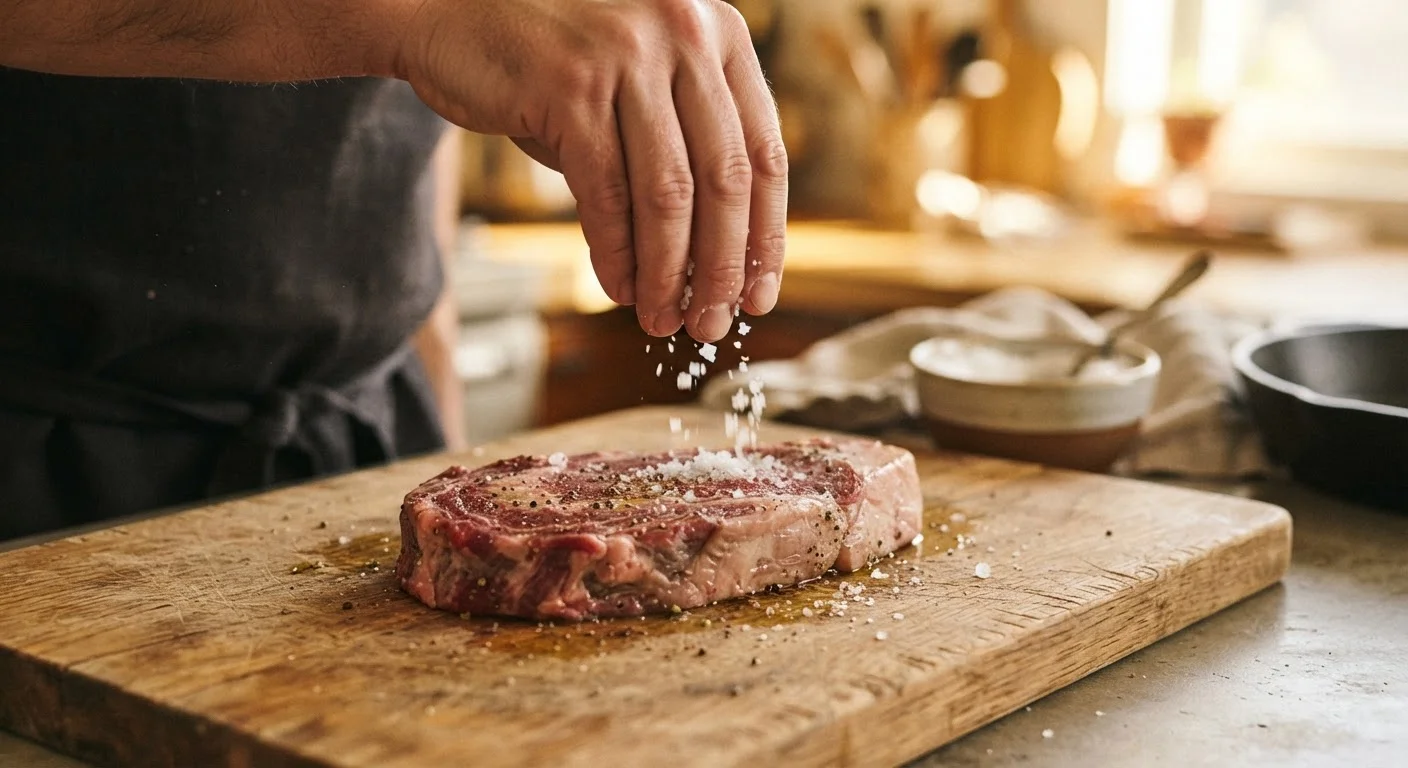
For most cuts of meat, salting well before cooking — ideally 45 minutes to several hours ahead — produces noticeably better results than salting right before the pan. Here's why: salt initially draws moisture to the surface, but given enough time, that moisture is reabsorbed along with the dissolved salt, seasoning the meat throughout.
If you salt and cook immediately (within about 10 minutes), that surface moisture hasn't had time to reabsorb, which can inhibit browning. The Maillard reaction — the chemical process that creates a golden, flavourful crust — works best on a relatively dry surface. So either salt early (30+ minutes out) or pat the surface dry before it hits the pan.
Salt meat at least 30–45 minutes before cooking — or the night before for thick cuts.
Early salting allows moisture drawn out by osmosis to be reabsorbed into the meat with dissolved salt, seasoning it from within. This also means the surface is drier when it hits the pan, which supports better browning.
Season pasta water generously before adding pasta.
Pasta has almost no opportunity to absorb seasoning once it's cooked and sauced. The cooking water is the primary way to build flavour into the pasta itself.
Taste and adjust salt at multiple points during cooking, not just at the end.
Salt added in stages allows you to build flavour gradually and reduces the risk of over-salting. It also gives you feedback about how the dish is developing.
Salt high-moisture vegetables before cooking to draw out water when needed.
Vegetables like eggplant and zucchini hold a lot of water, which can cause steaming rather than browning in a hot pan. Pre-salting and draining helps achieve a better texture.
Hold back on added salt when using store-bought stock, bouillon, or canned ingredients.
Many packaged staples are already high in sodium. Adding more salt on top without tasting first is a common cause of over-salted soups and braises.
For context on how different heat methods interact with these principles, see our breakdown of sautéing vs. pan-frying. And once meat is cooked, resting it properly is the other step most home cooks skip.
Vegetables, Pasta, and Soups: Different Rules Apply
Vegetables benefit from salt, but timing varies by cooking method. When roasting or sautéing, salt draws out surface moisture — which can be a problem if you want caramelisation, since too much moisture steams instead of browns. Salt right before cooking or halfway through, depending on how wet the vegetable is. Zucchini and eggplant, for example, benefit from salting and draining before cooking to remove excess water. For more on this, our article on why onions never caramelise properly touches on similar moisture dynamics.
Pasta water is its own category. The water should taste noticeably salty — many cooks describe it as "like the sea," though a moderate amount of salt is sufficient. Pasta absorbs water as it cooks, so this is your only real chance to season the pasta itself, not just the sauce. A common guideline is roughly 1–2 teaspoons of salt per quart of water, but taste as you go.
Soups and braises are forgiving. Because the liquid is part of the final dish, you can adjust salt throughout the cooking process. Salt lightly at the start, taste regularly, and correct toward the end. If you're using a store-bought stock or bouillon — which can be high in sodium — hold back on additional salt until you've tasted the base. Our guide on stock, broth, and bouillon explains what's in each and how sodium levels differ.
Taste Before You Salt — Every Time
Build the habit of tasting a dish before adding salt at any stage. Your palate is a more reliable guide than a fixed measurement, and it keeps you from compounding seasoning mistakes. Add salt in small pinches, stir, wait a few seconds, then taste again — flavour takes a moment to settle.
Avoiding Over-Salting and Fixing Flat Flavour
Over-salting is hard to reverse — you can dilute with more liquid or unsalted ingredients, but there's no reliable shortcut. The safest approach is to add salt in small amounts at multiple stages rather than one heavy dose at the end.
On the other side, food that tastes flat isn't always under-salted. Sometimes it needs acid — a squeeze of lemon or a splash of vinegar — which lifts and brightens flavour in a way more salt cannot. Our article on using acid to fix a flat dish walks through when to reach for acid instead of the salt shaker.
If you're monitoring overall sodium intake, understanding how much salt you're adding during cooking is one piece of the picture. Packaged ingredients contribute significantly too — our guide on reading sodium on food labels helps you account for that in everyday meal planning.
This article is for general informational purposes. For personalised dietary guidance, including sodium intake recommendations for specific health conditions, consult a qualified healthcare or nutrition professional.