

Key Takeaways
- The FDA's daily reference value for sodium is 2,300 mg for adults — about one teaspoon of table salt.
- The % Daily Value (%DV) on a label shows how one serving contributes to that daily limit.
- 5% DV or less is considered low sodium; 20% DV or more is considered high.
- Sodium hides in many unexpected foods, including bread, canned soup, and breakfast cereal.
- Serving size is critical: eating multiple servings multiplies the sodium total accordingly.
Sodium on Food Labels
Sodium is a mineral listed in milligrams (mg) on the Nutrition Facts panel of packaged foods. It tells you how much sodium — the primary component of table salt — is in one serving of that product. The number matters because consuming too much sodium over time is associated with elevated blood pressure and related health risks.
Sodium and salt are not the same thing: table salt (sodium chloride) is roughly 40% sodium by weight, so 1,000 mg of sodium equals about 2,500 mg (2.5 g) of salt.
Where Sodium Appears on the Label — and What to Look For
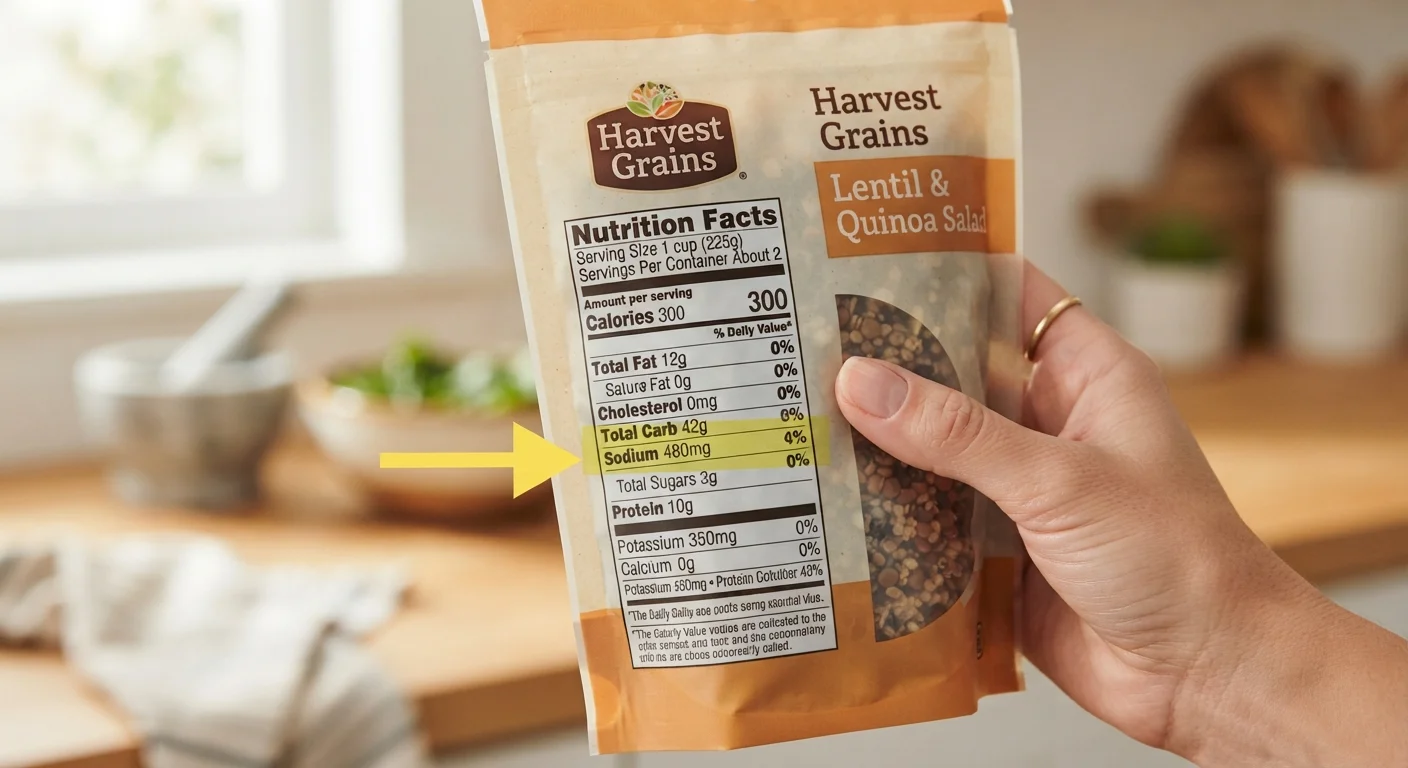
Every Nutrition Facts panel required by the FDA lists sodium in milligrams directly below the potassium line. Two numbers appear side by side: the milligram amount and the % Daily Value (%DV). Both are based on a single serving of the product — not the whole package.
That serving size distinction is critical. A can of soup might list 890 mg of sodium, but if the label defines the serving as half a can and you eat the whole thing, you've consumed 1,780 mg — more than three-quarters of the daily reference value in one sitting. For a full walkthrough of every row on the label, see Reading a Nutrition Facts Panel Without Getting Lost.
The FDA's daily reference value is 2,300 mg of sodium per day for adults. Use the %DV as a quick benchmark:
- 5% DV or less — low in sodium
- 6–19% DV — moderate; worth noting if eating several servings
- 20% DV or more — high in sodium
2,300 mg
FDA daily sodium reference value for adults
This is the benchmark used to calculate the % Daily Value figures printed on all Nutrition Facts panels in the United States.
~70%
Share of dietary sodium from packaged and restaurant foods
According to the FDA, the majority of Americans' sodium intake comes from processed and prepared foods, not from salt added at the table.
140 mg
Maximum sodium per serving for a 'low sodium' claim
This regulatory ceiling, set by the FDA, defines the legal threshold a product must meet to carry a 'low sodium' label on its packaging.
Sodium Claims on Packaging: What the Terms Actually Mean
Front-of-pack phrases can be reassuring — or misleading. The FDA regulates these terms precisely, so understanding their definitions prevents confusion at the shelf.
- Sodium-free
- Less than 5 mg per serving.
- Very low sodium
- 35 mg or less per serving.
- Low sodium
- 140 mg or less per serving.
- Reduced sodium
- At least 25% less sodium than the original product — but not necessarily low overall.
- Lightly salted
- At least 50% less sodium than would normally be added, with a statement that the food is not low sodium if it isn't.
- Unsalted / No salt added
- No salt was added during processing, but the food may still contain naturally occurring sodium.
This last point trips up many shoppers: "no salt added" canned tomatoes still contain natural sodium from the tomatoes themselves. The claim refers only to processing, not to total sodium content. For more on how label claims work across the board, see what front-of-pack nutrition claims actually mean.
Quick Comparison Trick at the Store
When comparing two similar products, look at sodium per 100g rather than per serving — serving sizes vary between brands, making direct comparisons tricky. If the label only shows per-serving figures, divide the mg by the serving weight in grams, then multiply by 100 to get a consistent number. This single habit makes side-by-side shopping much more accurate.
Hidden Sodium: Foods That Surprise Most Shoppers
Salty-tasting foods are easy to flag. The harder challenge is sodium that doesn't announce itself — the kind lurking in everyday staples.
The pattern across these foods is that sodium serves a functional role beyond flavour: it acts as a preservative, texture agent, and leavening aid. Knowing which categories tend to run high helps you read labels more strategically rather than reacting only to taste.
For context on how salt functions in cooking and why recipes call for it at specific stages, see Salt in Cooking: When to Add It and Why It Matters. To understand the broader picture of how sodium fits into a balanced diet, the Nutrition Basics hub is a useful starting point.
This article is for general informational purposes only and is not a substitute for personalised medical or dietary advice. If you have concerns about your sodium intake or cardiovascular health, speak with a qualified healthcare professional.