

Key Takeaways
- Serving size is the foundation of every other number on the label — always check it first.
- The % Daily Value column tells you whether a nutrient is high or low relative to a 2,000-calorie reference diet.
- Saturated fat, sodium, and added sugars are the three nutrients most worth limiting for general health.
- Fiber, vitamins, and minerals listed at the bottom are nutrients most people benefit from getting more of.
- Ingredient lists complement the nutrition panel — ingredients appear in order of weight, heaviest first.
What you will need
Why the Nutrition Facts Panel Exists
The Nutrition Facts panel is a federally standardized label required on most packaged foods sold in the United States. Introduced by the FDA and last significantly updated in 2016, the label is designed to give shoppers consistent, comparable information regardless of brand or product. Think of it as a snapshot of what you're actually eating — not a grade on a food, but a data point you can use.
That said, the panel can feel overwhelming at first glance: rows of numbers, unfamiliar units, and percentages that don't immediately add up. This guide walks through each section in the order it appears, so you can move from top to bottom without losing your place. For a broader look at label language — including front-of-package claims — see what food labels are actually telling you.
What you will need
Reading the Label, Row by Row
Follow the steps below using any packaged food you have on hand. A cereal box, a can of soup, or a bag of snacks all work well for practice.
Start with serving size and servings per container
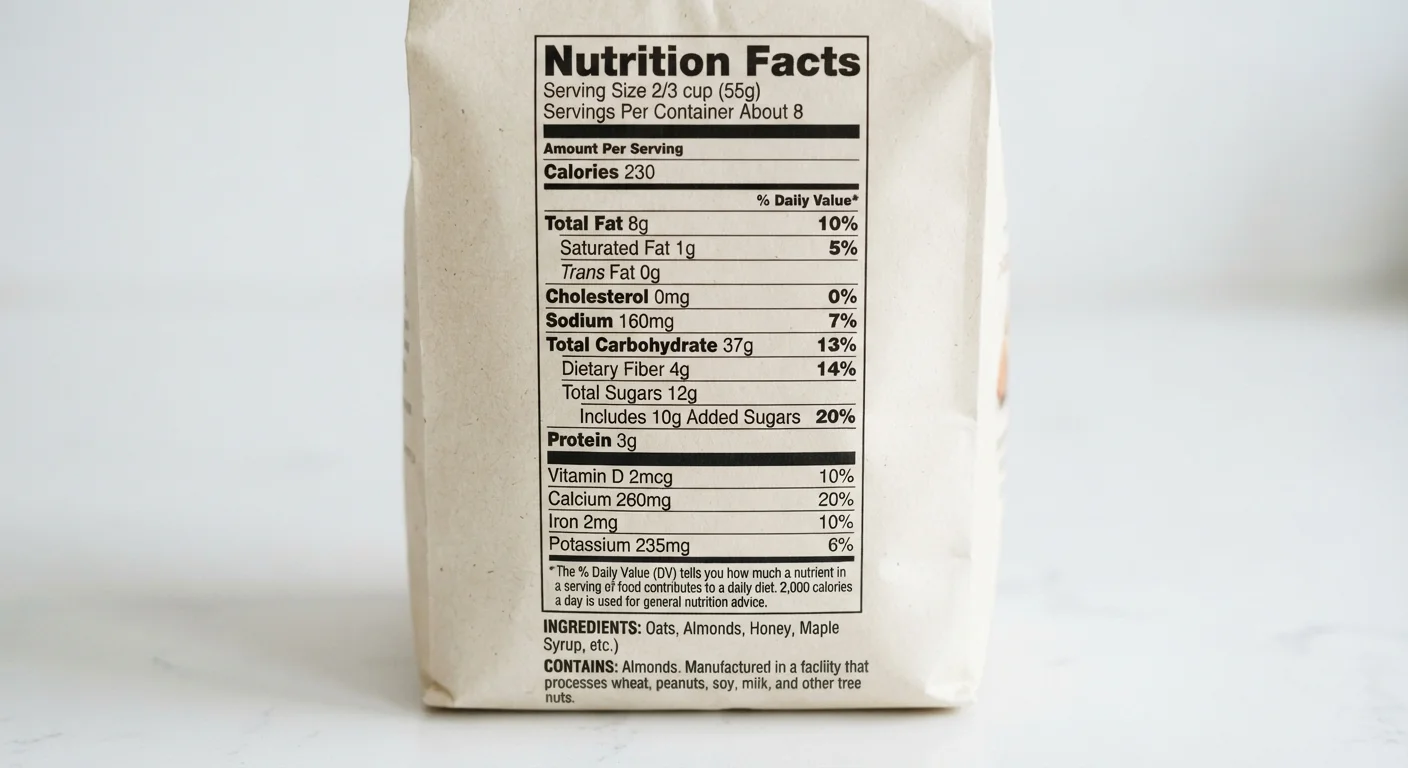
The very first lines — Serving Size and Servings Per Container — set the scale for every other number on the label. Every calorie count, every gram of fat, every milligram of sodium applies to one serving, not the whole package.
Serving size is listed in common household units (e.g., "1 cup" or "3 crackers") followed by the metric weight in grams. If you eat twice the serving size, double every figure on the label.
Read the calorie count in context
The large bold Calories number tells you how much energy one serving provides. The FDA's general guidance uses 2,000 calories per day as a reference point, though actual needs vary based on age, sex, activity level, and health status.
Calories alone don't tell you whether a food is nutritious — a serving of almonds and a serving of candy may have similar calorie counts but very different nutrient profiles.
Check the nutrients to limit: fat, sodium, and added sugars
The next block covers fats, cholesterol, sodium, and carbohydrates — the nutrients the FDA highlights because many Americans consume them in excess.
- Total Fat breaks down into Saturated Fat and Trans Fat. Saturated fat is worth watching; trans fat should be as close to zero as possible.
- Sodium is listed in milligrams. The Dietary Guidelines for Americans reference a limit of 2,300 mg per day for most adults.
- Total Carbohydrate includes Dietary Fiber, Total Sugars, and — critically — Added Sugars. Added sugars are sugars introduced during processing, separate from those naturally present in fruit or dairy.
Look for nutrients to get enough of
Below the carbohydrate section, the label lists Protein and then key micronutrients: Vitamin D, Calcium, Iron, and Potassium. These appear because many Americans fall short of adequate intake.
Protein grams are listed without a % Daily Value because protein needs vary widely. For the vitamins and minerals, a higher % Daily Value is generally favorable.
Decode the % Daily Value column
The % Daily Value (%DV) column appears on the right side of the label. It shows how much of each nutrient one serving contributes toward a standard daily reference intake based on a 2,000-calorie diet.
A useful rule of thumb from the FDA: 5% DV or less is considered low for a nutrient; 20% DV or more is considered high. Use this to quickly flag whether a food is a significant source of something you want more of — or something you're trying to limit.
Glance at the ingredient list as a complement
The ingredient list isn't part of the Nutrition Facts panel, but it sits directly below or beside it and adds important context. Ingredients are listed in descending order by weight — the first ingredient is present in the largest amount.
If a sweetener (sugar, corn syrup, honey, etc.) appears in the first two or three positions, that food is likely high in added sugars even if the packaging emphasizes other qualities. Use the ingredient list alongside the panel, not instead of it.
Use the %DV as a Quick Compass
You don't need to memorize daily gram targets for every nutrient. The % Daily Value column does the math for you. Aim for higher %DV on fiber, vitamins, and minerals; lower %DV on saturated fat, sodium, and added sugars. This single column makes label comparison fast and practical.
Once you're comfortable reading individual labels, a practical nutrition self-audit checklist can help you spot patterns across your whole diet.
Common Pitfalls and How to Avoid Them
Even careful readers run into a few recurring traps. The most common: assuming the whole package equals one serving. A bottle of juice or a small bag of chips often contains two or three servings. Multiply every number by the number of servings you actually consume.
A second pitfall is fixating on a single nutrient — calories, for example — while ignoring the rest. Calories matter for energy balance, but they don't capture fiber, vitamins, or the type of fat present. Our guide on whether calories are a useful tool or an oversimplification explores this tension in more depth.
Sodium is another easily overlooked figure. A food can seem modest in fat and sugar yet be very high in sodium — a concern worth understanding if you're managing blood pressure or simply watching intake. See our in-depth look at sodium on food labels for guidance.
Front-of-Package Claims Can Mislead
Words like "natural," "multigrain," or "light" on the front of a package are marketing terms, not regulated nutrition claims in the same way the Nutrition Facts panel is. Always turn the package over and read the actual label before drawing conclusions about a food's nutritional value.
This article is for general informational purposes only and is not a substitute for advice from a registered dietitian or other qualified healthcare professional. Individual nutrition needs vary; consult a professional before making significant dietary changes, especially if you have a medical condition.