

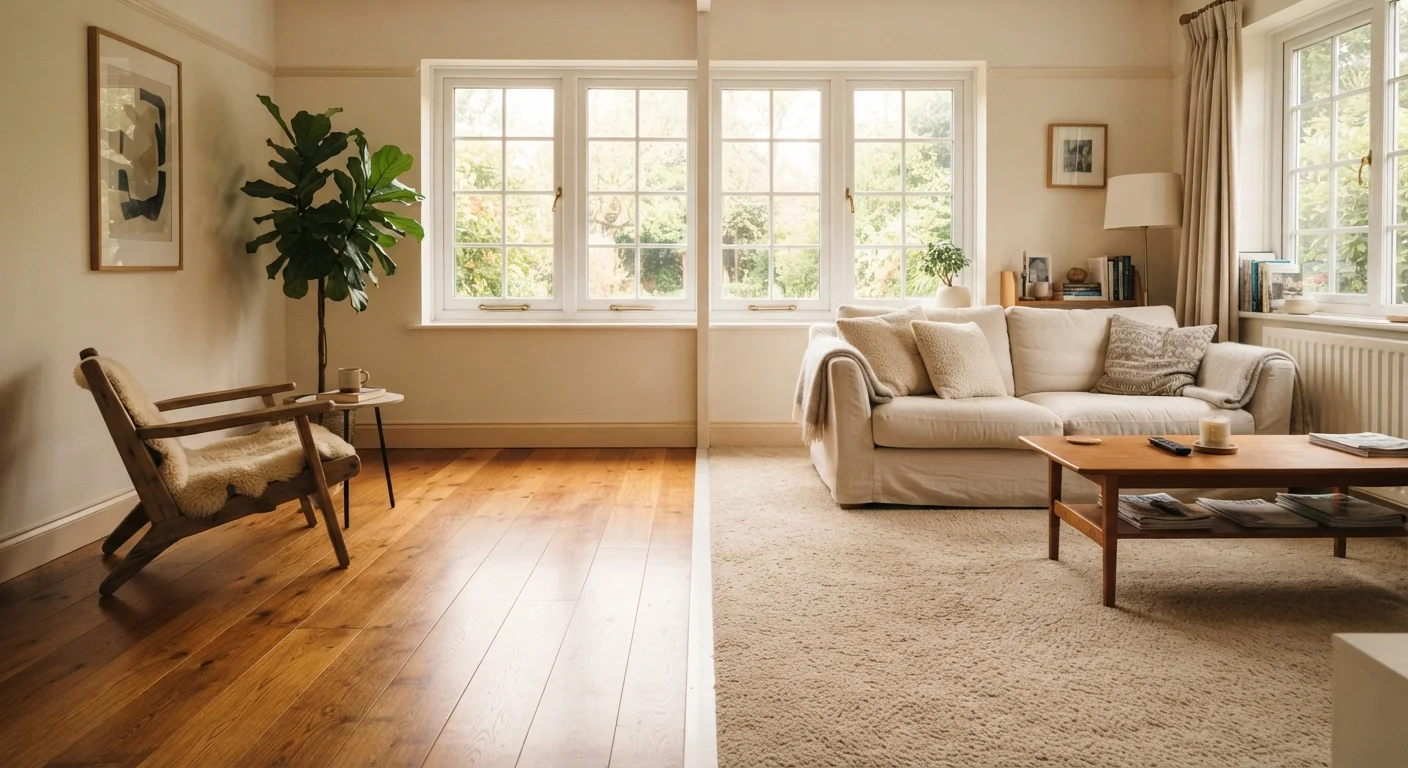
Key Takeaways
- Hardwood floors are easier to clean daily but require periodic refinishing to maintain their surface.
- Carpet provides superior sound absorption and warmth underfoot, especially in cooler climates.
- Carpet traps allergens more readily and requires deeper cleaning to stay hygienic.
- Hardwood can last decades with proper care; carpet typically needs replacement every 8–15 years.
- The right choice depends heavily on room use, household members, and your cleaning habits.
Option A
Hardwood Floors
The durable, timeless surface with straightforward long-term care.
Best for: Households that prioritise easy cleaning, durability, and a consistent look across living spaces.
Option B
Carpet
The soft, noise-absorbing choice for comfort-first rooms.
Best for: Bedrooms, family rooms, or homes with young children where warmth and cushioning underfoot matter most.
If you want the lowest daily cleaning effort
Hardwood Floors
Sweeping and damp-mopping removes most debris quickly. There are no fibers to trap dirt, pet hair, or spills.
If you have young children or need a softer surface
Carpet
Carpet cushions falls and creates a warmer play surface. It also reduces noise transmission between rooms.
If someone in your home has allergies or asthma
Hardwood Floors
Hard surfaces don't harbor dust mites and allergens the way carpet fibers do, making routine cleaning more effective.
If you want long-term durability without replacement
Hardwood Floors
Quality hardwood can be refinished multiple times and realistically last 50 or more years in a well-maintained home.
If upfront cost and noise reduction are your priorities
Carpet
Carpet is generally less expensive to install and significantly reduces echo and impact noise in busy rooms.
Comfort and Feel Underfoot
Comfort is one of the first things people notice when they step into a room — and flooring plays a surprisingly large role in it. Hardwood floors offer a firm, stable surface that feels clean and open. That solidity appeals to many people, but it can feel cold and unforgiving during winter months or in rooms where you stand for long periods.
Carpet delivers genuine cushioning. The padded underlayer absorbs pressure, reduces fatigue on joints, and retains warmth — particularly important in bedrooms or finished basements where barefoot comfort matters most. In rooms shared by children or older adults, that softness also reduces injury risk from minor slips.
Sound is another comfort factor worth weighing. Hardwood reflects noise, which can make open-plan spaces feel louder and echoey. Carpet absorbs sound effectively, lowering both airborne noise (conversation, TV) and impact noise (footsteps). If you live in a multi-level home or share walls with neighbors, carpet in key rooms can noticeably reduce noise transfer.
8–15 years
Average carpet replacement cycle
The Carpet and Rug Institute notes that replacement timelines vary significantly based on fiber type, traffic, and maintenance habits.
50%+
Noise reduction potential with carpet
Carpet and padding systems can reduce impact sound transmission by more than half compared to hard surface floors, according to flooring industry testing standards.
For a fuller picture of how flooring fits into overall home comfort, see Home Comfort From the Ground Up.
Cleaning and Maintenance Over Time
Day-to-day upkeep is where hardwood has a clear practical edge. Spills wipe up quickly, pet hair is visible and easy to sweep, and there are no fibers to trap fine dust or debris. A dry mop or vacuum handles most daily needs. The main periodic task is refinishing — sanding and resealing the surface — which can restore badly scratched hardwood and is typically needed every 7–10 years depending on traffic and finish type.
Carpet demands more frequent deep attention. Vacuuming at least once or twice a week prevents ground-in dirt from degrading fibers. Stains require prompt action and the right cleaning method for the fiber type. Professional steam cleaning is generally recommended every 12–18 months to remove embedded grime, bacteria, and allergens that routine vacuuming can't reach.
| Criterion | Hardwood Floors | Carpet |
|---|---|---|
| Daily cleaning effort | Low — sweep or dry mop | Moderate — vacuum 1–2x weekly |
| Deep cleaning frequency | Occasional damp mop | Professional clean every 12–18 months |
| Warmth underfoot | Cool, especially in winter | Warm and cushioned year-round |
| Noise absorption | Low — reflects sound | High — absorbs impact and airborne noise |
| Allergen management | Easier — fewer fibers to trap dust | Harder — fibers trap allergens |
| Typical lifespan | 50+ years with refinishing | 8–15 years |
| Stain resistance | Good with sealed finish | Varies by fiber; more vulnerable |
| Installation cost | Generally higher | Generally lower |
Understanding the difference between surface upkeep and deeper cleaning efforts matters for any flooring type. Deep Clean vs. Regular Maintenance breaks down when each type of effort is actually warranted.
Durability, Lifespan, and Practical Trade-offs
Hardwood flooring, when properly maintained, can last the lifetime of a home. Solid hardwood can be refinished multiple times, making surface damage a manageable rather than permanent problem. Engineered hardwood offers similar aesthetics with better resistance to humidity fluctuations, though it can typically be refinished fewer times.
Carpet has a shorter practical lifespan. Most residential carpet needs replacement every 8–15 years, depending on fiber quality, traffic level, and how well it's maintained. High-traffic areas like hallways and stairs tend to wear and flatten faster. Carpet is also more vulnerable to permanent staining from oils, dyes, and pet accidents.
One practical consideration is installation cost. Carpet tends to cost less to install initially, which makes it an accessible choice for large areas or rental properties. Hardwood carries a higher upfront cost but can pay dividends in longevity and property value over time — though it's worth noting that real estate outcomes vary and are never guaranteed.
Both flooring types are available in a wide range of quality levels, and the specific product, installation quality, and your household's habits will ultimately matter as much as the material category itself.
A Note on Humidity and Climate
Solid hardwood is sensitive to changes in humidity and temperature. In climates with very high humidity or in below-grade spaces like basements, hardwood can warp or buckle without proper moisture management. Engineered hardwood or alternative hard flooring options tend to perform more reliably in these conditions. Carpet, while less sensitive to humidity changes structurally, can develop mold or mildew if moisture is trapped beneath it — a risk in basements or poorly ventilated spaces.