

Key Takeaways
- Rug size matters more than color — undersized rugs visually shrink a room.
- Mirrors placed opposite light sources can double the perceived brightness of a space.
- Vertical elements like tall curtains and bookshelves draw the eye upward, making ceilings feel higher.
- Clearing just the floor perimeter creates an immediate sense of openness without deep decluttering.
- Warm, layered lighting reduces the flat, cramped feeling that a single overhead bulb creates.
Why Small Rooms Feel Smaller Than They Are
Square footage is fixed — but how spacious a room feels is surprisingly flexible. The difference between a cramped space and a comfortable one often comes down to a handful of low-cost adjustments that work with how our eyes and brains perceive depth, light, and boundary.
These aren't decorating tricks for aesthetics alone. Research in environmental psychology suggests that perceived spaciousness affects mood, focus, and how relaxed we feel at home. If a room consistently feels tight or heavy, that friction adds up. The good news is that most of the fixes are genuinely simple — no renovation required.
If you've ever tidied a room and still felt like something was off, you're not imagining it. Clutter and visual noise are different problems — and layout, light, and proportion play a bigger role than surface cleanliness.
Choose a rug that's actually large enough
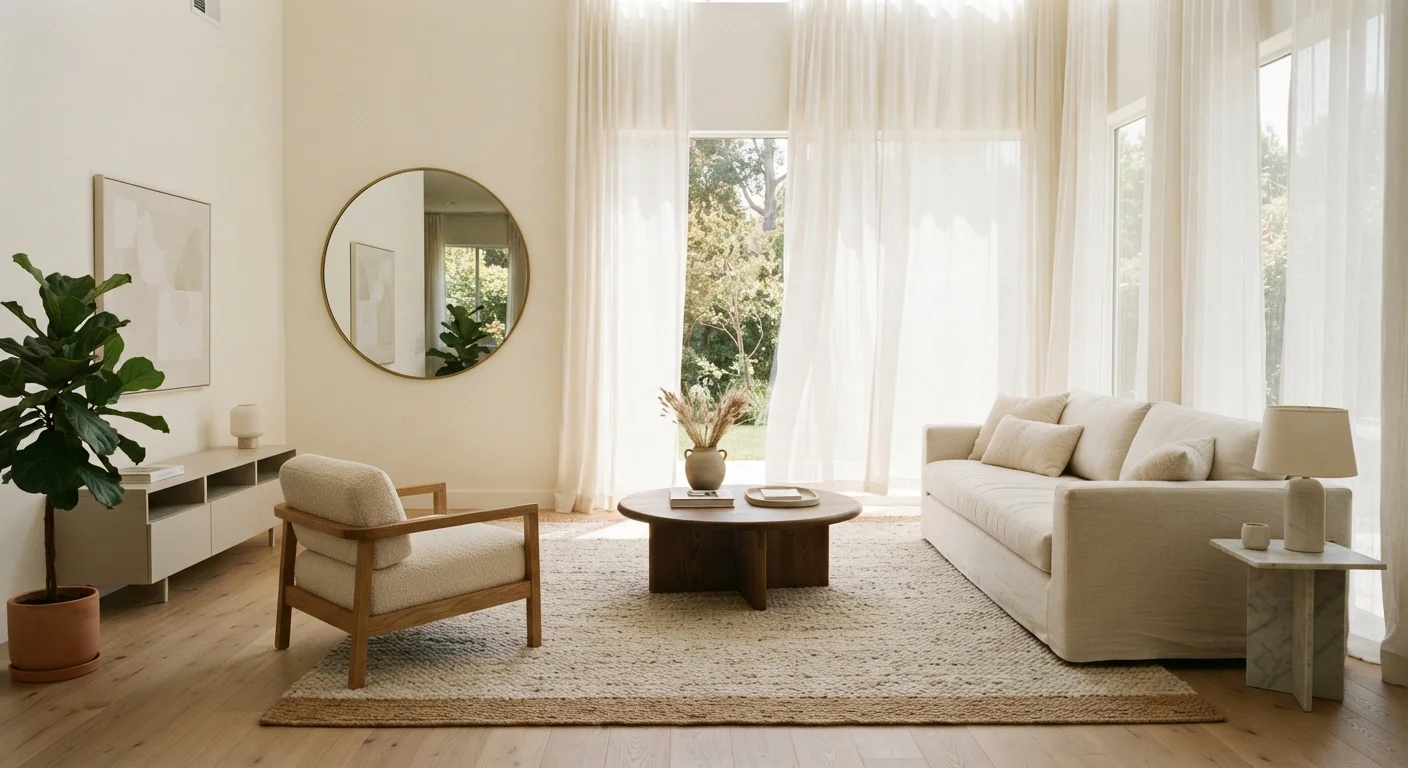
One of the most common mistakes in small rooms is using a rug that's too small. A tiny rug floating in the middle of a floor makes the room feel fragmented and the furniture feel unanchored. The goal is for at least the front legs of all major seating to sit on the rug — ideally all four legs of each piece.
In a living room, a rug that fits entirely under the sofa and chairs creates a defined, cohesive zone. In a bedroom, a rug that extends 18–24 inches beyond the sides of the bed grounds the whole space. When in doubt, go larger — it's one of the most reliable ways to make a room read as more intentional and open.
A rug that's too small fragments a room; going larger anchors furniture and opens the space.
Place mirrors opposite or adjacent to natural light sources
Mirrors don't create space — they reflect it, which can be just as effective for perception. The key is placement. A mirror positioned directly across from a window bounces daylight deeper into a room and makes it feel as though there's another opening in the wall.
Even a large mirror leaning against a wall rather than hung can do the job. For narrow hallways or dark corners, a mirror is often the single highest-impact change you can make without touching anything structural.
A mirror opposite a window effectively doubles the light a room receives.
Hang curtains high and wide
Where curtains are mounted changes the entire perceived geometry of a room. Hanging curtain rods close to the ceiling — rather than just above the window frame — draws the eye upward and makes walls feel taller. Extending the rod 6–10 inches beyond the window frame on each side means curtains stack off the glass when open, letting in maximum light and making the window look larger than it is.
Sheer or linen-weight fabrics in light, neutral tones are especially effective because they soften the boundary between inside and outside without blocking daylight.
Ceiling-height curtain rods add the illusion of taller walls for the cost of a bracket.
Clear the perimeter of the floor
You don't have to declutter an entire room to change how it feels. Clearing just the edges of the floor — the baseboards and corners — creates a visual breathing room that signals openness. Items stacked along walls, bags left by the door, and furniture pushed against every available surface all compress the perceived size of a space.
A room-by-room decluttering approach can help if floor clutter is persistent. But even as a first pass, pulling a few items away from the walls makes an immediate difference you can see the same day.
Clearing just the floor perimeter creates an immediate sense of openness without a full overhaul.
Layer lighting instead of relying on a single overhead source
A single overhead bulb casts flat, even light that tends to make rooms feel smaller and more institutional. Layered lighting — combining ambient overhead light with floor lamps, table lamps, and task lights — creates pools of warm light that give a room depth and dimension.
Warmer color temperatures (around 2700–3000 Kelvin on most bulb packaging) tend to feel more comfortable and cozy than cool, bright white light. Switching a single lamp and keeping overhead lights lower in the evening is enough to noticeably shift how a room feels at night.
Layered warm lighting gives a room depth that a single overhead bulb simply can't replicate.
Use vertical space to draw the eye upward
Low, wide furniture arrangements emphasize the horizontal and can make ceilings feel lower. Introducing one or two vertical elements — a tall bookcase, a floor-to-ceiling shelving unit, a cluster of wall art arranged vertically — shifts where the eye naturally lands and creates a sense of height.
Even something as simple as stacking books vertically on a shelf rather than laying them flat, or hanging one piece of art higher than feels instinctive, can contribute to this effect. The principle is about directing attention up rather than out.
Vertical elements guide the eye upward, making even low ceilings feel taller and less confining.
Putting It All Together
None of these changes require structural work, a designer, or a large budget. The most effective approach is to start with one or two that address your room's most obvious weak points — usually light or rug sizing — and observe the difference before adding more layers.
If storage is what's making your space feel crowded, flexible storage solutions can free up floor and surface area without a single nail in the wall. And if you share your home with others, balancing different comfort needs is worth thinking through before rearranging shared spaces.
Start With One Change, Not Six
It's tempting to try multiple adjustments at once, but making one change at a time helps you see what's actually working. Start with the fix most relevant to your room's biggest issue — usually lighting or rug size — and give it a few days before deciding whether you need to add more. This approach also makes it far easier on your budget.
Small rooms don't need to feel like a compromise. With a few deliberate adjustments, most spaces can feel noticeably calmer and more open — and that's worth far more than any quick-fix decor purchase.