

Key Takeaways
- The plate method divides your dish into simple visual zones — no measuring required.
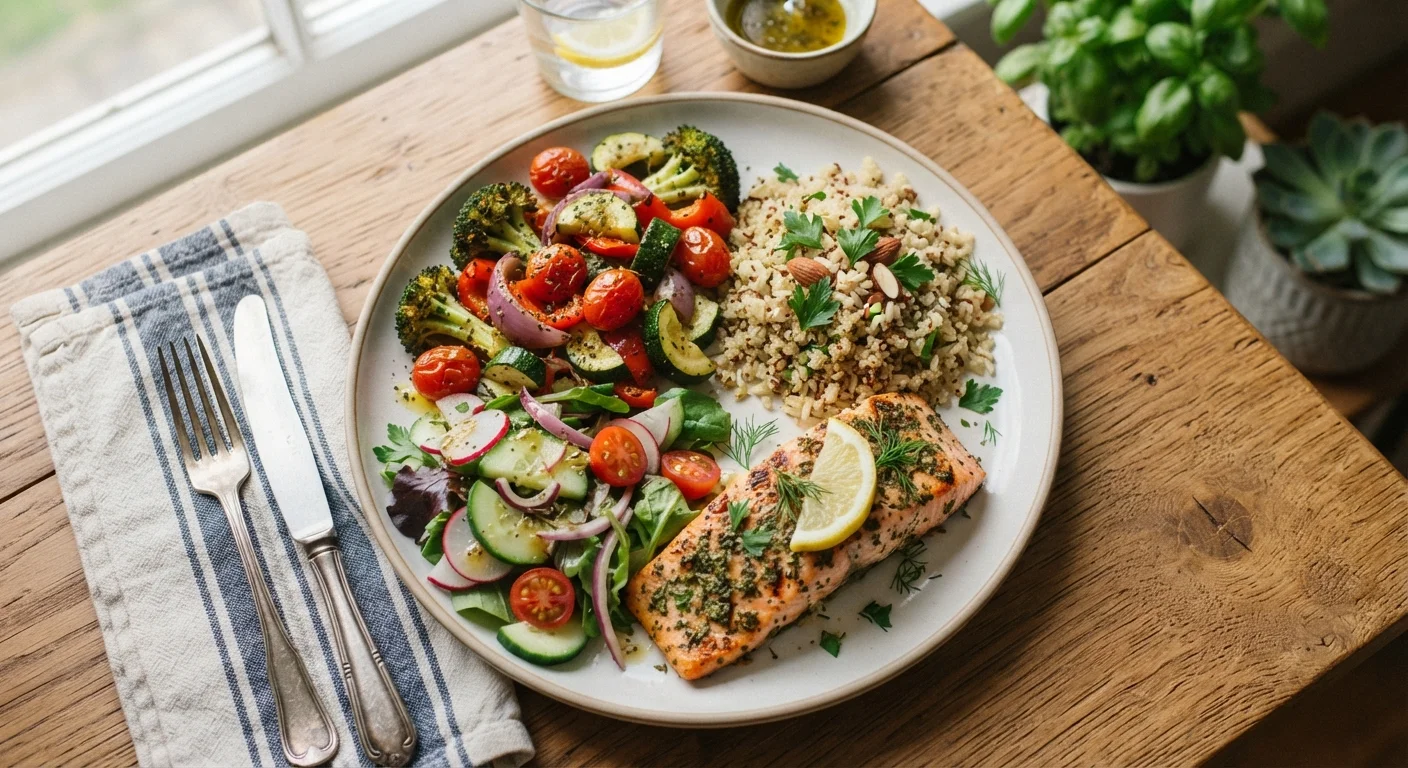
- Half your plate should be vegetables or fruit, a quarter protein, and a quarter grains.
- Healthy fats, hydration, and variety round out a nutritionally complete meal.
- Consistent visual habits are more sustainable than calorie counting for most people.
- Small, practical adjustments to existing meals can significantly improve nutritional balance.
What you will need
Why Visual Portioning Works
Calorie counting and nutrition tracking apps can be useful tools, but they're not the only path to eating well — and for many people, the overhead makes them unsustainable. The plate method offers a low-friction alternative that relies on visual proportion rather than precise measurement.
Developed and promoted by nutrition researchers and public health bodies over several decades, the basic idea is straightforward: if the right categories of food occupy the right proportions of your plate, most meals will land in a nutritionally reasonable range without any calculation. It's a system built for real life — weeknight dinners, restaurant meals, and packed lunches included.
If you'd like to build on this foundation, our everyday nutrition self-audit checklist can help you spot where your current habits already shine and where small adjustments might help.
What you will need
What You'll Need Before You Start
The good news: you likely already own everything required. The plate method doesn't demand special equipment or a kitchen overhaul — just a willingness to look at your meals with a slightly more deliberate eye.
A standard dinner plate (9–10 inches)
Serves as your built-in portion guide — its surface area is the visual template for balanced proportions.
Your hand
Palm, fist, and cupped-hand shapes provide intuitive serving-size estimates when no measuring tools are handy.
A simple meal-planning notepad
Jotting down two or three meal ideas for the week helps you shop for variety without overthinking at the store.
Once you have a sense of the visual framework, applying it takes only a few seconds per meal. The steps below walk you through building a balanced plate from scratch — or adjusting the one you're already used to making.
Step-by-Step: Assembling Your Balanced Plate
Follow these steps the first few times you try the plate method. After a week or two, the proportions will become second nature and you won't need to think through each one explicitly.
Fill half your plate with vegetables or fruit
Look at your plate and mentally draw a line down the middle. The entire left half belongs to vegetables — or a mix of vegetables and fruit. Aim for color variety: dark leafy greens, bright orange or red produce, and cruciferous vegetables like broccoli each bring different nutrients to the table.
Cooked, raw, fresh, or frozen all count. A simple side salad, steamed broccoli, or roasted carrots all fulfill this half without any special preparation.
Devote a quarter of your plate to lean protein
The upper right quarter of your plate is for protein. Good options include poultry, fish, eggs, legumes (beans, lentils, chickpeas), tofu, or modest portions of lean red meat. A serving roughly the size of your palm is a reasonable visual target for most adults.
Plant-based proteins like beans and lentils pull double duty — they also add fiber, which supports digestive health. If you're new to thinking about food groups, our introduction to balanced eating fundamentals explains each macronutrient's role in plain language.
Reserve the remaining quarter for whole grains or starchy vegetables
The lower right quarter goes to energy-sustaining carbohydrates. Whole grains — brown rice, whole-wheat pasta, oats, quinoa, barley — provide fiber and a steadier energy release compared with their refined counterparts. Starchy vegetables like sweet potato, corn, or peas also fit here.
A serving roughly the size of a cupped hand is a practical estimate for cooked grains. You don't need a measuring cup; the plate's quarter portion does the work for you.
Add a small amount of healthy fat
Healthy fats don't always need a dedicated section on the plate — they often come built into the meal. A drizzle of olive oil used in cooking, a few slices of avocado, a small handful of nuts or seeds, or a spoonful of nut butter added to a side dish all contribute beneficial unsaturated fats.
Think of fat as a finishing element rather than a main component. A thumb-sized portion is a useful visual guide for concentrated fats like oil, butter, or nut butter.
Choose a low-sugar beverage to complete the meal
What you drink alongside your plate matters. Water is the simplest, calorie-free choice. Unsweetened sparkling water, plain milk, or an unsweetened herbal tea are solid alternatives. Sugary drinks — sodas, sweetened juices, energy drinks — can add a significant amount of added sugar to a meal that would otherwise be well-balanced.
If you enjoy juice, a small glass of 100% fruit juice (roughly 4 oz) is preferable to a large serving, since it lacks the fiber of whole fruit.
Variety Is the Easiest Nutrition Upgrade
Rotating your vegetable and grain choices across the week — even slightly — naturally broadens the range of vitamins and minerals you consume. You don't need a new recipe every night; swapping brown rice for quinoa or spinach for broccoli is enough to make a real difference over time.
Once the method feels familiar at dinner, apply the same logic to lunch and breakfast — smaller plates, same proportions. A breakfast bowl of oats (grain) topped with berries (fruit/vegetable half) and a boiled egg or yogurt on the side (protein) maps cleanly onto the same framework.
Common Pitfalls and How to Avoid Them
The plate method is forgiving, but a few patterns tend to throw off balance for first-timers.
- Grain-heavy plates: It's easy to let rice or pasta crowd out the vegetable half. Plate your vegetables first — it's harder to crowd them out when they're already there.
- Protein portions that are too large: A chicken breast the size of your whole hand is more than the quarter-plate guide suggests. Aim for palm-sized rather than filling the entire right half.
- Skipping vegetables at breakfast: Breakfast is the meal most likely to miss the vegetable category entirely. Spinach in eggs, tomatoes on toast, or fruit as the "produce half" all count.
This Is General Guidance, Not Medical Advice
The plate-building approach described here is general nutrition education for healthy adults. It is not a substitute for personalized dietary advice. If you have a chronic condition, food allergy, or specific health goal, consult a registered dietitian or your healthcare provider before making significant changes to your diet.
For help decoding what's actually in packaged components you add to your plate, our guide to reading nutrition labels walks through every line without the jargon. And if you're building these skills alongside a tighter grocery budget, the principles in everyday cooking basics can help you put balanced meals together affordably.
This article is for general informational and educational purposes only and is not a substitute for personalized nutrition or medical advice. Consult a qualified healthcare provider or registered dietitian for guidance specific to your health needs.