

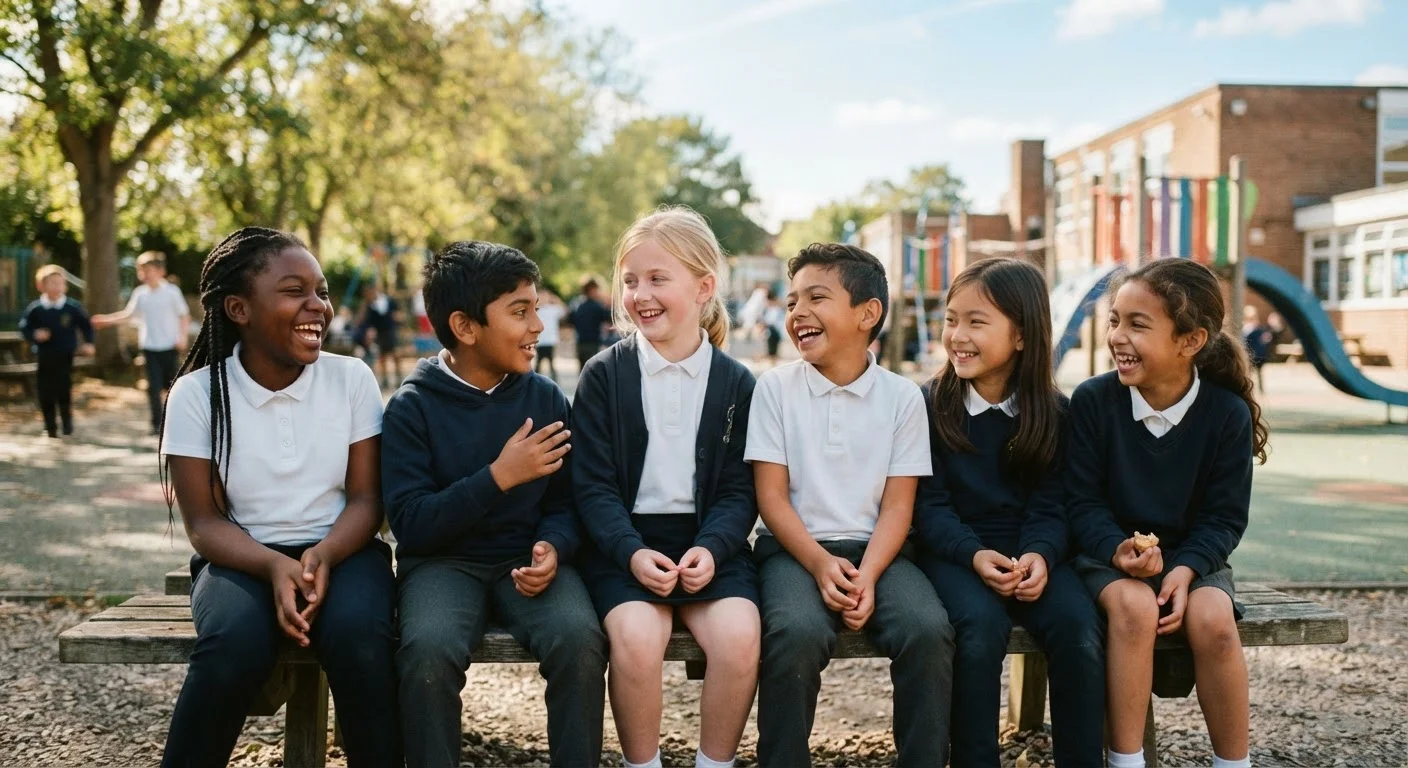
Key Takeaways
- Friendship groups naturally shift throughout primary school — this is developmentally normal.
- Cliques tend to emerge around ages 8–10 and serve a real psychological function for children.
- Most falling-outs between young children resolve on their own within days.
- Persistent social exclusion or repeated targeting is a signal that adult support is needed.
- Coaching emotional language at home gives children tools to navigate peer conflict independently.
- A strong parent-teacher relationship helps you get the full picture when issues arise at school.
Primary School Social Development
Primary school social development refers to the process by which children aged roughly 5–12 learn to form friendships, navigate group dynamics, handle conflict, and develop a sense of belonging among peers. It is a core part of childhood that unfolds alongside academic learning. The social world of school — including cliques, falling-outs, and shifting alliances — is not just drama; it is how children practice the relational skills they will carry into adult life.
Developmental psychologists describe this stage as a period of increasing 'peer orientation,' where children gradually shift their primary social reference point from parents to same-age peers, a process that accelerates through middle childhood.
Why the School Playground Is a Social Training Ground
When your child walks through the school gates, they enter one of the most socially complex environments of their young life. Unlike family relationships — which are given — peer friendships must be built, maintained, and sometimes repaired. That effort, however messy it looks from the outside, is doing important developmental work.
Research in child development consistently shows that peer relationships in middle childhood are a key context for learning empathy, conflict resolution, negotiation, and emotional regulation. Children who have at least one stable friendship during the primary school years tend to show stronger social confidence going into adolescence.
This does not mean every falling-out is a teaching moment to be engineered. It means that when you hear about playground drama at the dinner table, you're getting a window into real developmental progress — even when it is painful. See our guide to primary school milestones for more context on what to expect across these years.
1 in 5
Children reporting feeling left out at school
According to child wellbeing surveys, roughly one in five primary-age children report regularly feeling excluded by peers at some point during the school year.
~Age 8
When clique formation typically begins
Developmental research indicates that more defined, exclusive peer groups tend to emerge around age 8, coinciding with growing social self-awareness in middle childhood.
3–5 days
Typical resolution time for minor falling-outs
Child development studies suggest most peer disagreements among younger primary children resolve naturally within a school week, without adult intervention.
Cliques: What They Are and Why Children Form Them
Around ages 8–10, many children begin gravitating toward tighter, more defined social groups — often called cliques. These are smaller clusters of friends who share a sense of identity and, importantly, a sense of who does not belong. It can be distressing for parents to watch, especially if their child is on the outside.
But cliques serve a real psychological function. At this age, children are actively constructing a sense of self separate from their family. Belonging to a peer group helps anchor that identity. The exclusivity that feels so cruel from the outside is partly how children signal belonging to themselves and others.
This does not make exclusionary behaviour acceptable — it means it is predictable and worth addressing thoughtfully rather than with alarm. Helping your child understand why groups form, and coaching them on how to approach new friendships, is more useful than labelling the clique as villainous.
Help Your Child Name What They're Feeling
Children who can articulate emotions — 'I felt left out,' 'I was embarrassed' — are better equipped to communicate their needs to peers and resolve conflict. Building an emotional vocabulary at home is one of the most practical things parents can do to support their child's social life at school. Try reflecting feelings back during everyday conversations, not just during conflict.
Falling Out: Normal Friction Versus a Real Problem
Friendship falling-outs are practically a rite of passage in primary school. One day they are inseparable; the next, your child comes home crying because their best friend sat with someone else at lunch. These ruptures feel enormous to children — and to the parents who absorb the emotional fallout.
Most of these conflicts resolve within a few days, especially in the younger primary years. Children are egocentric by developmental design, which means misunderstandings happen constantly. They are also still developing the language to express hurt feelings without lashing out or withdrawing.
The signal that something more serious is happening includes: your child consistently excluded by the same peer or group over weeks; physical intimidation; distress that is affecting sleep or school attendance; or your child becoming reluctant to talk about school at all. In those cases, looping in the teacher is appropriate and constructive. Our article on talking to your child's teacher walks through how to have that conversation productively.
How to Support Your Child Without Taking Over
The instinct to fix things is powerful. But research on parental involvement in peer conflict suggests that children whose parents intervene heavily in friendship problems can develop less confidence in their own ability to navigate social situations. The goal is to be a calm, curious presence — not a social manager.
In practice, this means asking open-ended questions: "What happened next?", "How did that make you feel?", "What do you think you could do?". It means validating the emotion without validating every interpretation — "It sounds like that really hurt" is more useful than "They sound like a terrible friend."
If your child struggles socially over time, it is worth speaking with their teacher to understand what you are not seeing. Peer dynamics at school often look very different from the version children bring home. For children navigating a particularly hard stretch, supporting a child through a difficult school year offers grounded guidance on meaningful support without over-intervening.
When Online and Offline Worlds Collide
As children move through primary school, peer dynamics increasingly spill into digital spaces — messaging apps, gaming platforms, and social media. Exclusion and conflict that begin in the playground can continue at home via a screen. If your child's social stress follows them home digitally, it is worth reviewing how they are using connected devices. Our article on screen time during the school years explores this in more depth.
This article is for general informational purposes only. If you have concerns about your child's emotional wellbeing or social development, please consult a qualified healthcare or child development professional.