

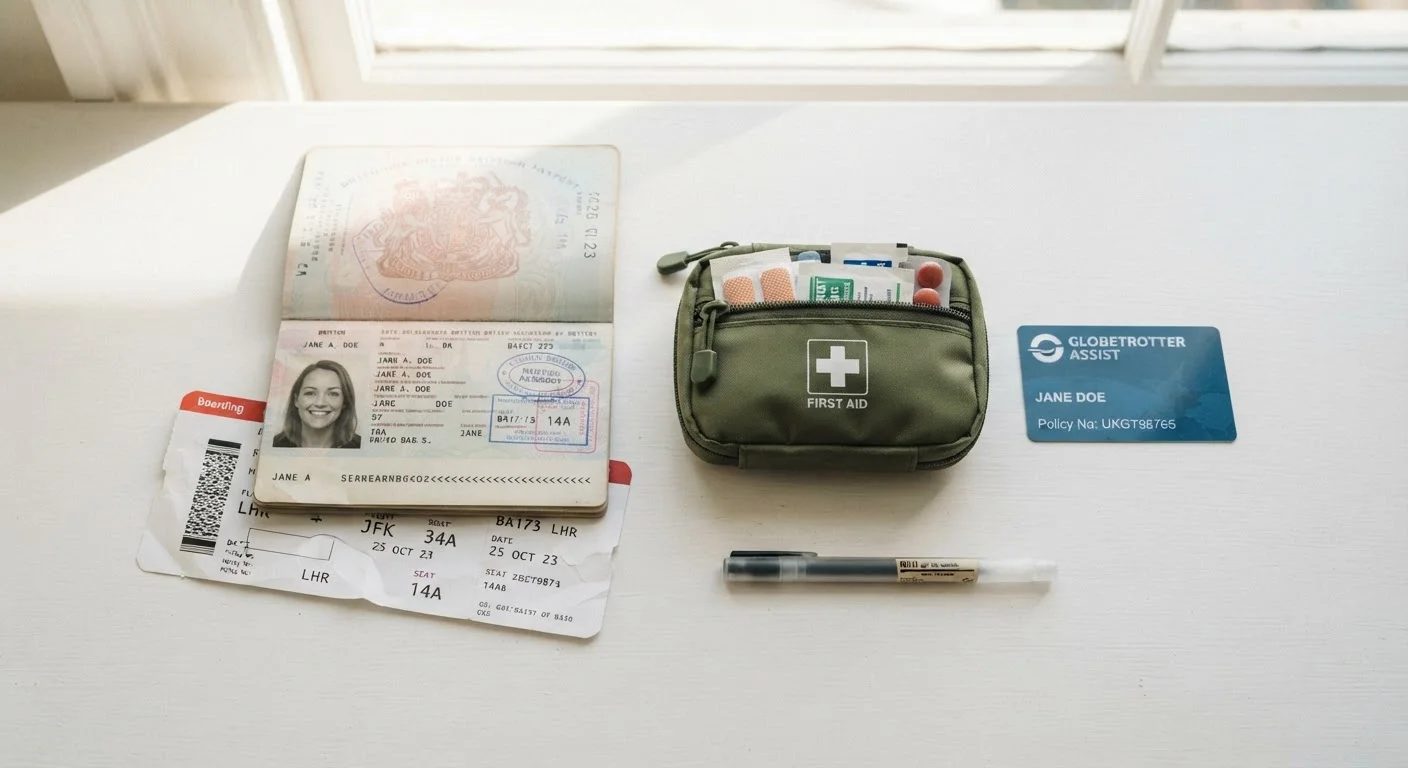
Key Takeaways
- Passport validity requirements vary by country — many require at least six months beyond your return date.
- Travel insurance should be purchased shortly after booking, not the day before departure.
- Sharing your itinerary and emergency contacts with someone at home is a simple but critical safety step.
- Health prep, including vaccinations and prescription supplies, may require weeks of lead time.
- Keeping digital and physical copies of key documents dramatically reduces risk if originals are lost.
Summary
24 items · 45–90 minutes
Why a Pre-Trip Checklist Pays Off
Most travel disruptions don't happen at the destination — they happen in the frantic days before departure, when details fall through the cracks. A forgotten travel visa, an expired passport, or a lapsed insurance policy can derail even a perfectly planned itinerary. That's why running through a structured checklist matters as much as booking the flights themselves.
This checklist focuses specifically on safety and logistics — the layer of trip planning that protects you when things go sideways. If you're still working on the broader planning foundation, see The Anatomy of a Well-Planned Trip for a full breakdown of every planning stage. For budget-related preparation, Before You Book: A Pre-Trip Budget Planning Checklist covers cost estimation and gap-spotting before you've left home.
Work through the groups below roughly in order — some items, like vaccinations or visa applications, require lead time and should be started weeks before departure.
US State Department Travel Website (travel.state.gov)
Look up entry requirements, visa information, and active travel advisories for your destination.
CDC Traveler's Health Portal (wwwnc.cdc.gov/travel)
Access destination-specific vaccination recommendations and health notices from the US Centers for Disease Control and Prevention.
Smart Traveler Enrollment Program (STEP)
Register your trip with the US Embassy so they can contact you in a crisis or natural disaster.
Secure cloud storage (e.g., personal email or encrypted cloud service)
Store digital copies of your passport, insurance policy, and booking confirmations in a location accessible from any device.
Offline maps application
Download destination maps before departure so you can navigate without relying on cellular data.
The Full Pre-Flight Checklist
The checklist below is divided into logical groups so you can work through each category systematically. Tackle the Documents & Entry Requirements and Health Preparation groups first — both can involve government processing times or medical appointments that can't be rushed.
Visa and Vaccination Timing Is Critical
Some visa applications require weeks of processing time, and certain travel vaccinations require multiple doses spread over several weeks before they're effective. Don't treat these as last-minute tasks. Start your entry-requirement and health-prep research as soon as your destination is confirmed — ideally six to eight weeks before departure. Always verify current requirements with official government and health authority sources, as rules change without notice.
Once you've confirmed your documents and health prep, move to insurance, emergency planning, and your day-of logistics. For guidance on what to carry on versus check, Carry-On vs. Checked Luggage: The Safety and Logistics Trade-Offs walks through the practical trade-offs.
Documents & Entry Requirements
Health Preparation
Travel Insurance
Emergency Contacts & Safety Net
Day-of Logistics
After You Complete the Checklist
Once you've worked through all the groups, take one final step: share your completed itinerary — flights, accommodations, and key contact numbers — with at least one trusted person at home. This is one of the most underrated safety measures a traveler can take. For a deeper guide on building a full emergency reference, including embassy contacts and local services, see Emergency Contacts, Embassies, and Local Services.
If you're navigating any unfamiliar travel terminology encountered during document or insurance review, Key Terms Every Traveler Encounters When Planning a Trip is a quick-reference glossary worth bookmarking.
Finally, if pre-departure nerves are making the process harder than it needs to be, Travel Anxiety: Why It Happens and Strategies That Can Help offers practical, research-grounded approaches for managing stress before and during travel.
Don't Rely on Travel Advisories Alone
Travel advisories from the US State Department are a useful starting point, but they don't capture every local risk or rapidly changing situation on the ground. Supplement official advisories with recent traveler reports, destination-specific health guidance from the CDC, and advice from your travel insurance provider. Conditions can shift quickly, so check all sources close to your departure date.
This article provides general travel preparation information for educational purposes. Entry requirements, visa rules, vaccination recommendations, and travel advisories change frequently — always verify with official government sources, your healthcare provider, and your travel insurance policy before departure.