

Key Takeaways
- A low airfare headline price rarely reflects the total cost once fees and logistics are added.
- Train travel often includes checked baggage and deposits you at a city center, saving time and money.
- Flying wins on long-haul routes; trains are frequently more practical under 300–400 miles.
- Factor in airport transit costs, parking, and security time when comparing both options.
- Your personal schedule and flexibility influence which mode delivers better overall value.
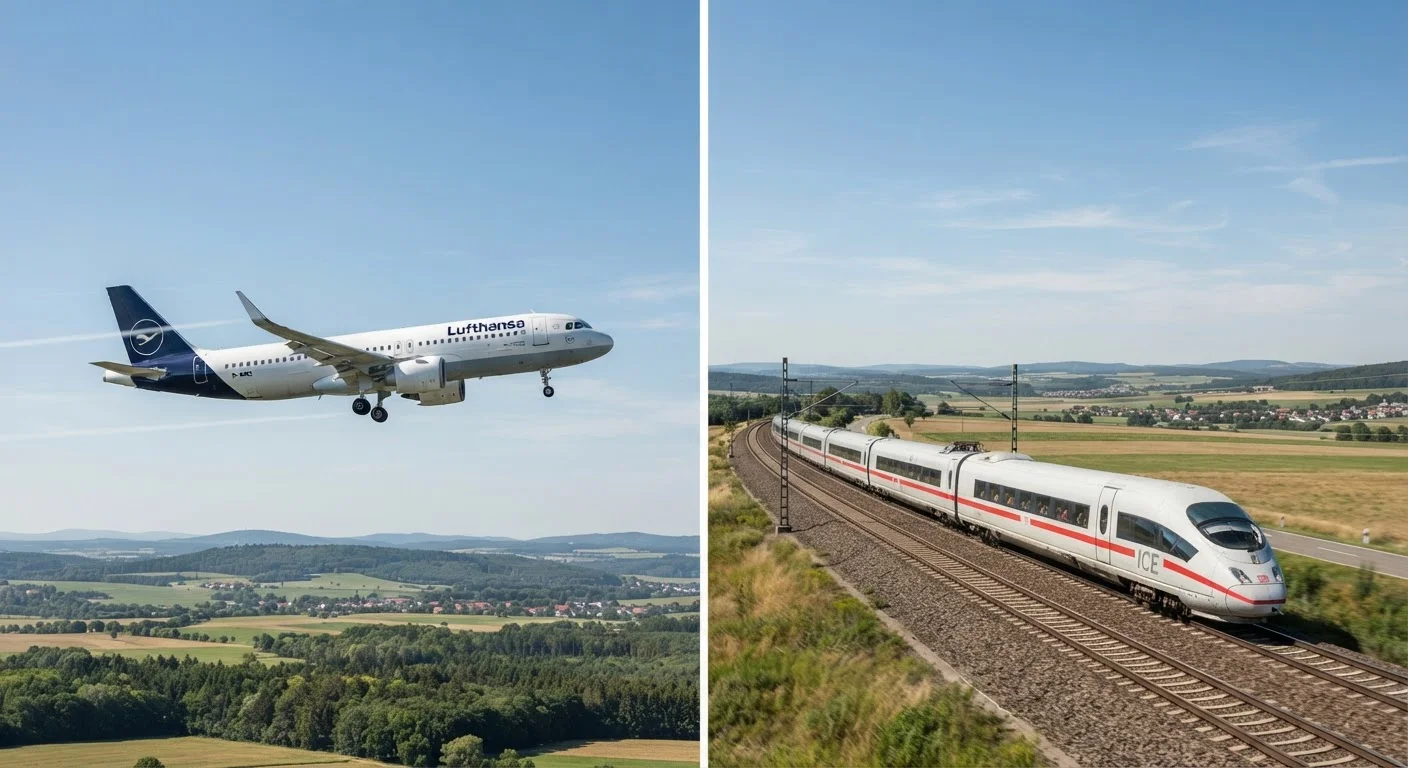
Option A
Flying
The fast, widespread option with layers of hidden costs.
Best for: Long-distance trips where speed matters more than comfort or simplicity.
Option B
Taking the Train
The transparent, city-center-to-city-center alternative.
Best for: Short-to-medium distance routes where convenience and included amenities add real value.
If you need to cover 500+ miles quickly
Flying
Beyond 500 miles, even with added fees, flying typically saves significant time that translates to a real cost on your itinerary.
If you're traveling between two well-connected cities under 400 miles apart
Taking the Train
Rail's city-center arrival, included luggage, and no security delays often make it faster door-to-door and cheaper all-in.
If you're traveling with checked bags and want predictable costs
Taking the Train
Most Amtrak routes and regional rail services allow checked bags at no extra charge, eliminating a major hidden cost of flying.
If time is your scarcest resource and distance is long
Flying
For cross-country or coast-to-coast travel, no rail option currently competes with the time savings a direct flight offers.
Why the Sticker Price Is Never the Whole Story
Budget travelers quickly learn that a $59 fare or a $49 rail ticket is a starting point, not a final number. Both flying and taking the train carry costs that don't appear until checkout — or worse, until you're already on the road. Understanding the true expense of each mode is the foundation of smarter trip planning.
Budget travel isn't just about finding the lowest price — it's about knowing what you're actually paying for. Before you click "book," it pays to run a full cost comparison.
| Criterion | Flying | Taking the Train |
|---|---|---|
| Base fare transparency | Low headline price; fees added at checkout | Fare typically reflects total cost |
| Checked baggage | $30–$35 per bag, each way | Usually included at no charge |
| Ground transportation needed | Often $25–$60 from airport | Station is usually city-center |
| Door-to-door time (under 400 mi) | Often slower when pre/post travel counted | Frequently faster all-in |
| Route availability | Nationwide, near-universal | Limited outside Northeast and key corridors |
| Parking cost (if driving to departure) | $20–$35/day near major airports | City stations often have cheaper options |
| Travel experience | Cramped, security-intensive | More spacious, scenic, no security screening |
The Hidden Costs of Flying
Airlines have become expert at separating the base fare from services that most travelers consider standard. A checked bag can add $30–$35 each way on many US carriers. A carry-on fee, seat selection, and in-flight meals can tack on another $20–$50 before you've left the gate. These fees are documented widely by consumer aviation research and are worth building into any budget.
Then there's the airport itself. Flying into a major hub rarely means landing near your destination. Ground transportation — a taxi, rideshare, or train from the airport — can cost $25–$60 in many US cities. Add parking at your departure airport if you're driving: daily rates near major airports frequently run $20–$35 per day. A three-night trip can easily add $90 in parking alone.
Finally, count your time honestly. Arriving two hours before departure, clearing security, boarding, and deplaning adds 2–3 hours to most domestic flights before you factor in any delays. Time is a real travel cost. See our guide to hidden travel costs for a fuller picture of where budgets quietly erode.
$30–$35
Typical checked bag fee per direction on US airlines
Most major US carriers charge per-bag fees each way; costs vary by airline and fare class.
2–3 hrs
Extra time flying adds beyond the flight itself
Arrival windows, security, boarding, and deplaning routinely add hours to domestic air travel.
~400 miles
Distance threshold where train becomes less competitive
Travel industry planners generally consider rail most practical for distances under 300–400 miles in the US.
The True Cost of Taking the Train
Train travel in the US — primarily via Amtrak, with regional commuter options in densely served corridors — typically deposits passengers directly at a downtown station. That eliminates the airport transfer cost entirely and reduces ground transportation to a short subway ride or walk. Amtrak's standard fares generally include two carry-on bags and two checked bags at no extra charge, which is a material saving over airlines.
Rail fares are also more transparently priced. The seat fee tends to be the total fee, apart from optional upgrades to business class or sleeper cars. On popular Northeast Corridor routes between cities like New York and Washington D.C., train travel is frequently price-competitive with flying when all-in costs are tallied.
The limitation is coverage and distance. Amtrak's network is strongest in the Northeast and along a handful of long-distance corridors. For travel between smaller cities or across large stretches of the interior US, service may be infrequent, slower, or simply unavailable. This is the single largest constraint rail faces against flying. When you're building a realistic travel budget, always check whether a practical rail option actually exists for your route before assuming it's an alternative.
How to Decide: A Practical Framework
The 300–400 mile threshold is a useful starting point. Under that distance, trains are often competitive on both time and total cost. Beyond it, flying typically wins on speed, though the cost advantage narrows once fees are counted. Your specific route, schedule flexibility, and how much luggage you carry all shift this calculus.
Ask these questions before booking: What is the all-in door-to-door travel time for each option? What does the fare include — bags, seat, meals? How far is each station or airport from my actual start and end points? Answering all three will give you a clearer comparison than headline prices alone.
If you're weighing this decision as part of a longer trip, your overall travel pace shapes costs too — travelers moving slowly between fewer destinations often find rail more practical and affordable than frequent short flights. And if you're traveling with others, group dynamics affect which transport mode is most cost-effective as well.
Prices and schedules change — always verify
Fares, baggage policies, and rail routes are subject to change. Always check directly with the airline or Amtrak for current pricing before booking. This article provides general guidance and does not guarantee specific costs or availability at the time you travel.