

Key Takeaways
- Most costly home repairs stem from skipped maintenance tasks that are easy to overlook.
- Many forgotten upkeep jobs take under 15 minutes but prevent hundreds of dollars in damage.
- Building a simple reminder system is often more effective than relying on memory alone.
- Some neglected tasks affect indoor air quality, water safety, and structural integrity over time.
Why the Easy Tasks Are the First to Slip
Home maintenance has a strange paradox: the tasks that are quickest to do are often the last to get done. Because they don't feel urgent, they get pushed to "someday" — until a drain backs up, a fire alarm fails, or a slow leak quietly warps a subfloor. The issue isn't laziness. It's that these tasks are invisible. Nothing signals they need attention until they've already failed.
Understanding why this happens is the first step toward changing it. Most homeowners manage upkeep reactively — responding to problems rather than preventing them. A simple maintenance rhythm that fits your real life can close that gap without adding stress.
Never replacing the HVAC filter on a regular schedule.
Why it happens: Filters are hidden inside the unit and out of sight, making them mentally invisible until airflow noticeably drops or energy bills climb.
Ignoring the dryer vent beyond the lint trap.
Why it happens: Most people clean the lint trap regularly but don't realize lint accumulates in the full exhaust duct, reducing airflow and increasing fire risk over time.
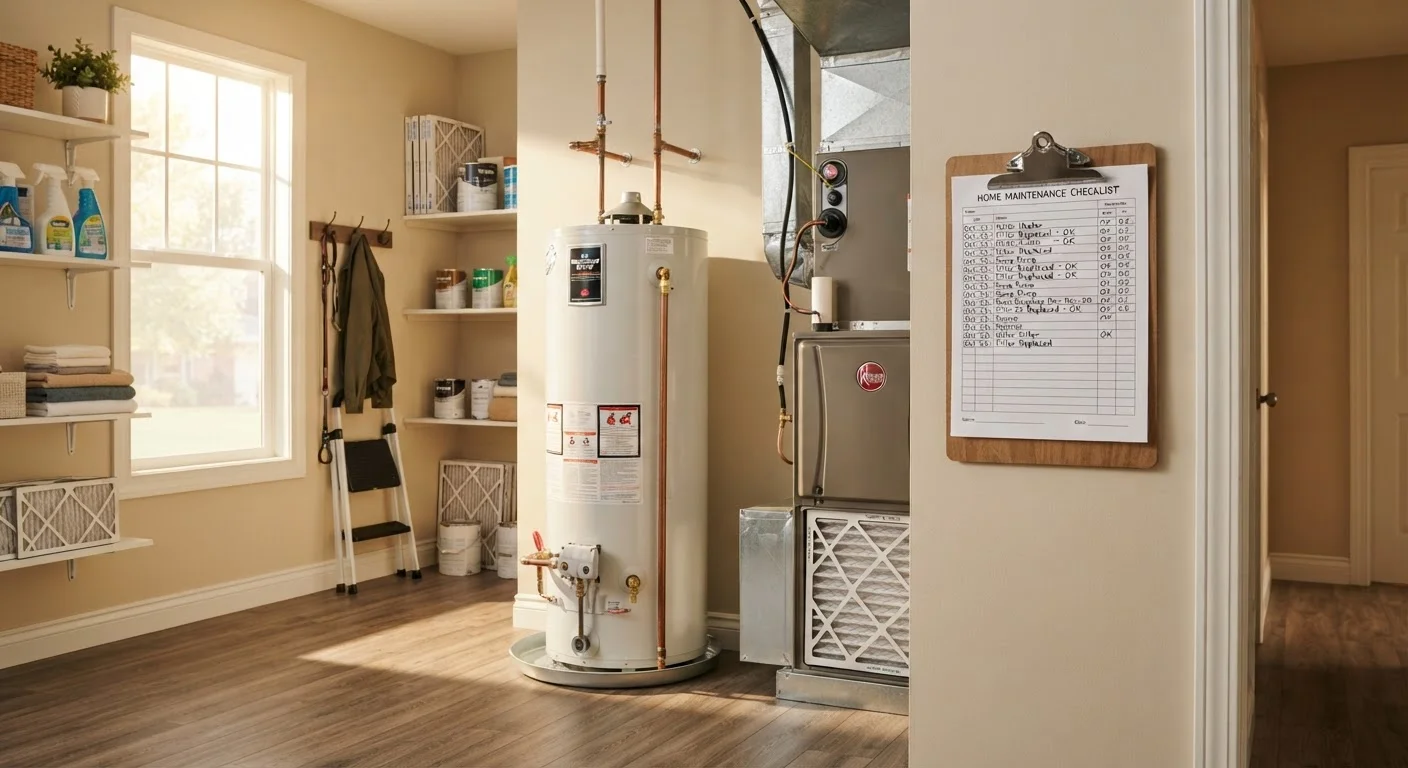
Skipping annual flushing of the water heater.
Why it happens: Water heaters work quietly in the background, so sediment buildup goes undetected until efficiency drops sharply or the tank fails entirely.
Leaving gutters uncleaned until water backs up.
Why it happens: Gutters are above eye level, so blockages aren't visible from the ground — they only become obvious when water spills over the edges or seeps into the fascia.
Never testing smoke and carbon monoxide detectors.
Why it happens: These devices are designed to be unobtrusive, which means they're also easy to forget entirely until a low-battery chirp draws attention.
Overlooking caulk and weatherstripping around windows and doors.
Why it happens: Deteriorating seals happen gradually and don't produce obvious symptoms until drafts become uncomfortable or heating and cooling costs visibly increase.
The Hidden Costs of Skipping Small Jobs
Each of these overlooked tasks carries a financial risk that compounds over time. A clogged dryer vent doesn't just reduce efficiency — it's a recognized fire hazard. An unchecked water heater anode rod can lead to full tank failure, often requiring emergency replacement. These aren't worst-case scenarios; they're the natural outcome of deferred maintenance.
$1,000–$5,000
Average cost of water damage repairs
According to home services data, water damage from preventable sources like blocked gutters or failed seals is among the most common — and costly — homeowner claims.
2,900+
Annual U.S. dryer fires reported
The U.S. Fire Administration has consistently identified failure to clean dryer vents as the leading cause of residential dryer fires.
If you own your home, you carry full responsibility for these systems. Understanding that distinction matters, especially for first-time owners transitioning from renting. And because repair costs can disrupt your monthly finances in ways that feel sudden but weren't, it's worth thinking about how unexpected home expenses fit into your broader budget picture.
The good news: nearly every item in this article can be addressed in a single afternoon. Pair this list with a seasonal maintenance checklist to build a schedule that catches issues before they escalate.
Don't Delay Electrical or Gas Concerns
Some home systems — gas appliances, electrical panels, structural elements — require a licensed professional, not a DIY fix. If any inspection reveals signs of gas leaks, sparking, or structural damage, stop and contact a qualified contractor or emergency service. No routine maintenance task is worth an unsafe shortcut.