

Key Takeaways
- Ultra-processed foods are designed to be convenient, affordable, and hard to stop eating — by intention.
- Store layout, health-sounding labels, and hunger while shopping are major hidden influences on your cart.
- Small, deliberate habits like meal planning and label literacy can meaningfully shift your purchasing patterns.
- No single food makes a diet unhealthy — overall patterns across the week matter most.
The Invisible Forces Steering Your Cart
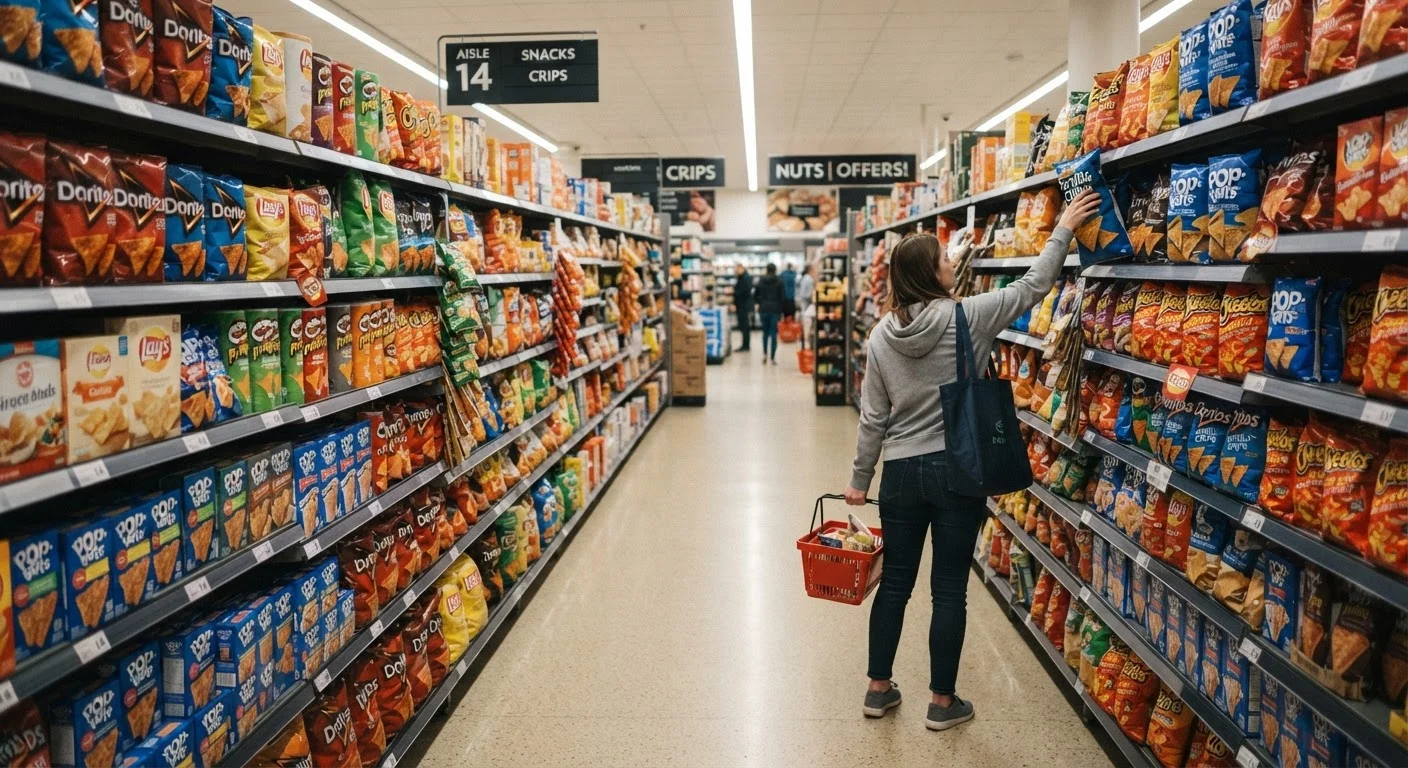
Most people who leave the supermarket with a cart full of heavily processed food didn't plan to. They went in for quick dinners and came out with flavored crackers, a frozen lasagna, and a multipack of snack bars. Understanding why this keeps happening is the first step to changing it.
Ultra-processed foods — a category that broadly includes packaged snacks, reconstituted meat products, flavored cereals, and shelf-stable ready meals — now make up a substantial share of calories consumed in American households. Researchers using the NOVA food classification system estimate that ultra-processed products account for more than half of total daily energy intake for many US adults. That's not simply a matter of weak willpower. It's a predictable outcome of overlapping environmental, psychological, and marketing pressures that most shoppers navigate without realizing it.
This article maps the most common mistakes that push your shop toward ultra-processed choices — and gives you practical ways to resist them. For a deeper look at how overall eating patterns add up, the Everyday Nutrition self-audit checklist is a useful companion.
57%
Share of US adult calories from ultra-processed food
Research published in the journal BMJ Open estimated that ultra-processed foods accounted for roughly 57% of total energy intake among US adults, based on nationally representative dietary data.
73%
Of US supermarket products that are ultra-processed
A study analyzing US grocery store inventories found that nearly three-quarters of products available for purchase met criteria for ultra-processed classification under the NOVA framework.
Common Mistakes That Pull You Toward Ultra-Processed Choices
These aren't moral failures — they're predictable responses to a shopping environment engineered for exactly this outcome. Recognizing each pattern is what makes it possible to sidestep it.
Shopping hungry and without a plan.
Why it happens: When blood sugar dips and no list exists, the brain gravitates toward high-calorie, immediately satisfying options — exactly what ultra-processed snacks are engineered to deliver.
Trusting front-of-pack health claims at face value.
Why it happens: Terms like "natural," "wholesome," and "no artificial colors" sound meaningful and are placed prominently to trigger trust. Most have no standardized regulatory definition in the US.
Conflating "convenient" with "ultra-processed."
Why it happens: Convenience is a legitimate need, especially for busy households, and food marketing successfully ties that need to packaged, shelf-stable products. Many shoppers don't realize that plenty of minimally processed foods are just as quick.
Ignoring serving size when comparing products.
Why it happens: Nutrition panels are presented per serving, and serving sizes vary widely between brands. A product that looks lower in sodium or added sugar may simply have a smaller declared serving.
Using price as the main filter for every purchase.
Why it happens: Ultra-processed foods are often cheaper per calorie than fresh whole foods, partly because they rely on heavily subsidized commodity ingredients like refined grains and corn-derived sweeteners.
Building a More Deliberate Shopping Habit
Awareness is the foundation, but it needs a structure to lean on. A few concrete habits make a genuine difference over time.
Shop with a list and a rough meal plan. Decision fatigue is real: the more choices you face while hungry or rushed, the more you default to familiar, heavily marketed options. A list anchored to three or four planned dinners dramatically reduces the number of in-aisle decisions you have to make.
Spend more time in the store's perimeter. Fresh produce, proteins, and dairy tend to ring the outer aisles of most US supermarkets. This isn't a rigid rule, but orienting your route there first means your cart is already partly filled before you enter the middle aisles where most packaged snacks live.
Slow down on health claims. Packaging language like "natural," "wholesome," or "made with real fruit" is largely unregulated and tells you little about a product's actual nutritional profile. Learning to read past the front of the pack is genuinely useful — the nutrition label guide breaks down exactly what those panels are communicating. You can also get a head start with reading a nutrition label without the confusion.
Consider ingredient length as a rough signal. Ultra-processed foods often contain long lists of additives, emulsifiers, and flavor compounds that have no home-kitchen equivalent. A shorter ingredient list doesn't guarantee superior nutrition, but it's a fast heuristic when you're short on time. For more on how processing changes a food's nutritional structure, see what changes when you process wheat.
"Healthier" Packaging Can Still Mean Ultra-Processed
A product marketed as high-protein, low-sugar, or gluten-free can still qualify as ultra-processed by ingredient and formulation. Front-of-pack claims are designed to attract buyers, not to summarize nutritional quality. Always flip the package and scan the ingredient list alongside the nutrition panel before drawing conclusions. If you're unsure what to look for, see our common mistakes when trying to eat healthier for context.
The goal isn't to eliminate every processed product from your kitchen — that's neither realistic nor necessary. It's to make the choice deliberate rather than automatic. Explore the Nutrition Basics hub for more practical guidance on eating well without overhauling your life.
This article is for general informational purposes only and does not constitute medical or dietary advice. For personal nutrition concerns, consult a registered dietitian or qualified healthcare professional.