

Key Takeaways
- A spending tracker records what you've already spent; a full budget plans what you intend to spend.
- Tracking alone can reveal problem areas but won't automatically change your financial outcomes.
- A full budget requires more setup but gives you a proactive framework for reaching money goals.
- Many people benefit from using both tools together, especially when paying down debt or saving intentionally.
- Either approach works best when it fits your actual lifestyle — the one you use consistently wins.
Our Verdict
Spending trackers and full budgets aren't competing tools — they serve different stages of financial awareness. Tracking is the right starting point for anyone new to managing money, while a full budget becomes essential when you have specific financial goals or recurring shortfalls. For most people, combining both delivers the clearest picture and the strongest results.
| Best for | Recommended |
|---|---|
| Those just starting to understand their spending habits | Spending Tracker |
| Those with defined savings or debt payoff goals | Full Budget |
| Those who frequently overspend in specific categories | Both Together |
| Those with stable, predictable income and low financial stress | Spending Tracker |
What Each Tool Actually Does
The terms "spending tracker" and "budget" are often used interchangeably, but they describe two distinct habits with different purposes.
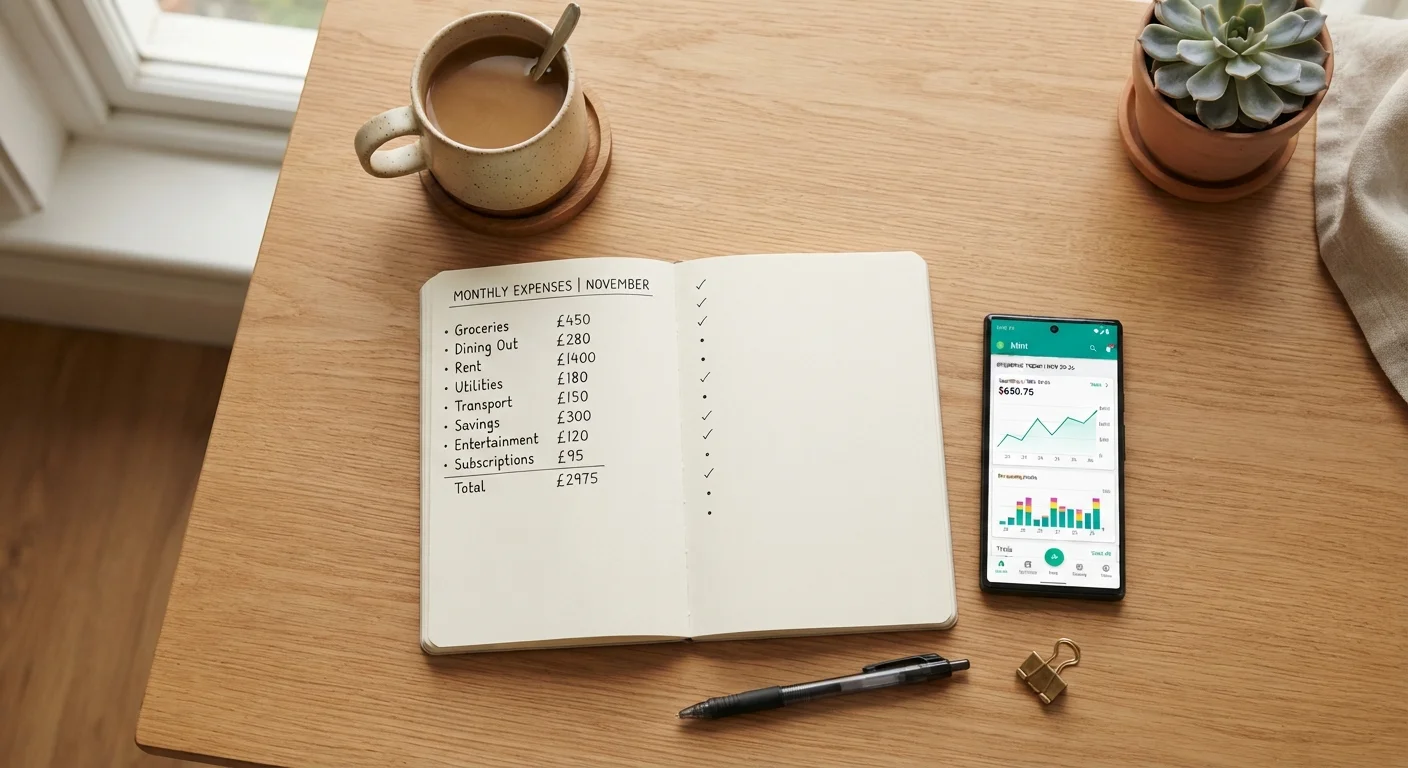
A spending tracker is a record of what you've already spent — a financial rearview mirror. You log purchases as they happen (or review bank statements after the fact), and the result is a clear picture of where your money went. Apps, spreadsheets, or even a notes app on your phone can all serve this function.
A full budget is a plan made in advance — a financial windshield. Before the month begins, you assign expected amounts to categories like rent, groceries, transportation, and savings. You're deciding intentionally how each dollar should behave before it lands in your account.
Understanding the distinction matters because they answer different questions. A tracker answers: Where did my money go? A budget answers: Where should my money go? Both questions are worth asking — but at different moments.
When a Spending Tracker Is Enough
For many people — especially those just beginning to pay attention to personal finance — a spending tracker is the right first step. It requires no forecasting, no income estimates, and no category math up front. You simply observe.
Tracking works particularly well if:
- Your income covers your expenses comfortably and you're not living paycheck to paycheck.
- You want to spot patterns before committing to a formal plan.
- You find detailed budgeting overwhelming and are more likely to abandon it than stick with it.
- You're self-employed or have irregular income that makes fixed monthly plans difficult.
The honest limitation of tracking alone is that it's descriptive, not prescriptive. Knowing you spent $480 on dining out last month is useful information — but without a target to compare it against, it doesn't automatically prompt a change. Many people track diligently for months and see little improvement in their finances because awareness, on its own, doesn't redirect money.
Start with one month of tracking first
If you've never budgeted before, spend one full month simply logging every purchase without judgment. This baseline data makes your first real budget far more accurate — you'll set category amounts based on actual behavior, not guesswork. Guessing too low in the first month is one of the most common reasons new budgets get abandoned.
When a Full Budget Becomes Necessary
A full budget earns its complexity when you have specific financial goals or when your spending regularly outpaces your income. If you're trying to build an emergency fund, pay off credit card debt, or save for a large purchase, a budget gives you the structure to make those goals real rather than aspirational.
Consider building a full budget when:
- You're carrying high-interest debt and want a deliberate payoff plan.
- You have a savings milestone — a home down payment, a vacation fund, a baby on the way.
- You've been tracking for a while and already know where the leaks are.
- Your expenses feel chaotic and unpredictable month to month.
A good budget doesn't need to be elaborate. Even a simple structure — tracking fixed versus variable expenses and allocating amounts before spending begins — is more actionable than tracking after the fact. If you want a framework to start with, the zero-based and 50/30/20 approaches each offer structured starting points worth comparing.
| Spending Tracker | Full Budget | |
|---|---|---|
| Primary purpose | Records past spending | Plans future spending |
| Best starting point | Beginners, irregular income | Goal-oriented savers, debt payers |
| Time investment | Low — log as you go | Moderate — set up monthly in advance |
| Behavior change potential | Awareness without guardrails | Proactive limits per category |
| Flexibility | High — no targets to miss | Lower — requires commitment to plan |
| Works best for | Pattern discovery | Reaching specific money goals |
Using Both: Where They Work Together
The most effective personal finance habit often combines both tools: a budget sets the plan at the start of the month, and a spending tracker holds you accountable to it as the month unfolds. Think of it as planning a road trip and then actually checking your GPS along the way.
This combination is especially powerful for people who have found that their current budget keeps falling short. The tracker surfaces where the plan broke down — maybe the grocery estimate was too low, or an unexpected car repair derailed the savings goal. That data then feeds back into a more realistic budget for the following month.
If you're curious about digital tools to automate this loop, it's worth weighing the trade-offs that budgeting apps involve before choosing one. Automation reduces friction, but it also requires trusting an app with financial data — a worthwhile conversation to have with yourself.
40%
Americans without a monthly budget
According to Gallup survey data, roughly four in ten U.S. adults report they do not maintain a detailed household budget.
1 in 3
Adults who track spending regularly
Federal Reserve consumer finance surveys suggest consistent spending tracking remains a minority habit among U.S. households.
This article is for general informational purposes only and does not constitute personalized financial advice. Consider consulting a qualified financial professional for guidance tailored to your situation.