

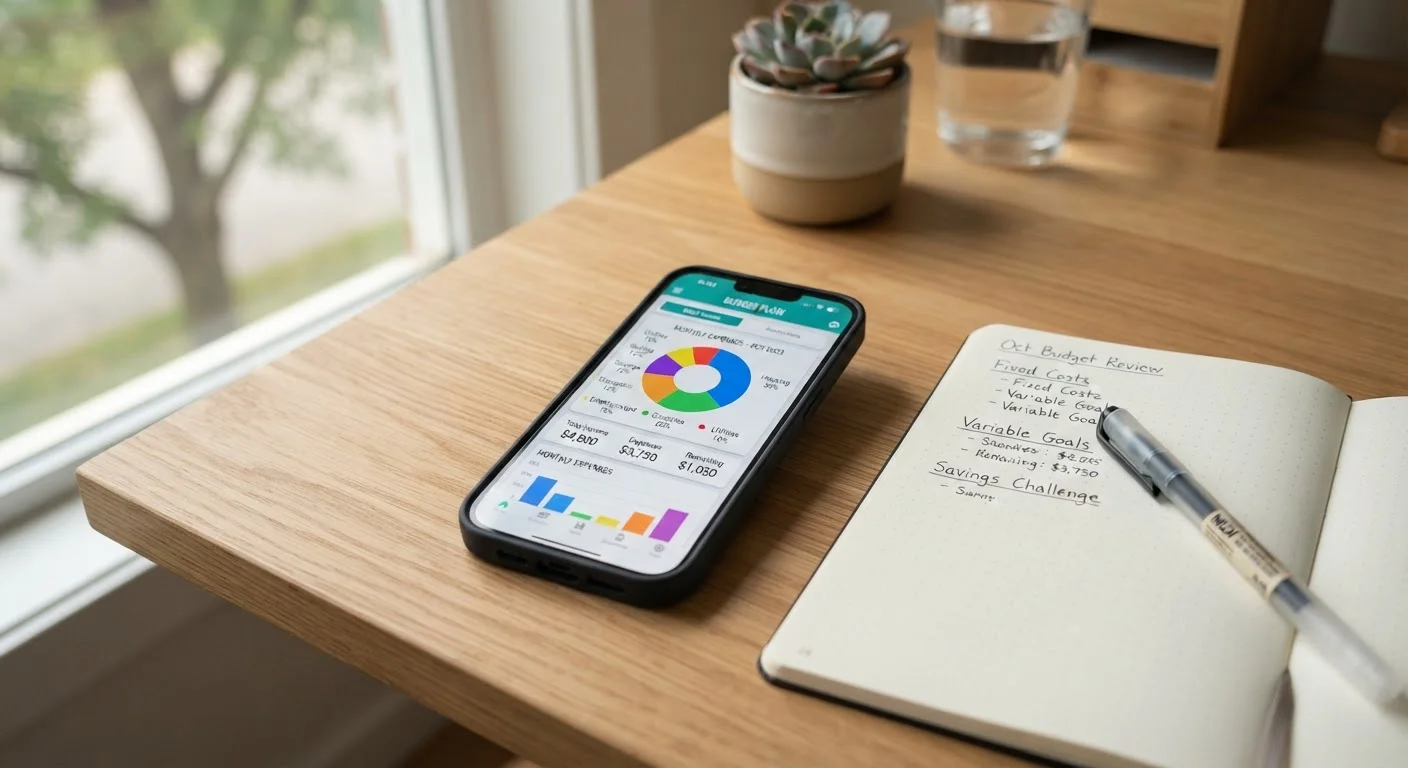
Key Takeaways
- Budgeting apps can automate tracking and surface spending patterns you'd otherwise miss.
- Most apps require linking bank accounts, which raises legitimate privacy and security considerations.
- Apps work best as a starting tool — sustainable budgeting still depends on building real habits.
- Low-tech alternatives like spreadsheets or pen-and-paper can be just as effective for some people.
Automatic transaction import saves time
Linking accounts means spending data flows in without manual entry, making it far easier to maintain a consistent picture of your finances.
Visual dashboards reveal spending patterns
Charts and category breakdowns can surface habits — like how much goes to dining or subscriptions — that are easy to overlook in raw bank statements.
Low barrier to getting started
Setup typically takes minutes, which removes a common excuse for delaying budgeting. A quick start is often better than a perfect system never built.
Goal tracking keeps savings targets visible
Many apps let you set savings goals and monitor progress, providing a motivational nudge that a passive bank account balance doesn't offer.
Sharing account data raises privacy concerns
Most apps require access to your financial accounts via third-party data aggregators, which introduces exposure if those services experience a breach or misuse your data.
App use can create false sense of progress
Regularly checking a budgeting dashboard can feel productive without actually changing spending behavior — the tool is only as useful as the decisions it informs.
Subscription costs add up over time
Several well-known budgeting apps charge annual or monthly fees. Over years, those costs are non-trivial compared to free alternatives like a spreadsheet.
Miscategorization requires ongoing correction
Automated category assignment is imperfect; transactions regularly land in the wrong bucket, and correcting them takes time — especially for irregular or unusual expenses.
Our Verdict
Budgeting apps are genuinely useful for people who want automated tracking, visual feedback, and a low-friction way to get started. That said, they're not a silver bullet — privacy trade-offs are real, and an app alone won't fix spending habits without conscious effort behind it. The best budgeting tool is ultimately the one you'll actually use consistently.
Best for people who want a fast, automated entry point into budgeting and are comfortable linking financial accounts to a third-party platform.
What Budgeting Apps Actually Do
Budgeting apps are software tools — usually mobile-first — that connect to your bank accounts, credit cards, and sometimes investment accounts to automatically categorize transactions and track spending in near real time. Some use rule-based systems to allocate money to categories before you spend it; others focus on tracking what you've already spent.
The basic value proposition: instead of manually reviewing bank statements or maintaining a spreadsheet, the app does the data entry for you. Popular approaches include envelope-style digital budgeting, spending dashboards, and goal-tracking features. If you're curious how these methods differ from one another, this comparison of zero-based and 50/30/20 budgeting covers the structural differences well.
Apps vs. Full Budgeting Systems
A budgeting app is a tool, not a method. The app might display your spending, but it doesn't tell you how to allocate your money — that's a separate decision. Pairing an app with a clear budgeting framework (like zero-based or 50/30/20) tends to produce better results than using either alone. Think of the app as the interface and the method as the actual plan.
The Case For Using a Budgeting App
For many people, the biggest barrier to budgeting isn't motivation — it's friction. Apps reduce that friction significantly.
Automatic transaction import saves time
Linking accounts means spending data flows in without manual entry, making it far easier to maintain a consistent picture of your finances.
Visual dashboards reveal spending patterns
Charts and category breakdowns can surface habits — like how much goes to dining or subscriptions — that are easy to overlook in raw bank statements.
Low barrier to getting started
Setup typically takes minutes, which removes a common excuse for delaying budgeting. A quick start is often better than a perfect system never built.
Goal tracking keeps savings targets visible
Many apps let you set savings goals and monitor progress, providing a motivational nudge that a passive bank account balance doesn't offer.
Automation is the standout benefit. When your transactions import automatically, you spend less time on data entry and more time interpreting what you see. Many people discover recurring charges or spending categories they hadn't consciously noticed until an app surfaced them visually. That kind of feedback loop is hard to replicate with a manual system checked once a month.
Apps also tend to lower the barrier to entry. If you've been held back by common budgeting myths, having a tool that handles setup quickly can help you get started without feeling overwhelmed.
The Case Against — or At Least, the Caveats
No tool is without trade-offs, and budgeting apps carry a few worth taking seriously.
Sharing account data raises privacy concerns
Most apps require access to your financial accounts via third-party data aggregators, which introduces exposure if those services experience a breach or misuse your data.
App use can create false sense of progress
Regularly checking a budgeting dashboard can feel productive without actually changing spending behavior — the tool is only as useful as the decisions it informs.
Subscription costs add up over time
Several well-known budgeting apps charge annual or monthly fees. Over years, those costs are non-trivial compared to free alternatives like a spreadsheet.
Miscategorization requires ongoing correction
Automated category assignment is imperfect; transactions regularly land in the wrong bucket, and correcting them takes time — especially for irregular or unusual expenses.
The privacy concern is the most substantive. Connecting a bank account to a third-party app means sharing login credentials or account data with a company outside your financial institution. While many apps use read-only access via secure protocols, data breaches at third-party platforms do occur. It's worth reading an app's privacy policy and understanding how your data may be used or shared before signing up.
There's also a behavioral trap: an app can give you the feeling of being organized without producing the underlying habit change. Checking a dashboard is not the same as making intentional spending decisions. Sustainable budgeting relies on systems and habits, not just visibility tools.
Finally, apps aren't the only option. A simple spreadsheet, a notebook, or even the digital envelope method can work just as well — sometimes better — for people who prefer full manual control or who find app interfaces distracting.
How to Decide If an App Is Right for You
The honest answer is that there's no universally correct tool. A few questions worth asking yourself:
- Are you comfortable sharing account access? If the privacy trade-off doesn't sit well, a spreadsheet or spending tracker may suit you better.
- Do you need automation to stay consistent? If manual entry leads you to abandon the system after two weeks, an app's automation may be the thing that keeps you engaged.
- Are you looking to track spending, plan spending, or both? Some apps focus on one more than the other. Knowing what you need helps you pick the right type.
Whatever you choose, the goal is the same: a clearer picture of where your money goes and more intentional decisions about where it should go. For broader context on the mindset behind these choices, the Money Mindset hub is a useful starting point.
1 in 3
Americans use a budgeting app
A CNBC/Acorns Invest in You survey found roughly one-third of Americans reported using a budgeting app or online tool to manage their finances.
~60%
Adults living paycheck to paycheck
Federal Reserve survey data has consistently found that a large share of U.S. adults would struggle to cover an unexpected $400 expense — underscoring the real-world need for better budgeting tools.
This article is for general informational purposes only and does not constitute personalized financial advice. Consider consulting a qualified financial professional for guidance specific to your situation.