

Key Takeaways
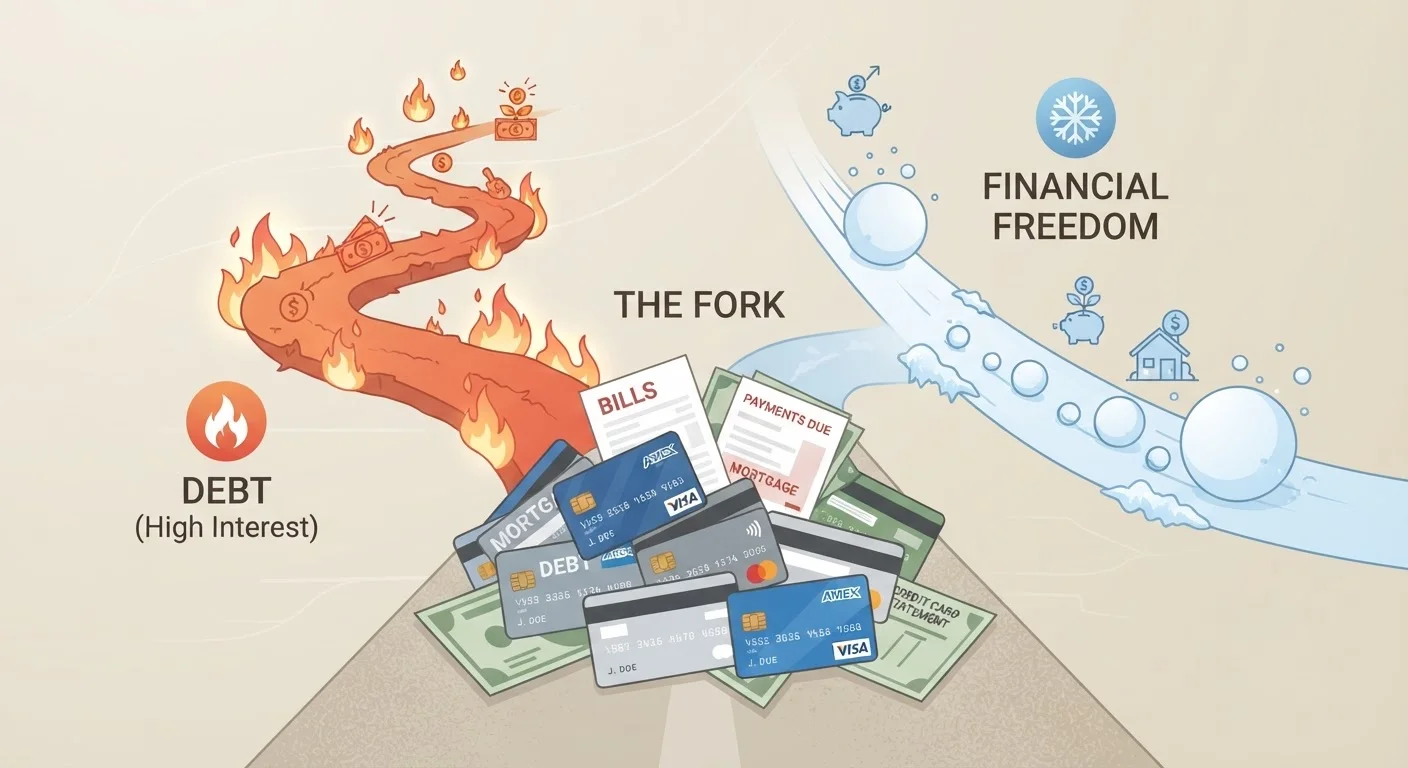
- The debt avalanche targets high-interest balances first, minimizing total interest paid over time.
- The debt snowball targets smallest balances first, generating early wins that can sustain motivation.
- Mathematically, the avalanche typically costs less — but the snowball often works better for people who need momentum.
- Both methods require paying minimums on all debts while directing extra money toward one priority account.
- The best method is the one you'll actually stick with through the entire repayment process.
Our Verdict
The debt avalanche is the mathematically efficient choice — it reduces the total interest you pay and gets you out of debt faster in dollar terms. The debt snowball trades some of that efficiency for psychological momentum, which makes it a better fit for people who have struggled to stay the course with debt repayment in the past. Neither method is universally superior; your own financial behavior matters as much as the math.
| Best for | Recommended |
|---|---|
| Those who want to minimize total interest paid | Debt Avalanche |
| Those who need early wins to stay motivated | Debt Snowball |
| Those with one debt significantly larger than others | Debt Avalanche |
| Those with several small balances draining mental energy | Debt Snowball |
How Each Method Works
Both strategies share a common foundation: you pay the minimum on every debt each month, then direct any extra money toward one specific target account. The two methods differ only in how that target is chosen.
Debt Avalanche: List your debts by interest rate, highest to lowest. Your extra payment always goes to the highest-rate balance. Once that's paid off, you roll its payment into the next-highest-rate debt, and so on. Because you're attacking the most expensive debt first, you reduce the total interest that accumulates across all your accounts.
Debt Snowball: List your debts by balance, smallest to largest — ignoring interest rates. Your extra payment goes toward the smallest balance. When that's cleared, you roll its payment into the next-smallest, and the payment amount grows (or "snowballs") as you go. Popularized by personal finance educator Dave Ramsey, the appeal here is behavioral: crossing debts off the list quickly feels rewarding and keeps people engaged.
Both methods are described in consumer guidance published by the Consumer Financial Protection Bureau (CFPB) as legitimate approaches to structured debt repayment. For more context on what debt repayment actually involves, see why minimum payments keep you in debt longer than you think.
The Numbers: A Simple Example
Imagine three debts: a $500 medical bill at 0% interest, a $3,000 credit card at 22% APR, and a $7,000 personal loan at 11% APR. You can pay minimums plus an extra $200 per month.
- Avalanche order: Credit card (22%) → Personal loan (11%) → Medical bill (0%)
- Snowball order: Medical bill ($500) → Credit card ($3,000) → Personal loan ($7,000)
In this scenario, the avalanche approach would likely save you several hundred dollars in interest over the full repayment period — the exact amount depends on your minimum payments and how quickly the 22% card compounds. The snowball, however, clears the medical bill within a few months, giving you a concrete win early on.
The core trade-off: the avalanche saves money; the snowball saves motivation. Research in behavioral economics — including studies published in the Journal of Marketing Research — suggests that people often underestimate how much early progress affects their long-term follow-through.
| Debt Avalanche | Debt Snowball | |
|---|---|---|
| Priority order | Highest interest rate first | Smallest balance first |
| Total interest paid | Lower — often the cheaper option | Higher — interest accumulates longer |
| Time to first payoff | Longer if high-rate debt is large | Faster — smallest balance clears quickly |
| Motivational structure | Math-driven, fewer early wins | Frequent wins, strong momentum |
| Best suited for | Analytically motivated individuals | Those who need visible progress |
| Complexity | Simple — rank by rate, execute | Simple — rank by balance, execute |
Which One Is Right for You?
The honest answer is that the most effective method is whichever one you'll actually complete. A perfect avalanche plan abandoned after three months beats nothing — but a steady snowball plan carried through to the end beats an abandoned avalanche every time.
Hybrid Approach: Start With a Quick Win
If you have one very small balance (say, under $300) but your other debts carry high interest rates, consider clearing that small balance first to reduce mental clutter — then switch to avalanche order. This isn't cheating; it's using both methods pragmatically. The goal is consistent forward progress, not methodological purity.
Ask yourself a few practical questions:
- Have you tried paying off debt before and lost steam? The snowball may help by delivering faster emotional rewards.
- Is one of your debts carrying an extremely high interest rate? A 25%+ APR credit card can cost you substantially more the longer it stays open — the avalanche makes financial sense here.
- Do you have many small balances cluttering your budget? The snowball can simplify your financial life quickly.
- Are you motivated primarily by numbers? Watching total interest shrink may be reward enough to sustain the avalanche.
It's also worth considering whether debt repayment should be your only focus right now. The article Saving vs. Paying Off Debt: Which Should Come First? walks through that parallel decision in detail. And if you're managing the behavioral side of money, the Money Mindset hub offers useful perspective on the habits that shape financial follow-through.
This article is for general informational purposes only and does not constitute personalized financial advice. Consider speaking with a licensed financial professional about your specific situation.