

Key Takeaways
- Food is typically one of the top three travel expenses and responds well to deliberate planning.
- Eating where locals eat — markets, bakeries, lunch counters — consistently delivers value without sacrificing quality.
- A few simple habits, like carrying snacks and eating a big lunch instead of dinner, can meaningfully cut daily food costs.
- Budget-conscious eating doesn't mean skipping local cuisine — it means being strategic about when and where you splurge.
Why Food Costs Spiral When You Travel
Most travelers underestimate food expenses when building a trip budget. Unlike flights or hotels, food costs accumulate in small, invisible increments — a bottled water here, an airport sandwich there, a tourist-zone dinner that costs three times what you'd pay two blocks away. By the end of a trip, unplanned food spending is often the biggest gap between projected and actual costs.
If you've ever returned home wondering where your money went, food is usually a large part of the answer. Our guide on why trips go over budget breaks down the broader planning gaps at play, but food deserves its own focused treatment.
The good news: food costs are among the most controllable travel expenses. You don't need to eat poorly or skip experiences. You need a few reliable habits.
~30%
Typical share of travel budget spent on food
Travel industry estimates commonly place food and drink at roughly 25–35% of total trip spending for leisure travelers, making it one of the largest variable expense categories.
2–3x
Price premium near major tourist landmarks
Consumer travel research consistently finds that restaurants within walking distance of major tourist attractions charge significantly more than equivalent establishments in residential neighborhoods.
Best Practices for Eating Affordably While Traveling
The following practices work across destinations — whether you're in a major US city, a European capital, or a lower cost-of-living country. Adapt them to your context, and they'll consistently reduce what you spend without reducing what you enjoy.
Eat your largest meal at lunch, not dinner
In many destinations — particularly in Europe and Latin America — lunch menus at sit-down restaurants are significantly cheaper than the same dishes ordered at dinner. Restaurants often offer fixed-price lunch specials that include multiple courses. Shifting your main meal to midday captures the best value without changing what you eat.
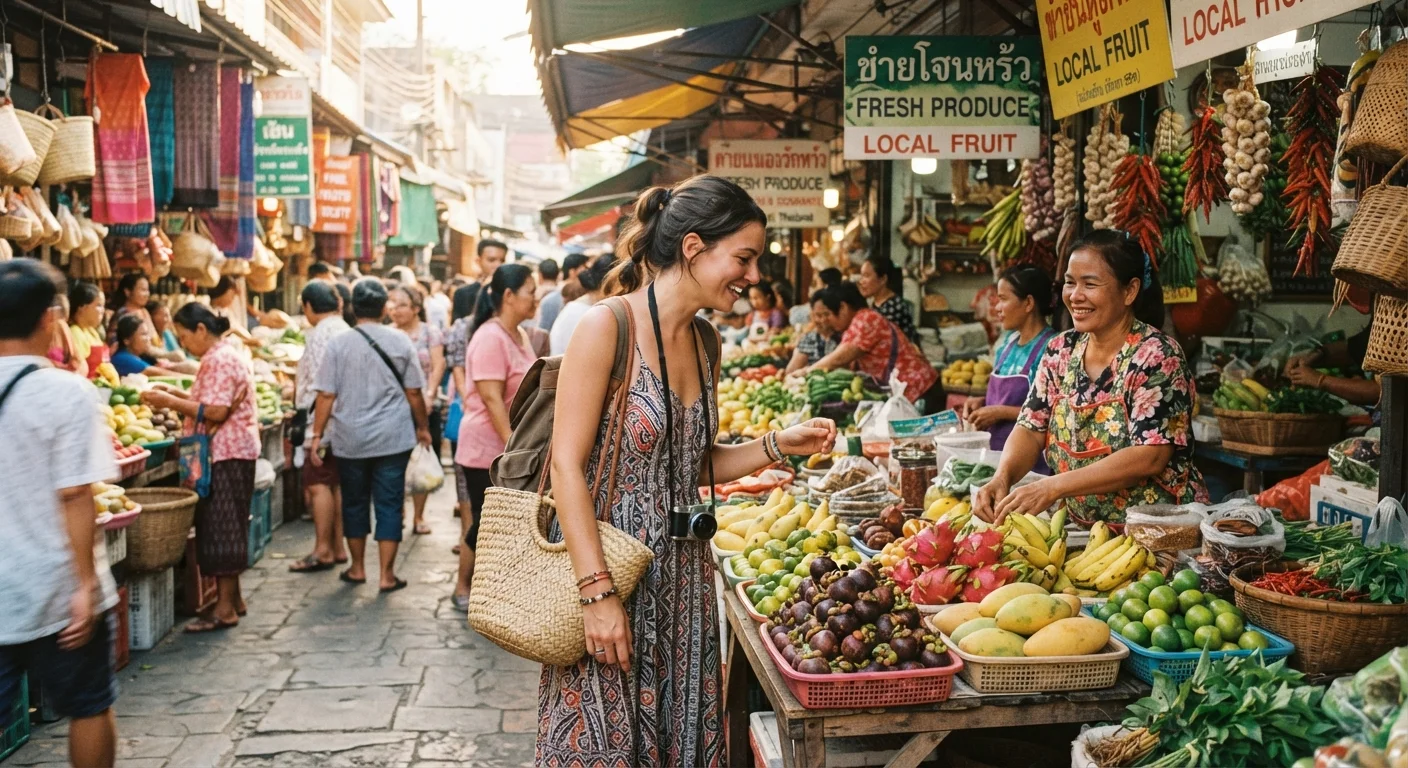
Shop at local markets for at least one meal per day
Grocery stores, municipal markets, and food halls sell prepared foods, cheeses, bread, fruit, and local snacks at a fraction of restaurant prices. This approach also gives you direct access to regional ingredients and flavors that restaurants sometimes homogenize for tourist palates.
Carry reusable water and snacks to avoid reactive spending
Hunger and thirst are the primary drivers of impulsive, overpriced food purchases. A €4 bottle of water near a monument or a $12 airport snack pack are rarely planned — they happen because you weren't prepared. Filling a reusable bottle and packing a few portable snacks from a grocery store each morning is one of the highest-return habits in travel eating.
Learn two or three phrases in the local language for ordering food
Being able to ask for a recommendation, specify a preference, or navigate a non-English menu builds trust with local vendors and often opens access to smaller, non-tourist-facing establishments. These places are usually cheaper and frequently better. Language effort signals respect, which can also mean better service and more honest pricing.
Set a daily food budget before you arrive, not as you go
Without a number in mind, each meal decision is made in isolation, making it easy to consistently choose slightly more expensive options. A realistic daily food budget — built as part of your overall trip planning — creates a frame that makes trade-offs visible. If you splurge on dinner, you know to adjust breakfast and lunch.
Reserve restaurant meals for deliberate experiences, not default convenience
Eating at a sit-down restaurant for every meal because it's the easiest option is one of the fastest ways to overspend on food. Treating restaurants as intentional choices — for a regional specialty, a memorable dinner, a recommendation from a local — keeps costs manageable and makes each meal more meaningful.
Quick Actions You Can Take Right Now
You don't have to overhaul your travel style to save meaningfully on food. A few targeted changes make a disproportionate difference. Start with these before your next trip.
For travelers managing tighter budgets overall, these habits pair well with the broader strategies in our guide to traveling on a fixed or limited income.
Eating Smart Without Eating Badly
Budget eating while traveling sometimes gets a bad reputation — as if spending less means settling for sad gas-station food. That's rarely the reality. In most destinations, the most affordable options are also the most culturally authentic: a market stall serving a regional staple, a neighborhood bakery, a lunch counter popular with working locals.
“The cheapest, most satisfying meal in almost any city is the one locals actually eat — and it's rarely in a place that advertises itself to tourists.”
— Rick Steves, Travel writer and educator, author of numerous European travel guides
The places to be cautious about are those designed primarily for tourists — restaurants with photographs on the menus, locations directly adjacent to major landmarks, and anywhere with an English-only menu in a non-English-speaking country. These aren't always bad, but they tend to charge a premium that reflects location rather than quality.
If you're also thinking about nutrition alongside cost, our article on eating well on a budget at home covers which staples stretch furthest nutritionally — principles that translate directly to travel eating.
And if you're traveling internationally, it's worth reading up on food and water safety abroad before you go, since tap water standards and street food hygiene vary widely by region.
The Two-Block Rule for Better Meals
Wherever you are, walk at least two blocks away from any major tourist attraction before sitting down to eat. Prices drop, quality often improves, and you're more likely to find the food residents actually eat. This single habit can save $10–20 per meal in high-tourism areas.
This article provides general travel guidance for informational purposes only. Food safety conditions, prices, and availability vary by destination and change over time. Always verify current conditions through official sources before traveling.