

Key Takeaways
- Animal proteins are 'complete,' providing all nine essential amino acids in a single source; most plant proteins are not.
- Plant proteins generally come packaged with fiber, antioxidants, and lower saturated fat than many animal sources.
- Bioavailability — how much protein your body actually absorbs — is typically higher for animal proteins.
- Combining different plant proteins throughout the day can meet your complete amino acid needs.
- Both protein types can support a nutritious diet; the best approach depends on individual health goals and preferences.
- Reading nutrition labels carefully helps you evaluate protein quality, not just protein quantity.
Option A
Plant-Based Protein
The fiber-rich, whole-food alternative.
Best for: People seeking high-fiber, lower-saturated-fat protein sources — including vegetarians, vegans, and anyone diversifying their diet.
Option B
Animal Protein
The complete, highly bioavailable classic.
Best for: People who want a straightforward complete amino acid profile with minimal meal-planning effort around protein combining.
If you follow a vegetarian or vegan lifestyle
Plant-Based Protein
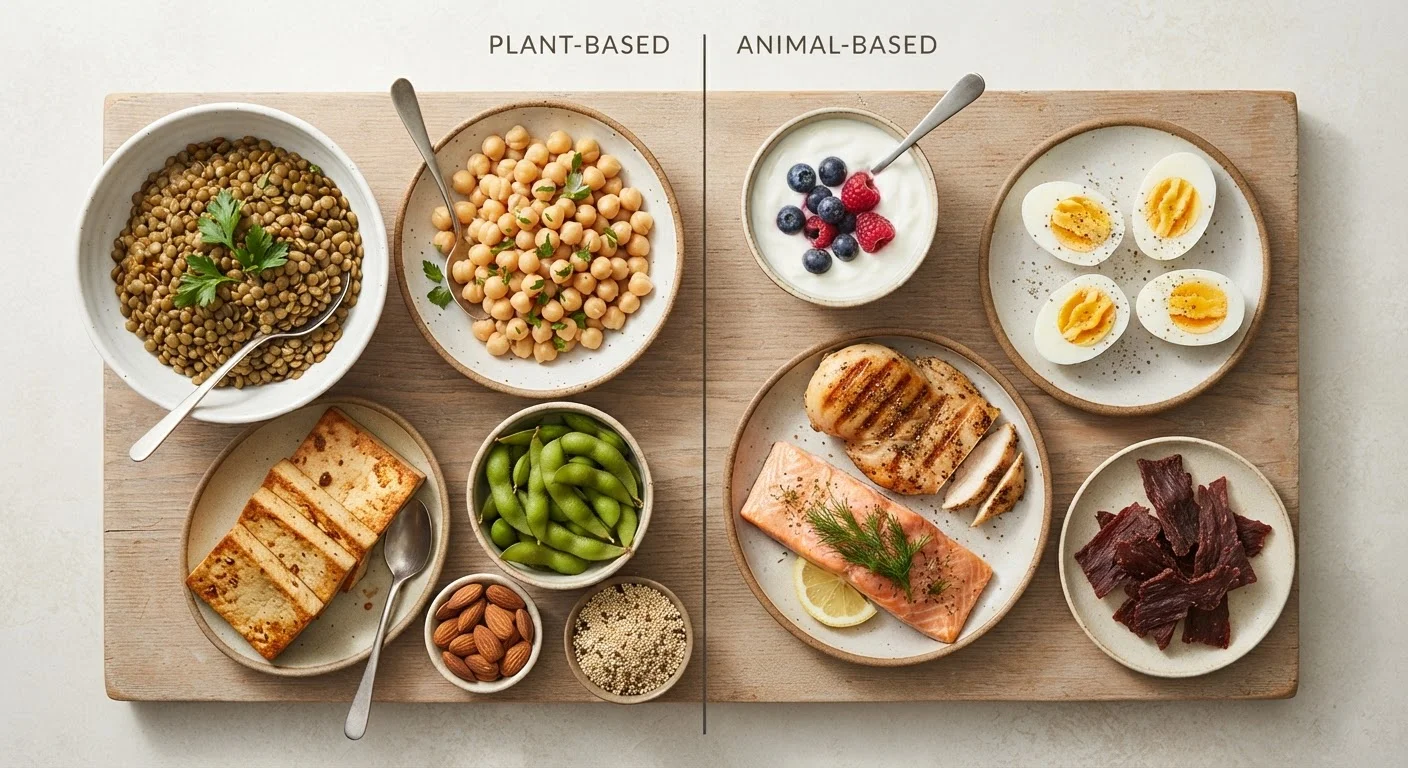
A varied mix of legumes, grains, nuts, and seeds can cover all essential amino acids while delivering beneficial fiber and phytonutrients.
If you want the simplest route to complete amino acid intake
Animal Protein
Eggs, poultry, fish, and dairy deliver all essential amino acids without requiring deliberate food combining.
If you're trying to improve digestive health alongside protein intake
Plant-Based Protein
Legumes, seeds, and whole grains supply dietary fiber that supports gut health — a benefit animal proteins do not offer.
If you're managing cardiovascular health concerns
Plant-Based Protein
Many plant protein sources are low in saturated fat and cholesterol; consult a healthcare professional for personalized dietary guidance.
If you need high protein efficiency for muscle repair or recovery
Animal Protein
Animal proteins have higher digestibility scores (PDCAAS/DIAAS) and robust leucine content, factors associated with muscle protein synthesis in research literature.
What Makes a Protein 'Complete' or 'Incomplete'?
Proteins are built from 20 amino acids, nine of which are classified as essential — meaning your body cannot manufacture them and must obtain them from food. A protein source is called complete when it supplies all nine essential amino acids in adequate proportions.
Most animal proteins — meat, poultry, fish, eggs, and dairy — are complete. Most individual plant proteins are not. Soy and quinoa are notable exceptions, providing all nine essential amino acids from a single source. For everyone relying primarily on plant foods, the practical solution is dietary variety: eating a range of legumes, grains, nuts, and seeds across the day covers the full essential amino acid spectrum without requiring every meal to be perfectly balanced. For a closer look at how specific plant sources stack up, see plant-based protein sources and how they compare nutritionally.
| Criterion | Plant-Based Protein | Animal Protein |
|---|---|---|
| Amino acid completeness | Usually incomplete (soy & quinoa excepted) | Complete in a single source |
| Bioavailability (DIAAS) | Moderate; varies by preparation | Generally high |
| Dietary fiber | Present — supports gut health | Absent |
| Saturated fat | Typically low | Varies; can be high (red meat, full-fat dairy) |
| Vitamin B12 | Not naturally present | Naturally abundant |
| Iron type | Non-heme (lower absorption rate) | Heme iron (higher absorption rate) |
| Environmental footprint | Generally lower | Generally higher (especially beef) |
Bioavailability: How Much Protein Does Your Body Actually Use?
Gram-for-gram comparisons on a nutrition label don't tell the whole story. Bioavailability refers to the proportion of protein your digestive system can actually absorb and use. Nutrition scientists measure this using scoring systems like the Digestible Indispensable Amino Acid Score (DIAAS) and its predecessor, the Protein Digestibility-Corrected Amino Acid Score (PDCAAS).
Animal proteins — particularly eggs, dairy, and meat — consistently score at or near the top of these scales. Many plant proteins score lower, partly because plant cell walls and compounds like phytates can reduce digestibility. Cooking, soaking, sprouting, and fermenting plant foods can meaningfully improve their digestibility, which is worth knowing when planning meals.
~1.0
Max PDCAAS score (eggs, whey)
The PDCAAS scale runs from 0 to 1.0; eggs and whey protein reach the ceiling, indicating excellent amino acid coverage and digestibility.
~0.5–0.7
Typical PDCAAS for legumes
Beans and lentils score in the mid-range on protein digestibility scales, though preparation methods like soaking and cooking improve their scores.
2x
Heme vs. non-heme iron absorption
Research indicates the body absorbs heme iron (from animal sources) at roughly two to three times the rate of non-heme iron found in plant foods.
This doesn't make plant protein inferior — it simply means portion sizing and food variety matter more when plant sources form the backbone of your diet. Understanding what protein claims actually mean on packaging is also useful; our guide on nutrition claims like 'high protein' on food labels explains what those terms are permitted to mean.
Beyond Protein: What Else Comes Along for the Ride?
Protein rarely travels alone. The other nutrients — and anti-nutrients — bundled with your protein source matter just as much as the protein itself.
- Plant proteins come packaged with dietary fiber, antioxidants, phytochemicals, and typically lower levels of saturated fat. These accompanying compounds are associated with cardiovascular and gut health benefits in population research.
- Animal proteins provide highly bioavailable micronutrients including vitamin B12, heme iron (absorbed more efficiently than plant-based iron), zinc, and omega-3 fatty acids (especially in fatty fish). These nutrients are harder to obtain in sufficient amounts from plants alone without careful planning or supplementation.
A Note on Vitamin B12 for Plant-Based Eaters
Vitamin B12 is found almost exclusively in animal-derived foods. People following a fully plant-based diet are at risk of deficiency over time, which can have serious neurological consequences. If you eat little or no animal protein, speak with a registered dietitian or your doctor about whether supplementation or fortified foods are appropriate for your situation. Our article on fortified foods vs. natural food sources explores how enriched products compare nutritionally to whole-food options.
Neither profile is universally superior — the right balance depends on your overall dietary pattern, health status, and personal goals. If you want to evaluate protein sources in the context of your grocery budget, our article on nutritional value versus cost across common foods offers a practical framework. And if reading the nutrition panel on a protein-rich product feels confusing, understanding what food labels are actually telling you is a useful starting point.
This article is for general informational purposes only and is not a substitute for personalized medical or dietary advice. Consult a qualified healthcare professional or registered dietitian before making significant changes to your diet, especially if you have an existing health condition.