

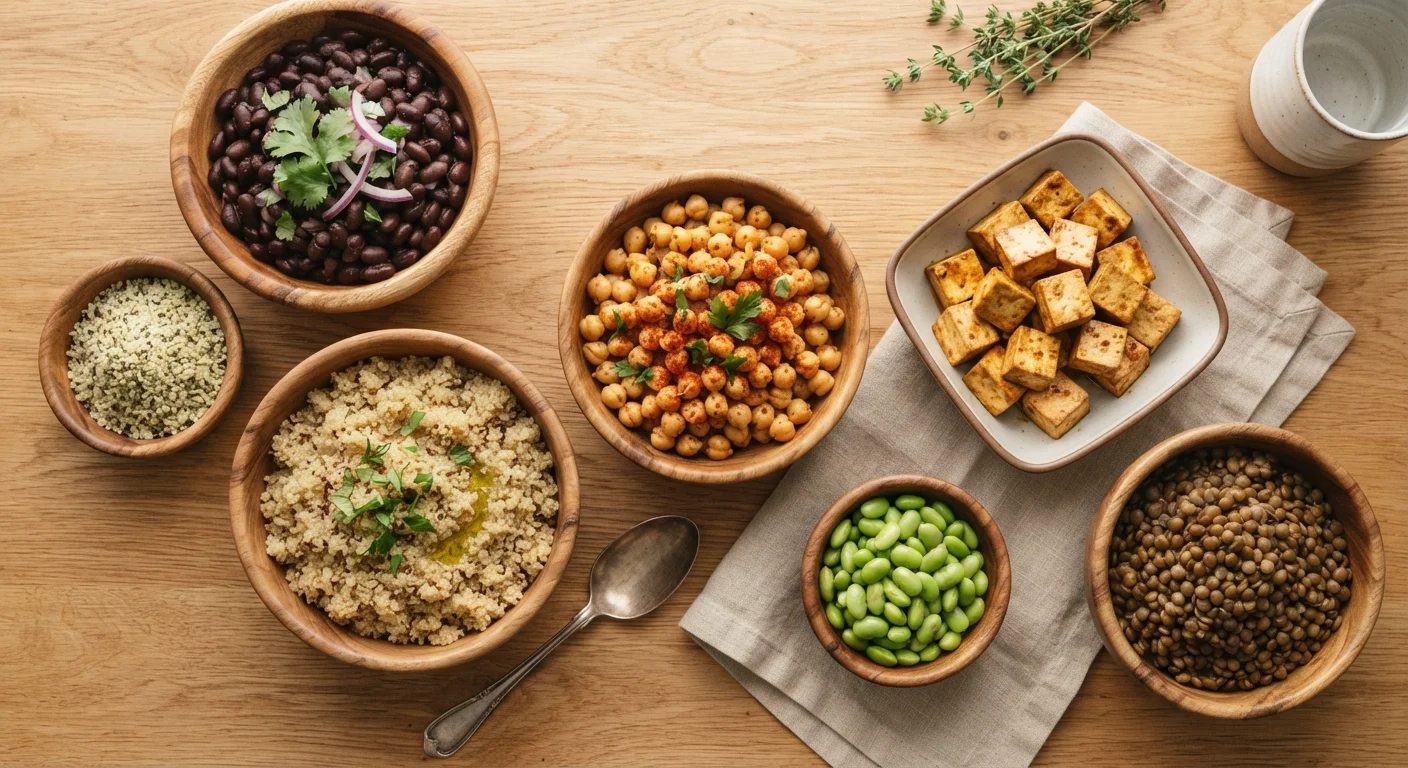
Key Takeaways
- Most plant proteins are 'incomplete,' meaning they lack one or more essential amino acids — but smart food pairing fills the gaps.
- Legumes, soy foods, and quinoa are among the most protein-dense plant sources available.
- Cooking methods and food preparation can significantly affect how much protein your body actually absorbs.
- You don't need to combine proteins at every single meal — a varied diet across the day is sufficient.
- Whole plant protein sources often bring bonus nutrients like fiber, iron, and magnesium alongside their protein.
Why Plant Protein Deserves a Closer Look
Protein is essential for muscle repair, immune function, enzyme production, and dozens of other processes your body runs every day. But if you're eating less meat — or none at all — you've probably wondered whether plants can really deliver what you need. The short answer is yes, with some nuance worth understanding.
The concept of complete versus incomplete protein often comes up here. A complete protein contains all nine essential amino acids (the building blocks your body can't make on its own). Most animal proteins are complete; most plant proteins are not — but that doesn't make them inadequate. When you eat a variety of plant foods across the day, you naturally cover all nine amino acids without obsessively pairing foods at every meal.
Another factor is bioavailability — how efficiently your body absorbs and uses a protein. Plant proteins are generally slightly less bioavailable than animal proteins, partly due to compounds like phytates and fiber that can slow absorption. Soaking, cooking, sprouting, and fermenting plant foods can meaningfully improve this. For a side-by-side comparison of how plant and animal proteins differ on absorption and amino acid profiles, see our detailed comparison guide.
You Don't Have to Combine at Every Meal
An older nutrition rule insisted that complementary plant proteins (like beans and rice) had to be eaten together at the same meal. Current dietary science shows this isn't necessary — your body pools amino acids throughout the day. What matters is eating a variety of protein-rich plant foods consistently across meals, not engineering perfect combinations plate by plate.
Top Plant-Based Protein Sources, Ranked by What They Offer
Lentils
Lentils are a powerhouse for plant-based eaters. One cooked cup provides roughly 18 grams of protein alongside substantial fiber, folate, and iron. They're an incomplete protein — low in the amino acid methionine — but pairing them with a grain like rice or bread naturally compensates for this.
Lentils also cook relatively quickly compared to other legumes and don't require soaking, making them one of the most practical high-protein plant foods for weeknight meals.
One cup of cooked lentils delivers around 18 grams of protein with minimal preparation required.
Tofu and Tempeh (Soy Foods)
Soy-based foods are the closest plant equivalents to a complete protein. Tofu provides about 10 grams of protein per half cup depending on firmness; extra-firm varieties pack the most. Tempeh — made from fermented whole soybeans — offers closer to 15–16 grams per half cup and also provides probiotics from the fermentation process.
Both are made from soybeans, which contain all nine essential amino acids, making soy one of the few plant sources nutritionists classify as a complete protein. Tempeh's fermentation also reduces phytate content, improving mineral absorption.
Soy is one of the rare plant proteins that provides all nine essential amino acids in meaningful amounts.
Chickpeas and Other Beans
Chickpeas, black beans, kidney beans, and cannellini beans all sit in the 14–16 grams of protein per cooked cup range. Like lentils, they're incomplete proteins — typically low in the sulfur-containing amino acids methionine and cysteine — but they're high in lysine, an amino acid that grains tend to lack. This is exactly why beans and grains complement each other so well nutritionally.
Beans are also among the most fiber-dense foods available, which supports digestive health and contributes to lasting fullness after meals.
Beans are high in lysine, the amino acid that most grains are short on — a natural nutritional partnership.
Edamame
Edamame — young, immature soybeans — delivers about 17 grams of protein per cooked cup, along with a solid profile of vitamins K and C, folate, and fiber. Because they come from soybeans, edamame share the same complete amino acid advantage as tofu and tempeh.
They're easy to prepare (often sold frozen and ready in minutes) and work well as a snack, salad topping, or side dish, making them one of the more accessible high-protein plant options for everyday use.
Edamame packs roughly 17 grams of protein per cup and requires almost no preparation.
Quinoa
Quinoa is technically a seed but eaten like a grain. It's one of the few non-soy plant foods considered a complete protein, providing all nine essential amino acids. A cooked cup yields about 8 grams of protein — less than legumes, but meaningful when quinoa is replacing a lower-protein grain like white rice.
It's also gluten-free, making it a useful option for people with celiac disease or gluten sensitivity who want to broaden their protein sources. Its mild flavor and quick cooking time make it easy to use as a base for grain bowls or a side dish.
Quinoa is one of the few plant foods outside of soy that qualifies as a complete protein source.
Hemp Seeds and Other Seeds
Hemp seeds offer about 10 grams of protein per three-tablespoon serving and contain a well-balanced amino acid profile — notably including adequate amounts of all essential amino acids, which is unusual for seeds. They're also rich in omega-3 fatty acids.
Pumpkin seeds (pepitas) provide about 9 grams per ounce and are high in magnesium and zinc. Chia seeds contribute around 5 grams per ounce along with fiber and omega-3s. Seeds are easy to add to smoothies, oatmeal, or salads, allowing you to boost protein intake without overhauling your meals. You can check how protein content appears on packaging with our guide to nutrition claims on packaging.
Hemp seeds have an unusually complete amino acid profile for a seed, making them a versatile protein add-on.
Protein Absorption Varies by Preparation
Raw or minimally processed plant foods sometimes contain antinutrients — compounds like phytates and tannins — that can reduce how well your body absorbs protein and certain minerals. Soaking dried beans overnight, cooking legumes thoroughly, sprouting seeds, or choosing fermented soy products like tempeh can all improve bioavailability. These steps don't need to be complicated; most standard cooking methods already do the work.
Making Plant Protein Work in Your Daily Diet
Understanding individual sources is useful, but real-world eating is about patterns. The most practical strategy is simply eating a wide variety of whole plant foods — legumes, whole grains, nuts, seeds, and vegetables — across meals rather than engineering each plate around protein math.
If you're trying to track how much protein a packaged food actually contains, knowing how to read a nutrition label makes a real difference. Our guide on what food labels are actually telling you breaks down serving sizes, daily value percentages, and where protein fits into the bigger picture. And if budget is a concern, legumes like lentils and canned beans consistently rank among the most cost-effective protein sources available — something our piece on eating well on a budget explores in depth.
Plant protein isn't a compromise — it's a genuinely nutrient-rich way to meet your needs, often with the added benefits of fiber and micronutrients that animal proteins don't provide. For broader guidance on building a well-rounded understanding of food, visit our Nutrition Essentials hub.
This article is for general informational and educational purposes only and is not a substitute for professional medical or dietary advice. Please consult a registered dietitian or qualified healthcare provider for guidance tailored to your individual health needs.